

National Council of Jewish Women

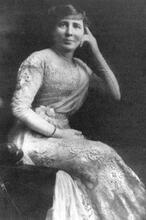
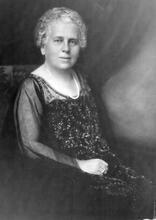
From her work with the National Council of Jewish Women to the United Nations, Constance Sporborg devoted her energies to bettering the lives of women throughout the world.
Institution: The Jacob Rader Marcus Center of the American Jewish Archives, Cincinnati, OH, www.americanjewisharchives.org and Underwood and Underwood Studios
The National Council of Jewish Women, a women’s voluntary organization, was founded in 1893. In its early years, the NCJW concentrated on combating assimilation by educating Jewish women about Judaism, hoping in the process to strengthen Jewish homes by making Council members into better Jewish mothers. Their efforts expanded to include political action including immigrant aid, combatting antisemitism, and many other issues. The Council’s political approach is most easily labeled as liberal, yet its politics have led others to label the organization as threatening. The NCJW continues to play an important role as a bridge between traditional motherhood and political activity, between the Jewish community and other women’s organizations, between Judaism and politics, and between diverse segments of the Jewish community itself.
Introduction
Resolved that we, Jewish women, sincerely believing that a closer fellowship will be encouraged, a closer unity of thought and sympathy and purpose, and a nobler accomplishment will result from a widespread organization, do therefore band ourselves together in a union of workers to further the best and highest interests of Judaism and humanity, and do call ourselves the “National Council of Jewish Women.”
When the National Council of Jewish Women was founded with these words in 1893, it was the first national organization in history to unite Jewish women to promote the Jewish religion. That its commitment to preserve Jewish heritage in a quickly modernizing America would be fraught with contradictions was not readily apparent in the optimistic surroundings of the World Parliament of Religions, convened as part of the Chicago World Exposition.
The NCJW seemed well suited to embodying the values of the exposition, which was a showcase for the greatest hopes of modernity—especially science, technology, and democracy. The council consistently strove to apply the latest “scientific” methods in its work, whether it was improving religious school instruction or aiding new immigrants. It reflected the influence of democracy in its attempt to adopt a pluralistic approach to Judaism, insisting on active involvement in the religion but not on adherence to particular practices. This approach of Americanizing without giving up Jewish identity was quite popular. In its first five years, more than five thousand American Jewish women, mostly of German descent, joined the fledgling organization. By the time it reached its tenth anniversary, the council had more than doubled that number. In more recent decades, membership hovered around ninety thousand.
The excitement generated in the council’s early years, however, masked significant internal divisions. The organization’s mission to “save Judaism” from the internal threat of assimilation as well as the external threat of antisemitism attracted a variety of women with very different approaches to furthering “the best and highest interests of Judaism and humanity.”
Founding and Early Years
 view larger
From her work with the National Council of Jewish Women to the United Nations, Constance Sporborg devoted her energies to bettering the lives of women throughout the world.
Institution: The Jacob Rader Marcus Center of the American Jewish Archives, Cincinnati, OH, www.americanjewisharchives.org and Underwood and Underwood Studios
view details view larger
Courtesy of the National Council of Jewish Women Collection, Manuscript Division, U.S. Library of Congress. view details
field_section_text_value
Internal Struggles
In fact, the NCJW’s commitment to pluralism would nearly result in the organization’s demise, but not from outside pressures. Rather, internal divisions would prove to be so contentious that they permanently changed the council’s religious character. The NCJW’s founding leadership overwhelmingly identified with Reform Judaism. Some, like Solomon and American, were active followers of radical Reform, observing the Sabbath on Sunday rather than the traditional Saturday. These leaders understood that their Jewish practices would not be accepted by everyone, and they did not try to use their positions to recruit support for radical Reform. But neither did they understand that for some members issues like adherence to the traditional Sabbath were nonnegotiable. To cross that line was not merely to Americanize Judaism but to abandon the faith. That the leaders of an influential Jewish organization, especially an organization that often represented the Jewish community to non-Jews, would be perceived as abandoning central Jewish practices was unacceptable. The issue came to a climax at the 1913 convention. Those advocating adherence to a more traditional interpretation of Judaism lost, and many left the organization.
Leaving was made easier by the fact that, by 1913, the NCJW and a few “fraternal” orders were no longer the only options for Jewish women wanting to exercise leadership roles. For women tired of defending their beliefs at NCJW conventions, organizations with clearer commitments, such as Hadassah’s endorsement of Zionism or a sisterhood’s attachment to the philosophy of its synagogue, were appealing. The result of this external competition and internal division was an increased focus on social service, especially immigrant aid work. That shift was so powerful that many people still (incorrectly) consider the NCJW a nonreligious, or even antireligious, organization.
Jewish Social Justice

President of the National Council of Jewish Women from 1920 to 1926, Rose Brenner (1884-1926) provided strong leadership, almost doubling the size of the organization. The NCJW has always championed both public service and the role of traditional motherhood; indeed, Brenner is the only unmarried woman ever to be president.
Institution: The Jacob Rader Marcus Center of the American Jewish Archives, Cincinnati, OH, www.americanjewisharchives.org and Bachrach.
field_section_text_value
Immigrant Aid

In line with their emphasis on motherhood, council members and employees provided services to more than twenty thousand immigrant Jewish girls who arrived on American shores without guardians. They met girls at ports of entry, built settlement houses, provided vocational training and Americanization classes, shared tips on etiquette, provided cultural programs, and fought against the influence of the white slave trade. They visited girls in their homes to see how they were doing and acted as advocates for those in legal trouble.
Members who provided such aid were termed “friendly visitors,” reflecting the council’s belief that they were providing the stern but loving guidance that would have been provided by a stable home had circumstances allowed. Some recipients of NCJW services viewed “friendly visitors” as annoying interlopers who offered help only because it served their own self-interest to combat antisemitism, not because they understood or cared about the immigrants’ needs. There is no doubt that “friendly visitors” were separated from the girls they served by a wide economic and social gap.
In addition, many NCJW members were ambivalent about training girls to enter the workforce, doing so because they recognized the economic necessity but regretful that women who worked could not pay “proper” attention to care of children and home. Resulting policies included support of protective legislation for working women and corollary opposition to the Equal Rights Amendment. These policies were easy to adopt from the vantage point of wealthy homes, but they sometimes made life more difficult for the families they were supposed to help. Yet, unlike most other Jewish agencies, the council’s model of philanthropy required more than giving money. All “friendly visitors” received training in modern social work, and the personal contact that many members had with the immigrant community humanized the statistics and, in many cases, led to genuine empathy.
Furthermore, the NCJW differed from other (largely Christian) organizations that saw poor immigrant girls as “fallen” and in need of saving. The council believed that their clients were generally good people who merely needed to overcome unfortunate circumstances. The help they provided was therefore material, not spiritual. They did hope that the girls they served would become good Jewish mothers, and sometimes supported religious training toward that end, but their goal was to help the girls preserve their ethnicity in ways that were “appropriate” to America, not merely to preserve Judaism.
By most accounts, the NCJW’s model of immigrant aid was highly successful. One New York City report credited the council’s preventive programs with a 40 percent decrease in Jewish women arraigned for prostitution. NCJW leaders were invited to present sessions at international conferences, and their methods were taught in college classrooms. No organization wielded more influence over immigrant Jewish girls than the NCJW.
Other Projects
Success also produced significant spin-off projects. The most famous was the NCJW’s innovative services for the visually impaired. Rather than treating the visually impaired as unemployable and therefore in need of charity, the council approached blindness as a health issue. They encouraged schools to mainstream blind children rather than institutionalize them and ran an aggressive prevention campaign teaching children how to prevent blindness. They also helped mainstream the visually impaired into Jewish religious life by printing the first Braille prayer book. Most important, the council did not assume that loss of sight meant loss of ability to work. In place of charity, the NCJW created an extensive vocational training program designed especially for the visually impaired and helped find jobs for those who completed the program.
Also unique was the NCJW’s Department of Farm and Rural Work, which was exceptionally active in the 1920s. As a response to overcrowding, many resettlement agencies encouraged Jews to live outside urban centers. However, the council was the only agency that provided for the ongoing religious, health, and educational needs of these rural Jewish families, supplying services to more than twenty-five hundred farms in eight states.
The NCJW was innovative in combating antisemitism as well. Five years before B’nai B’rith established the Anti-Defamation League, the council’s Committee for Purity of the Press reviewed newspaper accounts about Jews and publicly objected to stories tainted by antisemitism. The council was also one of the first Jewish organizations to find a way formally to involve young people in their work. From 1894 until the 1950s, the council of Jewish Juniors provided an opportunity for teenagers to participate in the council’s social welfare projects. Like synagogue youth groups today, junior sections were attached to their adult counterparts in individual communities and often served as feeders for the adult council sections.
The demographic center of the council’s immigrant aid work was, not surprisingly, New York City. As the major point of entry for Jewish immigrants, Ellis Island was the natural hub for the NCJW’s services. However, New York City had not always been the council’s geographic center. Original NCJW sections indicate a significant midwestern presence, with Chicago as the undisputed trendsetter bolstered by strongholds in places like Cincinnati, Cleveland, and Pittsburgh (which provided the council with its second national president, Pauline Rosenberg). As immigrant aid work became more central to the organization, however, so did New York City.
The council’s shift in focus and geography was accompanied by a shift in the power of its leaders. American, who had moved from Chicago to New York City, emerged as the clear, if controversial, leader of the council’s immigrant aid programs. Her affiliation with the New York section led many to wonder if the New York section and the NCJW were becoming one and the same, leaving others in subordinate roles as supporting cast members. That concern led to threats of secession by some sections and to a fight between Solomon (who remained in Chicago) and American. Several years of controversy eventually forced American out of the organization, but no one could change the fact that New York City had become the center of American Jewry. To this day, the national offices of the organization remain in New York.
Women’s Issues
Though internationally renowned for its immigrant aid work, the NCJW was not as clearly committed to other Progressive ideas. For example, though most council leaders personally supported woman suffrage, the organization itself never took an official stand on the issue. This failure to act may have been because a significant number of suffrage leaders were antisemitic, because council leaders feared that a debate over suffrage would result in a destructive split reminiscent of disputes over religious policy, or because, for these largely privileged women, suffrage simply did not seem as pressing as helping starving immigrants. Most likely, failure to act on the leading women’s issue of the day resulted from all these factors.
However, the NCJW was a leader on other women’s issues. For example, Margaret Sanger credited the council with being the first organization in the United States publicly to demand the legalization of birth control. For the NCJW, support for birth control was not so much an issue of sexuality, or even of women’s rights, as it was a natural part of their concern for Jewish immigrants and a belief that family planning was necessary to conquer poverty.
Influenced by War
By the end of the 1920s, changing world politics and increasing American restrictions slowed the wave of Jewish immigration, but the new circumstances did not diminish the NCJW’s programs or alter its focus. Though reduced in size, the council’s immigrant aid programs stayed in place until after World War II, when the organization helped refugees from the Holocaust navigate the necessary bureaucracy to resettle in the United States and offered classes in English and citizenship. They also helped those who stayed in Europe rebuild their lives. In 1945, the NCJW created the Ship-A-Box program, which provided educational materials to European children and teachers. The following year, it established settlement houses in Paris and Athens and offered college scholarships so that European students could study social work in the United States and then return home where their services were so desperately needed.
The council, like the rest of the world’s Jewish community, was transformed by the war. Though the group did not change its emphasis on motherhood or social welfare work, it did reflect transformations occurring throughout the American Jewish community. Most noticeable was the organization’s growth. Spurred by postwar public proclamations of ideal womanhood that promoted voluntarism and supported the council’s glorification of motherhood, membership in the NCJW nearly doubled between 1945 and 1970, going from 60,000 to 110,000 members in nearly 200 sections.
Another postwar change was the council’s adoption of Zionism. Previously unwilling to take an official stand on Zionism for fear of divisiveness, the horrors of the Holocaust overrode members’ ambivalence about the need for a Jewish state. In fact, that need seemed so clear that the council’s Department of Israel Affairs would quickly surpass the size of its Department of Immigrant Aid and would remain one of its largest departments for more than half a century.
Predictably, the NCJW’s support of Israel came in the form of sharing expertise in immigrant aid, social work, education, and child care. Early council efforts centered around Hebrew University, where the NCJW established a library for the School of Education (1949), the University High School (1963), and the Center for Research in the Education of the Disadvantaged (1968). As in Europe, the council offered scholarships to Israeli social work and education students who were willing to study in the United States and return home to share their skills. In the arena of child care, the council introduced the Home Activities for Toddlers and Their Families program in 1972. The council also pioneered the Home Instruction Program for Preschool Youngsters (HIPPY, known as HaETGAR in Hebrew), which was implemented nationally by the Israeli government in 1975 and has become one of the most acclaimed parenting programs for at-risk families in the world. HIPPY was followed almost immediately by the creation of the MANOF program, a residential support service for delinquent teens. In recent decades, NCJW’s Research Institute for Innovation in Education at Hebrew University has focused attention on resettling Ethiopian and Russian Jews in Israel.
Policies and Involvement Outside the Jewish Community
In the United States, council programs also experienced a change. By the end of the 1950s, most Jews displaced by the war had been resettled and, in general, the American Jewish community was financially secure. The NCJW continued to look for needs within the Jewish community and continued its reputation for innovation with its Golden Age project, which created senior centers to provide activities and meals to isolated elderly people. The council’s traditional services for the poor, however, began to find a new clientele.
Council programs had always been open to non-Jews, and it had always been NCJW policy to invest resources in starting new programs until others (like government agencies) recognized their importance and took them over. In the Progressive Era, such was the outcome of projects like school lunch programs, installation of public water fountains and sanitation systems, and the creation of juvenile courts. In the 1960s, inspired by the civil rights movement, the council actively fostered the transfer of long-standing programs to other hands. In many cities, council sections turned over settlement houses to civil rights leaders.
Because the NCJW’s approach to social welfare work was preventive, the organization always pressed for political change, even as it provided programs. The council’s political approach is most easily labeled as liberal. Where it has sought change, it has called for reform rather than revolution. It has shared a belief with most other Jewish organizations that American democracy is good for Jews, and members’ own economic success has provided few reasons to question the basic structure of the American economy. Even in terms of gender roles, the NCJW’s consistent emphasis on motherhood has kept it from being a radical organization, leading women back into traditional home structures even as it provided opportunities to act outside of family service.
Yet the council’s liberal politics have led others to label the organization as threatening. In the early years, the criticism came from traditional Jews who questioned the council’s expansion of women’s roles or apparent acceptance of Reform Judaism. In more recent times, the NCJW’s opposition to nuclear weapons, McCarthyism, and the Vietnam War, as well as its advocacy of civil rights, earned the organization an FBI file and the (unwarranted) suspicion that it was a communist front.
The NCJW continues to play an important role as a vehicle for Jewish women to express their political activism in Jewish terms. The organization has had Non-Governmental Organization (NGO) status at the United Nations since the UN’s founding. Its Washington bureau functions not only as a vehicle for lobbying but also as a source of political training for council members.
The specifics of the council’s political policies continue to be shaped by the organization’s emphasis on motherhood and social welfare. To provide an informed foundation for its political positions, the NCJW created The Center for the Child, which conducts research on the effectiveness of programs that serve families. Other motherhood-inspired policies have included advocacy for government support of quality child care and the strengthening of women’s economic clout. The latter concern, as well as a shift in feminist thinking influenced by the civil rights movement of the 1960s, led the NCJW to reverse its original opposition to the Equal Rights Amendment. In fact, by the mid-1970s, the council would become one of the strongest Jewish voices in favor of the ERA.
Equally strong has been the NCJW’s support for reproductive choice, including the right to abortion. This position—an extension of the council’s belief in individual liberty, its support for Planned Parenthood, and its efforts to combat poverty—has included vocal support for Medicaid funding for abortion, as well as a presence on the speaker’s platform at national pro-choice rallies.
As in its Progressive past, the NCJW also continues to function as a conduit for the exchange of ideas between secular America and the Jewish community. For example, it has looked for the intersections between feminism and Judaism, creating the Jewish Women’s Resource Center (an archive of materials on Jewish women), sponsoring conferences on Jewish feminism, housing drop-in centers for Jewish lesbians, and supporting scholarship about Jewish women. Throughout, it has remained committed to pluralism, refusing to endorse a particular religious position or practice but rather promoting community dialogue.
As with all women’s voluntary organizations, membership in the council has declined from its heyday in the 1950s and 1960s as more women have entered the workforce. It has survived, in part, because its structure allows individual sections the flexibility to concentrate efforts on meeting local needs. That flexibility, however, has produced a diversity of activity that has made it difficult for the council to establish a clear national identity. Despite this challenge, the NCJW continues to act as a bridge between traditional motherhood and political activity, between the Jewish community and other women’s organizations, between Judaism and politics, and between diverse segments of the Jewish community itself.
Elwell, Ellen Sue Levi. “The Founding and Early Programs of the National Council of Jewish Women: Study and Practice as Jewish Women’s Religious Expression.” Ph.D. diss., Indiana University (1982).
National Council of Jewish Women: Proceedings of the First Convention, November 15–19, 1896 (1897).
Papers of the Jewish Women’s Congress, 1893 (1894); Rogow, Faith. Gone to Another Meeting: The National Council of Jewish Women, 1893–1993 (1993).
Solomon, Hannah. Fabric of My Life (1946).
More Like This
Double your impact to amplify Jewish women’s stories—
All gifts matched up to $35,000
Before you close this article, please consider supporting the Jewish Women’s Archive and uplifting Jewish women’s voices.
At JWA, we preserve the voices of Jewish women and gender-expansive people past and present, share them freely with millions online, and empower a new generation of Jewish feminists to lead with courage, creativity, and conviction.
But none of this happens without you. JWA is an independent nonprofit— we rely on people, like you, who believe that history belongs to all of us and that the voices of Jewish women must remain powerful, and heard.
This month, a generous JWA board member will match every gift dollar for dollar—up to $35,000—through June 30. Your contribution goes twice as far right now.
Every contribution—no matter the size—helps us document, teach, and inspire through Jewish women’s stories.
It takes less than a minute to make a difference.
Thank you for being a part of the JWA community,
Judith Rosenbaum, CEO

