
Hadassah: Yishuv to the Present Day
Hadassah, the Women’s Zionist Organization of America (HWZOA) has a lengthy history of activity in the Yishuv and Israel, going back to 1913, about a year after it was founded in New York, and continuing to this day. This activity, outstanding in its scope, continuity, stability, and diversity, encompasses efforts in the sphere of health and medical services and in the welfare of children and youth. Hadassah’s work has been the largest Diaspora women’s collective effort on behalf o the Yishuv and the state of Israel. Despite changing times and economic and other crises, Hadassah women still dedicate the lion’s share of their activity for Israel and contribute many millions of dollars for its medical center.
field_section_text_value
The Jewish, American, and Gender Sources of Hadassah’s Activities in the Yishuv and Israel
From the perspective of Jewish tradition, Hadassah’s medical undertakings were the embodiment of three central A biblical or rabbinic commandment; also, a good deed.mitzvot with which women were traditionally involved: Lit. "righteousness" or "justice." Charityzedakah (charity), Gemilut H̱asadim (good deeds for the benefit of others), and Bikkur H̱olim (lit. visiting the sick, but in practice, caring for the ill). Even after secularization became common in much of Jewish society, women continued to be active in these fields, which had become the responsibility of modern social welfare organizations. Hadassah’s health and medical services were also intimately connected to professions that in turn-of-the-twentieth-century America were identified as women’s professions par excellence.
The establishment and support of hospitals, Hadassah’s central undertaking in the Yishuv and Israel, was a widely accepted historical tradition for American Jews. Their wealthy predecessors had established Jewish hospitals across the United States throughout the nineteenth century. It was also quite common for them to bequeath sums to hospitals in their wills.
Furthermore, what characterizes Hadassah’s medical activities in the Yishuv and Israel is a traditional Jewish value that united all of American Jewry in the twentieth century in its efforts to provide relief for Jews outside the United States. Rescue work, the secular counterpart of the traditional Jewish commandment of Pidyon Shvuyim (ransoming of captives), which has also been a major Zionist ideological component, was incorporated into Hadassah’s ideology and has been an important basis of its practical work: medical and health services, support of Youth Aliyah, and, in a wider sense, vocational education and training. The centrality of rescue work in Hadassah’s ideology and practice was even expressed in its name: “Hadassah, that is, Esther” (Esther 2:7), i.e. the woman who saved her people. The rescue factor was most overtly manifested in Hadassah's activity for Youth Aliyah, a singular humanitarian effort dedicated to the rescue of children and youth, their rehabilitation and re-education.
Important influences on Hadassah’s fields of activity in Palestine stemmed from various factors relating to the American women’s arena at the beginning of the twentieth century, namely:
The emergence of professional women and the resulting development of “women’s professions” that were dominated by women: nursing, social work, and teaching. Public health, a branch of the nursing profession, was especially well developed and respected.
The arena of American women’s voluntary organizations. These women’s organizations functioned according to a set of ideas developed by “social feminism,” which held that men and women differ in their traits and qualifications and that women’s moral and intellectual qualities qualified them to make special contributions to social reform. Women’s organizations whose activities were directed by social feminist principles were active mainly in the spheres of child welfare and social reform and were considered well suited to women’s qualifications.
The Settlement House Movement, as well as other Progressive movements in which women had key roles and many of whose activists and leaders were women.
The emphasis on children’s welfare and education, and social movements aiming at children’s welfare.
Ideological Fundamentals and Patterns of Activity
field_section_text_value
Early Work in Palestine
field_section_text_value
The British Mandate Period (1920-1948)
The end of the British military regime in Palestine and the establishment of a civilian Mandate required a change in the deployment of the American Zionist Medical Unit. Formerly a temporary medical relief organization whose goal was to give immediate medical aid and solve the most urgent medical problems, it now had to assist in the establishment of a permanent health-care system for the Yishuv. In September 1921, the Twelfth Zionist Congress in Carlsbad decided to turn the American Zionist Medical Unit into a medical association that would operate in Palestine as an independent agency directly accountable to Hadassah. It was named and still is Hadassah Medical Organization (HMO). It remains the organization to which all Hadassah’s medical institutions in the Yishuv and later in Israel belong. Legally, Hadassah Medical Organization is an Israeli non-profit organization owned by Hadassah, the Women’s Zionist Organization of America, and is a partner with the Hebrew University of Jerusalem, with five medical and health profession schools (the Medical School; the schools of Nursing, Occupational Therapy, Public Health, and Community Medicine; and the Hebrew University-Hadassah School of Dental Medicine).
In the British Mandatory period, Hadassah saw itself as a service organization for the Yishuv and acted accordingly. Thus, during the 1920s the Hadassah Medical Organization developed health services for the entire population in the Yishuv and was active in preventive medicine and in health care for new immigrants, which became its primary spheres of medical activity throughout the period. In was responsible for both hospital services and the majority of public health medical services. It also introduced more extensive use of modern medical equipment, such as the stethoscope and microscope, and routine use of bacteriological laboratories.
Until the late 1920s, the Rothschild Hospital (Hadassah) was directed by American Jewish doctors. Problems of communication—both of language and mentality—accompanied by friction arose between them and elements in the Yishuv, particularly the workers’ movement organizations. There were three American Jewish Directors General of the Rothschild Hospital in the 1920s. Due to misunderstandings or differences in mentality, a severe confrontation broke out between the last of them—Dr. Ephraim Bluestone—and the workers’ organizations. However, in 1929 Henrietta Szold, then director of the Health Department of the Va’ad Le’umi, appointed Dr. Haim Yassky (Odessa, 1896–Jerusalem, 1948), a young Russian-Jewish ophthalmologist who had been trained in Odessa and was now a member of the Yishuv, as its first non-American Director-General.
Yassky’s appointment set the pattern for Hadassah’s activity in Palestine and its standing in the Yishuv and Israel in general. From this point on, the Directors-General of Hadassah’s hospitals as well as other institutions would be residents of the Yishuv, greatly involved in its daily life. This assured that Hadassah's enterprises would be operated in a way compatible with the Yishuv's conditions and needs. Employment of local personnel became the rule in all Hadassah undertakings in the Yishuv and Israel as well.
In the 1930s, however, the nature of HMO activities in the Yishuv was transformed. It adopted a policy of devolution, gradually transferring its health and medical institutions outside Jerusalem to the Jewish municipalities and to Kupat H̱olim Ha'Klalit, the General Sick Fund of the General Federation of Labor (Histadrut) [hereafter: Kupat H̱olim]. Two objectives lay behind this policy: to encourage the Yishuv to provide its own services and to enable Hadassah to undertake new projects. Another policy change took place at the same time: Hadassah would now emphasize development of university medical services. This also had geographical implications: from now on Hadassah’s major thrust would be in Jerusalem, centered for the most part on the Rothschild Hospital.
The Hadassah Medical Organization assumed direct responsibility for the hospital, which, in 1939, in cooperation with the Hebrew University, had become a university hospital officially known as the Meir Rothschild Hadassah-University Hospital and popularly known in the Yishuv as Bet H̱olim Hadassah. During the 1930s and the 1940s the hospital’s high level of medical care made it the best in Palestine, both because it contained departments nonexistent elsewhere in the country and because of its connection with the Hebrew University.
In 1934 the Hadassah leadership laid the cornerstone for its large medical center on Mount Scopus, the Rothschild-Hadassah University Hospital, which was intended to be a medical research facility of the first rank in Palestine. Its planners decided to emulate the model prevalent in the United States: a hospital, medical school, medical research laboratories, and a nursing school all under one roof. This was also the reason for locating the medical center adjacent to the Hebrew University campus.
A 1936 agreement between Hadassah and the Hebrew University provided guidelines for cooperation and coordination in medical research between the two entities. This proved the foundation for what became known as the “medical para-faculty,” which laid the foundations for the Hebrew University-Hadassah Medical School, founded in 1949 (see below). The medical center’s activity on Mount Scopus began in the summer of 1939, three months before the outbreak of World War II.
Projects for Children and Youth

field_section_text_value
Hadassah and Youth Aliyah
field_section_text_value
Educational and Vocational Training
Beginning in the early 1940s—more than twenty years after beginning its medical and health activity in Palestine—Hadassah established a number of vocational education and vocational training institutions. Hadassah leaders believed that vocational education, which was grossly underdeveloped in the Yishuv, would be a valuable contribution to industry in the future Jewish state and that young people in the Yishuv should be given the technological training common in the West so that they would possess the appropriate tools to compete in the Western economy.
The series of enterprises began with the founding of the Brandeis Center for Vocational Training, which until Israel's founding included three entities: a girls’ trade high school, a boys’ vocational school, and a vocational guidance bureau. The Alice L. Seligsberg Trade School for Girls established in 1942 was guided by two educational principles that were revolutionary at the time: 1) to give intelligent but poor girls an education and a trade and improve the quality of their lives by training them both as homemakers and in professions; and 2) to eradicate the prevalent perception that women’s role was inferior to men’s. The school’s first principal and the architect of its educational philosophy and curriculum was Helen Kittner (1910–1978), 31 years old at the time, a graduate of a university in Lvov, Poland.
The Vocational School for Boys included four-year training programs for fine mechanics and printing. Both were established in 1944 and 1945 on the initiative of Henrietta Szold as an attempt to solve one of the Yishuv’s main social problems, the high elementary-school dropout rate among boys.
In 1944, Hadassah established the Vocational Guidance Bureau (which became the Vocational Guidance Institute in 1965 and the Hadassah Career Counseling Institute in 1989). It became an integral part of Hadassah’s vocational education and training activity in Palestine and was established as the vocational guidance field was being developed in the United States. The best minds in education and psychology from the Hebrew University participated in its founding, as did other key figures in those fields in the Yishuv. In order to establish the bureau, Hadassah recruited Dr. Erwin Arnstein, who had run a vocational guidance office in Haifa and was considered the best of the Yishuv’s few experts in this field.
Establishing Women’s Paramedical Professions
 view larger
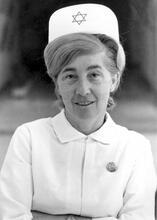
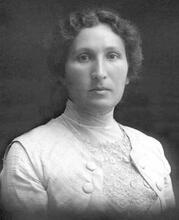
After stowing away on a ship to Israel in 1919, Shulamith Cantor went on to serve as director of the Hadassah School of Nursing in Jerusalem and worked to develop the nursing profession in the Yishuv and during the early years of the State.
Institution: Nira Bartal.
view details view larger
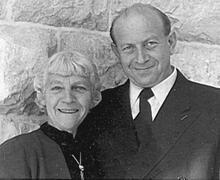
Dutch-born Sarah Bavly (1900 – 1993) was a pioneer nutritionist in the Yishuv who laid the groundwork for Israel's nutritional infrastructure and educational programming, directing Hadassah's hospital nutrition departments and school lunch programs, and establishing the State's first College of Nutrition.
Institution: Miriam Bavly.
view detailsfield_section_text_value
The State Period (1948-Present)
The ideological fundamentals, major conceptions, and modus operandi of Hadassah’s enterprises in Palestine were established during the Mandate period and continued to exist during the state period, adapting to the changing needs of the time. However, the scope of Hadassah’s enterprises and its place in Israel’s medical and welfare services underwent a great deal of change.
During the War of Independence (December 1947–July 1949), Rothschild-Hadassah University Hospital treated 90 percent of those wounded in the war in Jerusalem. Hadassah Hospital in Safed played a similar role in the north. Several of Hadassah’s activities at the time included bringing medical specialists from the United States in fields that did not yet exist in Israel, establishing a blood bank through which blood donations were sent to Israel during the war, establishing a rehabilitation center in Jerusalem, and contributing to the establishment of Tel Ha'Shomer Hospital, which later became the largest hospital in Israel.
The War of Independence was a period of very severe crisis for Hadassah, as well as a time when its leaders had to decide on the future of its activities in the new state. The crisis began on April 12, 1948, with the attack on a convoy traveling from western Jerusalem to the Hadassah medical center at Mount Scopus, in which 78 Hebrew University and Hadassah workers were killed, including Dr. Haim Yassky, the Director-General of the Hadassah Medical Organization, and several others involved in the establishment, planning, and organization of the future medical school. Hadassah was forced to leave its modern hospital on Mount Scopus, which it had entered only nine years earlier, and to spread out over several old buildings on Ha-Nevi’im Street in western Jerusalem. With the decline in the status of Jerusalem, the center of most of Hadassah’s nationwide activities since the 1930s, as an economic and political center of the new state, there were proposals to move the hospital to the coastal plain. However, Hadassah’s leadership decided to keep the hospital in Jerusalem, fulfilling an important organizational ideological tenet: a profound connection to the city.
Hadassah played a comparatively minor role in the mass absorption of immigrants after the state was established. In October 1948 its leaders concluded that it did not have enough funds for providing medical treatment to the new immigrants on a nationwide scale, nor did it have sufficient medical staff to take on such a task. One area related to the new immigrants for which Hadassah did take responsibility on a wide scale was treatment of tuberculosis patients. A very important contribution was the infant welfare stations Hadassah Medical Organization set up between 1947 and 1951, especially in 1949, the peak year of immigration, in places with a high concentration of immigrants. Their importance lies in the very poor physical state of many infants and mothers, among both Holocaust survivors and immigrants from the Islamic countries, who suffered from exhaustion, malnutrition, and various diseases. In 1949 Hadassah also established a hospital for Yemenite child immigrants in Rosh Ha'Ayin.
This period, which defined Hadassah’s future activity in Israel, was also one of the most prosperous and decisive for Hadassah in the establishment of medical facilities that would later have great influence on Israeli medicine. In 1949 Hadassah established the Hadassah-Haim Yassky Memorial Hospital in Be’er Sheva, which at once filled up with new immigrants. The hospital served the Negev population for ten years until 1960, when it was devolved to Kupat H̱olim.
Perhaps Hadassah’s most important activity during the first years of the state was the establishment after many years of preparations of the first medical school in Israel—The Hebrew University-Hadassah Medical School. The school was established in 1949 as a joint venture of Hadassah and the Hebrew University of Jerusalem and patterned after American medical schools. This model was later followed in the establishment of other medical schools in Israel: at Tel Aviv University (1964) and at the Technion, Israel Institute of Technology, in Haifa (1969).
In 1945, shortly after the decision to establish the medical school, Hadassah created an advisory agency, the Medical Reference Board, in the United State, to provide professional advice and assist in the establishment of the school. Its members were prominent Jewish physicians, including some of the best in the United States, medical administrators, and public health experts, all of whom served as volunteers. The Medical Reference Board gave advice on the educational philosophy to be adopted by the medical school—an issue already discussed among the bodies involved in establishing the school in 1942. The board members also drafted a curriculum for the future medical school, based on curricula of several leading American medical schools. Early in 1947, the committee charged with choosing the medical school’s teaching method decided on a model similar to that current in American medical schools. This decision was facilitated by the Medical Reference Board, under the influence of Hadassah, and by Dr. Haim Yassky, Director-General of Hadassah Medical Organization, all of whom considered American medical practice to be the epitome of modernity and wished to see it take root in the Yishuv. They made this decision even though most of the doctors at the Rothschild-Hadassah University Hospital, the future medical school's teachers, had been trained in Central Europe and could not be counted upon to accept the American method of teaching. While the Central European method of studying medicine was virtually devoid of any practical element, the American method was based on medicine as an investigational science and the use of bed-side teaching and was taught accordingly. The American system and consequently the Israeli medical schools accepted many fewer students than in the European system, which trained huge numbers in enormous lecture halls.
Another contribution of Hadassah to the medical school stemmed from the decision to follow the American pattern of medical education: in-service training for the teaching staff in the United States. In 1946, the senior members of the Rothschild-Hadassah University Hospital medical staff were sent to the United States, where they received research and teaching fellowships and participated in clinical programs at several leading American medical schools. During the 1950s, high-ranking physicians at the hospital were sent to the United States for in-service training. Doctors were later sent to Great Britain, Australia, and Canada. The fellowships program has since become ongoing, with grants not limited to doctors only but also available to medical administrators, nutritionists, and other specialists.
The medical school’s founding had a decisive effect on Rothschild-Hadassah University Hospital. Research activity had taken place in the hospital before, though without the promotion and personal prestige of an academic institution. The status of research changed because academic appointments to the school of medicine, as part of the Hebrew University, were comparable to those made in the Hebrew University in general, which beginning in 1949 underwent an accelerated process of growth and academization. As a result, medical research was transformed almost overnight into a vital component in the personal careers of the hospital’s doctors and of the hospital activity in general. The establishment of the medical school thus led to accelerated academization of the Rothschild-Hadassah University Hospital staff and speeded progress in advanced medicine and medical research.
In accordance with the trend toward specialization and academization, in 1952 Hadassah devolved its preventive health services (child welfare centers, school hygiene services, and its services for treatment and eradication of trachoma and ringworm) to the Israel Ministry of Health, though retaining those in Jerusalem and the Jerusalem corridor to train medical students at the Hebrew University-Hadassah Medical School. (Its other public health projects were devolved to other ministries.) However, in 1953 it established a community health center in the Kiryat Ha'Yovel neighborhood of Jerusalem. The center conducted a pilot operation that stressed health work on a group basis, focusing on the needs of the individual, involving the whole family, and providing a comprehensive program of preventive, diagnostic, and curative health services. Attention was paid to psychological factors as they affected the mental health of the individual. In 1953 the Hebrew University-Hadassah School of Dental Medicine (founded by Alpha Omega Fraternity, a professional Jewish dental fraternity based in the United States) was established.
During the first years of the state Hadassah thus completed its task of laying the foundations for hospitalization, preventive medicine, nursing and medical education, and tertiary care facilities in the Yishuv and Israel. Its relative standing as a factor in health and welfare services in Israel, though not university medical education, declined during the state’s early period, and as early as 1955 it owned only a small fraction of the country’s hospital beds and child welfare centers.
Hadassah-Hebrew University Medical Center in Ein-Kerem

Judith Steiner-Freud, a graduate of the Henrietta Szold Hadassah School of Nursing, became the director of her alma mater, as well as Deputy Dean of nursing in the medical faculty of Hadassah and the Hebrew University of Jerusalem, and thus had an important influence on the development of nursing education and practice in Israel.
Courtesy of Judith Steiner-Freud
field_section_text_value
Welfare Projects, Projects for Young Immigrants, and Vocational Education and Training
In the first decade of Israel’s existence Youth Aliyah was a major field of activity for Hadassah. The funds Hadassah raised for Youth Aliyah were second on its list of contributions received (33% of the funds; 38% went to medical services). Youth Aliyah’s activity increased after the state was established, with the arrival of mass waves of immigrants from 72 countries and communities, including tens of thousands of children whose educational patterns were different than those of the veteran Yishuv. In 1952 71% percent of the youth in Israel were immigrants. Youth Aliyah brought children and youth to the country first from Eastern Europe and the Balkan countries, and later from Arab and North African countries. Since its inception, it has absorbed and rehabilitated children and youth from 80 countries and Israeli-born children from the fringes of society.
Hadassah saw itself as a progressive element in Youth Aliyah and as having made a contribution to the quality of education and the treatment, training, fostering, and welfare that Youth Aliyah provides. As part of Youth Aliyah, Hadassah has established youth villages, institutions, day centers for youth, and vocational training centers and has funded enrichment programs in music and the arts. It sent American experts to Israel to evaluate the project and make recommendations for Youth Aliyah activity and sent key personnel to the United States for study and in-service courses. It also provided funds for special goals, such as purchasing equipment, building libraries and sport and music centers in the Me’ir Shefeyah Youth Village, annual allocations for the Hadassah Ne’urim youth village, budgets for building, and more.
Hadassah's activity for Youth Aliyah during the first decades after Israel's founding emphasized various aspects of the individual’s welfare, including providing a trade for those who wished to acquire a profession; psychological therapy in an environment that emphasized the collective; nurturing music, the arts, and other enrichments, using American professionals for assessment; and uncovering human and organizational problems and sending key Israelis professionals to study in the United States. By 1958 Hadassah had contributed $35 million supporting 75,000 immigrants and Israeli youth.
Alongside all these activities Hadassah was a crucial source of help during times of economic crisis, since the funds Hadassah contributed allowed room to maneuver, which the institutions’ regular budget did not.
As Israel became more established, Hadassah decreased its support for Youth Aliyah. Among Hadassah's more prominent contributions for Youth Aliya in later years was its contribution of $3 million in 1990 to enable it to meet the needs of youth immigrants from Ethiopia who arrived through "Operation Solomon" (which brought 14,500 immigrants in a single day) and its establishment of special health educations programs for them.
Currently, Hadassah support for Youth Aliyah is reduced to three youth villages (Ramat Hadassah Szold, Hadassah Ne'urim, and Me’ir Shefeyah Youth Village). It mainly supports enrichment in areas apart from the regular budget, such as financing roots voyages to Poland and Ethiopia and renovation of buildings.
Vocational Education
The Alice L. Seligsberg Trade School for Girls. Data from 1950 show that the number of girls attending the school increased shortly after the State of Israel was established. The school had three courses of training in areas seen at the time as female professions: secretarial work, baking, and homemaking. It also offered courses in cookery, weaving, and embroidery. With time the training courses were expanded to paramedical fields that were vital to Israel in general and to the Hadassah Medical Organization in particular: in 1955 the school also offered a dental technician’s course and a laboratory technician’s course. Toward the end of the state’s first decade, about 300 girls attended the school, which then had six tracks of study: fashion, nutrition, handicrafts, clerical work, laboratory technician, and dental technician. The workshops for boys, established in the early 1940s, were enhanced in Israel's early years and the number of pupils increased to 100 in 1954.
In 1984 the Seligsberg School became a comprehensive six-grade high school for both genders, and in 1988 Hadassah devolved the school to the authority of the Jerusalem Municipality. It was transferred to an impressive new building in the neighborhood of East Talpiot (or Armon HaNetziv) and renamed the Hadassah Seligsberg Brandies Comprehensive School.
Post-high-school projects. As a direct consequence of its leadership’s belief that they must respond to Israel’s industrial needs, Hadassah established two post-high-school vocational institutions that were the first of their kind in Israel. Established in 1949, one school taught hotel management and was modeled on the hotel management school at New York University; the other was a fashion institute whose goal was to promote the development of Israel’s textile industry.
The Vocational Guidance Bureau (since 1989 the Hadassah Career Counseling Institute, HCCI) operated during the state’s early years to help Jerusalem elementary-school graduates find a vocational direction and to spread the idea of vocational guidance via the first psychotechnical course of its kind in Israel, which opened in 1952. With the participation of the Ministry of Education, the Israel Defense Forces (IDF), Tel Aviv Municipality, and other authorities, the course promoted the value of vocational guidance among school principals, social workers, and the general public, imparting the importance of psychometric testing and vocational guidance.
The Vocational Guidance Bureau and later the Hadassah Career Counseling Institute assisted in developing the fields of vocational guidance, vocational and career counseling, organizational development, and occupational and organizational psychology in the Yishuv and Israel. This was accomplished by developing the tools of these fields, creating Israel’s major pool of occupational information, training experts, and encouraging appropriate training at Israeli universities. The institute continued to assist in developing other institutions dealing with these areas.
Due to Hadassah’s funding, the Hadassah Career Counseling Institute was able to engage in many voluntary activities. As part of Hadassah’s commitment to absorbing immigrants, the institute invested much effort in developing tools to assist them, such as guiding teenagers in choosing high schools, workshops aiming at acquiring “job hunting” skills, and the translation of occupational information into many foreign languages. In the 1990s, primarily because of Hadassah’s increasing involvement in empowering women, the institute engaged in activities aimed at advancing Israeli women from various sectors. It conducted assertiveness-training workshops, leadership skills workshops, and workshops for homemakers wishing to enter the job market. In 2006 the Hadassah Career Counseling Institute (HCCI) was sold to Adam Milo, a leading Israeli human resources group, dedicated to the development and implementation of human resource and process management solutions as well as career counseling.
In 1970 Hadassah established its final vocational/technological education institution in Israel: the Hadassah Community College (renamed the Hadassah College of Technology in 1989 and Hadassah College Jerusalem in 2003), which, like many of Hadassah’s projects, was based on an American model. Its purpose was to prepare students for the working world by training them in various technological fields. Dr. Helen Kittner was the college’s first director. After several visits to the United States to view American community colleges and receive guidance from leading American educators, she drafted a curriculum appropriate for Israel’s developing technology at the beginning of the 1970s.
The two-year college opened with 100 students in four departments: computers, photography, laboratory technician, and medical secretary training. In 1978 Dr. Yaakov Amidi was appointed director of the College, which he led for the next 21 years. During this time the study tracks expanded to include video and electronics departments, as well as dental technology, printing, electro-optics, industrial design, and hotel management. During the 1980s and especially in the 1990s, an attempt was made to coordinate the new technological areas of study developing in the print and media fields.
Following developments in Israeli higher education, and the encouragement of Hadassah, the college began to evolve into a public academic college. The course of study was extended to three years. In 1996 the college was accredited by the Israel Council for Higher Education in computer science, optometry, and medical technology. The technological and academic colleges operated side by side. Between 1999 and 2012, Prof. Nava Ben-Zvi, a distinguished figure in Israeli higher education who was later awarded the Israel Prize for Lifetime Achievement in Education, served as the college’s president and developed its academic professional orientation with the opening of new professional academic fields of study. In 2011, the Hadassah College of Technology closed and Hadassah stopped its support almost entirely. However, the college still uses Hadassah's name and facilities.
Other Activities

Aid to New Immigrants
Hadassah worked in various ways to help absorb the hundreds of thousands of Jews who arrived from the FSU in the 1970s and especially in the early 1990s. It invested large sums of money in retraining doctors, dentists, nurses, and other health workers, employing many of them in its own hospitals. Hadassah Career Counseling Institute and Hadassah’s College of Technology participated in these efforts by providing professional guidance and retraining. In 1991 Hadassah allocated one million dollars for its emergency programs.
Hadassah also assisted the two waves of immigrants of Ethiopian origin in the 1980s and early 1990s, focusing mostly on collaborating in educational programs aiming at their integration into Israeli society.
The Jewish National Fund
To all the above one must add Hadassah’s assistance to the Jewish National Fund (JNF), beginning in 1927, with the development of over 30 major projects. By 1968, Hadassah had donated 83 million trees and "reclaimed" approximately 156,250 acres of land and was considered one of the JNF’s largest contributors. Its operations included draining swamps (especially during the 1930s), developing water sources and streams and constructing reservoirs, soil development, and major forestation activities. The latter included all areas of creating forests, including picnic sites, youth camps, parking lots, etc. Major activities included drainage and land reclamation of the Zvulun Valley for developing industrial and residential areas (1930); afforestation projects from the 1950s on; construction of the Eshet Dam in the southern Arava Valley to store floodwater (1987); and establishing American Independence Park (1998) between Bet Shemesh and Jerusalem.
Hadassah-Israel
As a result of Hadassah’s 1983 decision to “go international” (see Hadassah in the United States), the first group to be established outside the United States was Hadassah-Israel, founded by a group of American women immigrants who wished to continue their Hadassah activity, as well as several native Israelis and immigrants from various countries. Several groups of Hebrew-speaking women were later established.
Influenced by feminism in the United States and Israel, Hadassah entered distinctly feminist activity in various fields, such as women’s health and the Hadassah Career Counseling Institute’s activities for Israeli women.
As of 2020, Hadassah-Israel is a Zionist non-partisan organization composed of women responding to the particular needs of Hadassah projects and programs in Israel. It is different from Hadassah, the Women’s Zionist Organization of America, in that its members include Jewish women who do not live in the United States and its major area of activity is not fundraising but broad communal activity, much of which is for the benefit of women. It is different from Hadassah International in that it is an organization of Jewish women while Hadassah International’s members can be men or women, Jewish or non-Jewish.
Hadassah Foundation
The Hadassah Foundation (a $10 million fund, established in 1998, intended for social needs in Israel and the United States that fell outside Hadassah’s traditional purview) supports Israeli institutions that deal with various aspects of women’s empowerment. As of 2020, it has provided funds (usually $70,000 for two years) to 48 nonprofit organizations in Israel dealing with women’s welfare and empowerment. The Foundation has provided grants, inter alia, to the Women’s Economic Empowerment Fund, which seeks to train women to set up small businesses and provides loans to start them; the interdisciplinary feminist Kol Ha'Ishah in Jerusalem, which deals with empowering women and providing economic coping skills, such as business initiatives, to poor women; projects that deal with women and poverty; and dialogues between women from different cultural backgrounds (religious and non-religious, Jewish and Arab Israelis, heterosexual women and lesbians). The Foundation also supports Nivcharot, an organization focusing on Haredi women and their integration into public, social, and political life. Nivcharot acts on two different channels. The external channel of legislation and law combats the lack of representation in decision-making centers, while the other channel is intercommunal, aiming to enhance the rights of Haredi women to representation and to be trained as leaders, as well as giving legitimation for their voice and its impact in the Israeli public.
Despite changing times and economic as well as other crises, Hadassah women still dedicate the lion's share of their activity for Israel and contribute many millions of dollars for its medical center. Hadassah’s work has been the largest Diaspora women’s collective effort on behalf of the Yishuv and the state of Israel. Yet the enterprise always had professional partners in Erez Israel, such as doctors, nurses, educators, and teachers, who carried out the work and frequently were those who envisioned the projects. Their contribution to Hadassah’s Zionist enterprise in the Yishuv and in Israel was decisive. The most prominent among them were the Directors-General of Hadassah Medical Organization, some of whom served in office for many years: Haim Yassky (1896–1948, served in office 1929–1948); Eli Davis (1908–1997, served in office 1948–1951); Kalman Jacob Mann (1912–1997, served in office 1951–1981); Shmuel Pinchas (b. 1939, served in office 1981–1999); Avi Israeli (b. 1951, served in office 1998-2001); Shlomo Mor-Yosef (b. 1951, served in office 2001-2011); Ehud Kokia, (b. 1950, served in office 2011-2013); Avigdor Kaplan (b. 1939, served in office 2013-2014); Tamar Yablonski-Peretz (b. 1952, served in office 2014-2015); Zeev Rotstein (b. 1950, has served in office since 2015).
English
Annual Reports of Hadassah, 1947–2003. Hadassah Archives, New York (The Archives of Hadassah, the Women’s Zionist Organization of America, Inc.), Center for Jewish History, New York.
Antler, Joyce. The Journey Home: Jewish Women and the American Century. New York: Schocken Books, 1997.
Bartal, Nira. “Nursing Education Moves Into the University: The Story of the Hadassah School of Nursing in Jerusalem, 1918–1984.” Nursing History Review 13 (2005): 121–145.
Gal, Allon. “Hadassah and the American Jewish Political Tradition.” In An Inventory of Promises: Essays on American Jewish History in Honor of Moses Rischin, edited by Jeffrey S. Gurock and Marc Lee Raphael, 89–114. Brooklyn: Carlson, 1995.
Hirsh, Joseph, editor. The Hadassah Medical Organization: An American Contribution to Medical Pioneering and Progress in Israel. New York: Hadassah, 1965.
Katzburg-Yungman, Mira. Hadassah: American Women Zionists and the Rebirth of Israel. Oxford: The Littman Library of Jewish Civilization, 2012.
Katzburg-Yungman, Mira. “The Impact of Gender on the Leading American Zionist Organizations.” In Gender, Place and Memory in the Modern Jewish Experience: Re-placing Ourselves, edited by Judith Tydor-Baumel and Tova Cohen, 165–186. London and Portland, Oregon: Vallentine Mitchell, 2003.
Katzburg-Yungman, Mira. “Women and Zionist Activity in Erez Israel: The Case of Hadassah, 1913–1958.” In American Jewish Women and the Zionist Enterprise, edited by Shulamit Reinharz and Mark A. Raider, 160–183. Waltham, Mass.: Brandeis University Press, 2005.
Kutcher, Carol. “The Early Years of Hadassah, 1912–1921.” Ph.D. diss., Brandeis University, 1976.
Levin, Marlin. It Takes A Dream: The Story of Hadassah. Jerusalem: Gefen Books, 1997, 2002.
Miller, Donald H. “A History of Hadassah, 1912–1935.” Ph.D. diss., New York University, 1968.
Sardi, Zeev. The First 45 Years: The Inception and Development of the Hadassah Vocational Guidance Institute. Jerusalem: 1989.
Simmons, Erica. Hadassah and the Zionist Project. Lanham, Maryland: Rowman & Littlefield, 2006.
Twenty Years of Medical Service to Palestine, 1918–1938: Report Issued to Commemorate the Opening of the Hadassah University Medical Center, May 9, 1939, 20 Iyyar 5699 (English and Hebrew). Jerusalem: 1939.
Up-to-date information about Hadassah-Israel activities can be found on the website: https://www.hadassah-israel.org/index.php?lang=en
Hebrew
Bar-Gil, Shlomo. Meẖapsim Bayit Mots'im Moledet: Aliyat Hano'ar Ba'H̱inukh U'Bashikum: She'erit Ha'Pleta 1945-1955 [They Sought a Home and Found a Homeland: Youth Aliyah and the Education and Rehabilitation of Holocaust Survivors, 1945–1955]. Jerusalem: Yad Ben-Zvi, 1999.
Bartal, Nira. H̱emla Va'Yeda: P'rakim Be'Toledot Ha'Si'ud Be'Eretz Israel 1918-1948 [Compassion and Competence: Nursing in Mandatory Palestine 1918–1948]. Jerusalem: 2005.
Hacohen, Dvora. Manhiga Lelo G'vulot: Henrietta Szold – Biography [To Repair the Broken World: The Life of Henrietta Szold]. Tel Aviv: Am Oved, 2019.
Hirsch, Dafna. Banu Hena Lehavi Et Ha'Ma'arav: Hanẖalat Hig'yena U'Bniyat Tarbut Baẖevra Ha'Yehudit Bitkufat Ha'Mandat [We are Here to Bring the West: Hygiene Education and Culture Building in the Jewish Society of Mandate Palestine]. Sede Boker: Ben-Gurion Research Institute for the Study of Israel and Zionism, 2014.
Katzburg Yungman, Mira. Nashim Tsiyoniyot Be'amerika: Hadassah Utkumat yisra'el [American Women Zionists: Hadassh and the Rebirth of Israel]. Sede Boker: The Ben-Gurion Research Institute for the Study of Israel and Zionism, Sede Boker Campus, Ben Gurion University of the Negev, 2008.
"Report of the Theme Exploring Hadassah Crisis, Submitted to Yael German, Minister of Health," April 2014; https://www.health.gov.il/PublicationsFiles/Hadassah-crisis.pdf
Shehory-Rubin, Zipora and Shifra Shvarts. Hadassah for the Health of the People: The Health Education Mission of Hadassah: the American Zionist Women in the Holy Land. Tel-Aviv: Dekel, 2012.
Shvarts, Shifra. “‘Who Will Take Care of People in Erez Israel?’: The Activities of the American Zionist Medical Unit to Establish Public Health Service During the Early Years of the British Mandate, 1918–1921.” Iyunim bi-Tkumat Israel: Studies in Zionism, the Yishuv and the State of Israel 8 (1998): 322–346.
Websites
Hadassah Medical Center – Aspects in Management and the Recovery Agreement and the Regulations of the State on Public Hospitals, The State Comptroller of Israel's Report, 2016, 66C, 537-573, https://www.mevaker.gov.il/sites/DigitalLibrary/Pages/Reports/169-14.as…;
Hadassah Medical Center Website, https://www.hadassah.org.il/factsandnumbers
Hadassah Nursing School Website, https://medicine.ekmd.huji.ac.il/he/nursing/Pages/default.aspx
Ministry of Health, Health Information Division, Licensed inpatient Hospital Beds, January 2020. https://www.health.gov.il/PublicationsFiles/beds2020.pdf
Ministry of Health, Health Information Division, Inpatient Institutions and Day Care Units in Israel, 2017, Part II: Movement of Patients by Institution and Department, 2018. https://www.health.gov.il/PublicationsFiles/mosadot2017_p2.pdf
Nivcharot Website, https://www.nivcharot.co.il
Rambam Health Care Campus Website, https://www.rambam.org.il
Shaare Zedek Medical Center Website, https://www.szmc.org.il/heb/About-Us/SZMC-Stats
The Sheba Medical Center Website, https://www.shebaonline.org/
Soroka Medical Center Website, https://hospitals.clalit.co.il/soroka/he/about/Pages/about-the-medical-…
Tel Aviv Sourasky Medical Center Website, https://www.tasmc.org.il/About/Pages/About.aspx
More Like This

Double your impact to amplify Jewish women’s stories—
All gifts matched up to $35,000
Before you close this article, please consider supporting the Jewish Women’s Archive and uplifting Jewish women’s voices.
At JWA, we preserve the voices of Jewish women and gender-expansive people past and present, share them freely with millions online, and empower a new generation of Jewish feminists to lead with courage, creativity, and conviction.
But none of this happens without you. JWA is an independent nonprofit— we rely on people, like you, who believe that history belongs to all of us and that the voices of Jewish women must remain powerful, and heard.
This month, a generous JWA board member will match every gift dollar for dollar—up to $35,000—through June 30. Your contribution goes twice as far right now.
Every contribution—no matter the size—helps us document, teach, and inspire through Jewish women’s stories.
It takes less than a minute to make a difference.
Thank you for being a part of the JWA community,
Judith Rosenbaum, CEO