

American Jewish Congress

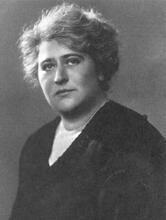
In 1933, Louise Waterman Wise founded the Women’s Division of the American Jewish Congress. During the 1930s and 1940s, members of the Women’s Division dedicated themselves to helping the victims of Nazi aggression in Europe. After 1948, AJCongress women turned their energies toward the new State of Israel, sending aid and eventually sponsoring tours for AJCongress members. The Women’s Division continued to advocate for civil rights and women’s rights in the United States and worked to preserve Jewish American culture until the division was discontinued after approximately fifty years. The AJCongress’s support for women’s rights and feminism within the Jewish community has continued under the auspices of the Commission for Women’s Equality, which was founded in 1984.
Women in the American Jewish Congress’ Early Years
Women have played an important part in the American Jewish Congress (AJCongress) since the organization was first established after World War I. American Jewish leaders originally convened a Jewish Congress in December 1918 in order to represent the interests of the war-torn Jewish communities of Eastern Europe at the postwar peace conference. Although AJCongress organizers hoped to create a vehicle of American Jewish unity, from the outset the AJCongress movement drew its strongest support from the ranks of American Zionism and from within the Eastern European immigrant community. This constituency probably contributed to the AJCongress’s acceptance of women’s involvement. While women in the more established and genteel German Jewish community tended to conform to the same model of middle-class domesticity as their non-Jewish counterparts, many Jewish women from Eastern Europe arrived in the United States with a tradition of active participation in the marketplace, the family economy, and the politics of the Jewish labor movement.
The leadership of the AJCongress also helped to encourage women’s participation. Fully committed to the democratic idealism of progressive politics, AJCongress leaders such as Rabbi Stephen S. Wise and Louis D. Brandeis were strong supporters of women’s rights, especially female suffrage. Moreover, as champions of greater democracy in Jewish communal life, AJCongress advocates could not have excluded women without provoking accusations of hypocrisy. These commitments were evident during the election of Jewish Congress delegates in 1917, in which Jewish women enjoyed the right to vote and to run as candidates—three years before American women gained the unrestricted right to vote under the Nineteenth Amendment.
The original American Jewish Congress was disbanded in 1920, after receiving the report of its delegation to the peace conference in Versailles. Immediately thereafter, the organization was reestablished on a permanent basis under the leadership of Stephen S. Wise. During the 1920s, the AJCongress devoted most of its modest resources to aiding Eastern European Jewry and advancing the Zionist cause.
Founding of the Women’s Division
field_section_text_value
The State of Israel
field_section_text_value
Civil Rights and Civil Liberties
field_section_text_value
Peace Efforts
In conjunction with its commitment to civil liberties, the Women’s Division of the American Jewish Congress maintained a long tradition of involvement in issues of peace and international relations. Like their counterparts in the AJCongress’s general division, Women’s Division members were stalwart supporters of the United Nations. Women’s Division representatives worked closely with the American Association for the United Nations and lobbied the United States Government to ratify various UN treaties and conventions, especially those that promised to protect human rights. During the 1960s and 1970s, the Women’s Division helped to organize letter-writing campaigns against nuclear testing, the arms race, and the antiballistic missile program, and urged that tax dollars allocated for nuclear weapons development be redirected toward education and other domestic social programs. At the same time, AJCongress women became increasingly concerned about the persecution of Jews in the Soviet Union. Beginning in the mid-1960s, Women’s Division leaders and other AJCongress officials took an active part in conferences, protest rallies, and mass meetings designed to focus attention on Soviet antisemitism. In cooperation with other organizations, the Women’s Division pressured the United Nations to consider Soviet antisemitism as a human rights issue.
Their commitment to international peace and human rights prompted many AJCongress women to become vocal opponents of the war in Vietnam. Beginning in the mid-1960s, the Women’s Division issued a series of resolutions calling for peace. Members of the Women’s Division, including Jacqueline K. Levine, who chaired the AJCongress’s National Peace Committee, played an important part in the agency’s antiwar efforts. Leaders of the Women’s Division urged AJCongress members to write letters to President Lyndon B. Johnson, members of Congress, and United Nations ambassador Arthur Goldberg protesting the bombing campaigns in Vietnam and calling for an end to the war. In 1967, the Women’s Division collaborated with the Americans for Democratic Action and SANE in a petition drive demanding peace negotiations. Women’s Division members, including the organization’s top leadership, took part in numerous antiwar demonstrations throughout the duration of the war.
Women’s Equality
field_section_text_value
Jewish Identity
Throughout the postwar period, AJCongress women worked to sustain Jewish identity and culture. During the 1940s and 1950s, the AJCongress sponsored studies to determine the most effective methods for helping Jewish children to develop psychologically sound self-images despite the presence of antisemitism in American culture. Programs developed by the Women’s Division emphasized mothers’ responsibility for transmitting Jewish values to their children. Members of local chapters organized study groups, holiday parties, music festival,s and other special activities dedicated to celebrating and imparting Jewish history and culture. Even as they became more active in the broad social movements of the 1960s and 1970s, AJCongress women confirmed their long-standing commitment to Jewish continuity. In the late 1960s, the Women’s Division, the AJCongress’ Commission on Jewish Affairs, and the Herzl Institute cosponsored a School for Jewish Parent Education, one of several programs designed to stem the tide of assimilation among Jewish youth by providing instruction in Jewish religion, history, music, and art.
The End of the Women’s Division and Beyond
field_section_text_value
Alperin, Michele. “An Image of Israel: Jewish Feminists Discuss Ms. Magazine vs. American Jewish Congress.” Bridges, Vol. 13, No. 2 (Autumn, 2008): 4-19.
Baum, Charlotte, Paula Hyman, and Sonya Michel. The Jewish Woman in America. New York: Dial, 1975.
Cohen, Steven M., Susan Dessel, and Michael Pelavin. “The Changing (?) Role of Women in Jewish Communal Affairs: A Look into the UJA.” In The Jewish Woman: New Perspectives, edited by Elizabeth Koltun. New York: Schocken, 1976.
EJ, s.v. “American Jewish Congress” and “Wise, Stephen Samuel”.
Fishman, Sylvia Barak. A Breath of Life: Feminism in the American Jewish Community. New York: Free Press, 1993.
Frommer, Morris. “The American Jewish Congress: A History, 1914–1950.” 2 vols. Ph.D. diss., Ohio State University, 1978.
Glanz, Rudolph. “The Eastern European Jewish Woman.” In The Jewish Woman in America: Two Female Immigrant Generations, 1820–1929. Vol. 1. Ktav, 1976.
Katz, Elizabeth D. “Racial and Religious Democracy”: Identity and Equality in Midcentury Courts. Stanford Law Review, Vol. 72 (June 2020): 1467-1579.
Kuzmack, Linda Gordon. Woman’s Cause: The Jewish Woman’s Movement in England and the United States, 1881–1933. Columbus, OH: Ohio State University Press, 1990.
Marcus, Jacob Rader. The American Jewish Woman: A Documentary History. Ktav, 1981.
Mohl, Raymond A. “Some of Us Were There before Betty: Jewish Women and Political Activism in Postwar Miami.” In A Jewish Feminine Mystique? Jewish Women in Postwar America, edited by Rachel Kranson, Shira M. Kohn, and Hasia R. Diner, 13-30. New Brunswick: Rutgers University Press, 2010.
Pogrebin, Letty Cottin. Deborah, Golda, and Me. New York: Crown, 1991.
Sheramy, Rona. “There are Times When Silence is a Sin”: The Women’s Division of the American Jewish Congress and the Anti-Nazi Boycott Movement. American Jewish History, Vol. 89, No. 1 (March 2001): 105-121.
Svonkin, Stuart. “Jews Against Prejudice: American Jews and the Intergroup Relations Movement from World War to Cold War.” Ph.D. diss., Columbia University, 1995.
Urofsky, Melvin I. A Voice That Spoke for Justice: The Life and Times of Stephen S. Wise. Albany: SUNY Press, 1982.
Waldman, Lois. Telephone interview with Stuart Svonkin, August 29, 1995.
Women’s Division of the American Jewish Congress. Papers. American Jewish Historical Society, Waltham, Mass.
Zucker, Bat-Ami. “Frances Perkins and the German-Jewish Refugees, 1933-1940.” American Jewish History, Vol. 89, No. 1 (March 2001): 35-59.
More Like This

Double your impact to amplify Jewish women’s stories—
All gifts matched up to $35,000
Before you close this article, please consider supporting the Jewish Women’s Archive and uplifting Jewish women’s voices.
At JWA, we preserve the voices of Jewish women and gender-expansive people past and present, share them freely with millions online, and empower a new generation of Jewish feminists to lead with courage, creativity, and conviction.
But none of this happens without you. JWA is an independent nonprofit— we rely on people, like you, who believe that history belongs to all of us and that the voices of Jewish women must remain powerful, and heard.
This month, a generous JWA board member will match every gift dollar for dollar—up to $35,000—through June 30. Your contribution goes twice as far right now.
Every contribution—no matter the size—helps us document, teach, and inspire through Jewish women’s stories.
It takes less than a minute to make a difference.
Thank you for being a part of the JWA community,
Judith Rosenbaum, CEO

