

Young Women's Hebrew Association

The immediate precursor of the Young Women’s Hebrew Association movement was the participation of women in the life of the Young Men’s Hebrew Association in the nineteenth century. A truly independent women’s association did not appear until after the turn of the twentieth century, when a new YWHA was established in New York City in early 1902. Its principal founder and guiding spirit was Bella Unterberg. From the start, its primary aim was to provide social recreational activities for Jewish working girls, and it was an immediate success. The essential factor setting the new YWHA apart from the YMHA was its pronounced Jewishness.
Background
field_section_text_value
Foundations and Development of YWHA
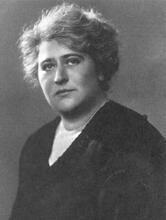
A truly independent women’s association did not appear until after the turn of the century, when a new YWHA was established in New York City in early 1902. Its principal founder and guiding spirit was Bella Unterberg (née Epstein), the wife of shirt manufacturer and Jewish philanthropist Israel Unterberg. Born in 1868 to a Russian Jewish immigrant family (her father had arrived in the United States in 1855 and fought in the Civil War), Unterberg received both a New York City public school education and a sound Jewish upbringing. As a young woman in her twenties, she was profoundly affected by the efflorescence of Jewish women’s social activism during the 1890s. Supporting and supported by the parallel efforts of her husband, Unterberg became a communal leader in her own right, directing campaigns for the Ladies’ Fuel and Aid Society and the Women’s Committee of the Council for National Defense. But it was the YWHA that became her foremost concern and “favorite child.” She became so closely identified with the YWHA, in fact, that her biographer could quite rightly state: “The story of the YWHA is from the beginning the story of Mrs. Unterberg, its record Mrs. Unterberg’s record, its triumphs and achievements, her triumphs and achievements.”
The institution had its beginnings in a meeting called by Unterberg on February 6, 1902, and held in her home at 143 West 77th Street. The eighteen women present elected Unterberg as president, Mrs. Henry Pereira Mendes as vice president, and Mrs. Simon Liebovitz as treasurer. Mendes was the wife of the Synagogue cantorhazzan of the Spanish and Portuguese synagogue, Shearith Israel, and in addition to the vice presidency was elected “religious guide” of the organization. Regarding its mission, Unterberg recommended “that the Society establish an institution akin in character to the YMHA but combining therewith features of a religious and spiritualizing tendencies.” The minutes conclude: “After considerable discussion on the question of the Society’s name, it was agreed that it be called and known as the Young Women’s Hebrew Association.”
So, the new institution would be modeled after the YMHA as a community center dedicated to the uplift—both social and spiritual—of young Jews. In Unterberg’s view, the best way to reach young people was “by thoroughly fraternizing and associating with them and by placing before them opportunities of pleasant and refined social pleasures to attract them gradually to better, nobler and more spiritual ideals.” By the beginning of 1903, the YWHA had rented a building at 1584 Lexington Avenue and soon established itself as a vital community center in the burgeoning Jewish neighborhood of Harlem. From the start, its primary aim was to provide social recreational activities for Jewish working girls. As such, it was an immediate success, recording a total attendance of over twenty-one thousand in its first year alone. Unterberg soon recognized the need for larger quarters and in 1906 rededicated an expanded and renovated facility. The building could now house eighteen female residents and would henceforth become a boarding home as well as a community center. At the dedication, Unterberg asked those assembled: “Can you imagine doing a greater good than supplying hundreds of hard-working girls with a chance of bettering their condition and of helping them, in many cases, from a condition of want and necessity to a place in the world where they can become independent and self-supporting?” Under her beneficent direction, the new YWHA was a kind of social settlement house for young working Jewish women.
Differences From YMHA
field_section_text_value
 view larger
The swimming pool of the Young Women's Hebrew Association of New York opened in 1916 and played a major part in promoting sport and physical activities for working girls and women.
Institution: 92nd Street Y, New York
view details view larger
Reformers believed that women needed physical health to fulfill domestic roles and offset the negative influence of unsanitary urban conditions. Physical exercise was the answer, as demonstrated by this 1914 photograph of an exercise class at the Young Women's Hebrew Association in New York City.
Institution: 92nd Street Y, New York
view detailsAdditional amenities included “musical salons” held on Sunday evenings and weekly dances for young women and men on the outdoor roof garden, which proved to be especially popular. The roof was also used during the summer for day care programs for “anemic and cardiac children, and the children of poor families.” The YWHA also sponsored summer camping, including hiking, canoeing, and all manner of sporting activities. Back in the city, athletics was fostered in classes in swimming, tennis, fencing, and so on. Dance was especially popular, being offered in several varieties. An employment bureau was provided for young women in need of jobs, and during World War I, the YWHA cooperated extensively with numerous war relief efforts. Finally, the earlier emphasis on immigrant adjustment was retained but from a more sympathetic point of view: “An important work to which a great deal of attention has been paid is the formation of Americanization Classes for Aliens, to help lessen the tragedy in the social evolution of the immigrants.”

Goldwasser, I.E. “The Work of Young Men’s Hebrew and Kindred Associations in New York City.” Jewish Communal Register (1917).
Israel and Bella Unterberg—A Personal and Communal Record (1932); Kaufman, David. “The YMHA as a Jewish Center.” In “ ‘Shul with a Pool’: The Synagogue Center in American Jewish Life, 1875–1925.” Ph.D. diss., Brandeis University, 1994.
Ninety-Second Street Y. Archives. Record group 5, Young Women’s Hebrew Association, NYC.
Rabinowitz, Benjamin. “The Young Men’s Hebrew Associations,” PAJHS 37 (1947).
More Like This

Double your impact to amplify Jewish women’s stories—
All gifts matched up to $35,000
Before you close this article, please consider supporting the Jewish Women’s Archive and uplifting Jewish women’s voices.
At JWA, we preserve the voices of Jewish women and gender-expansive people past and present, share them freely with millions online, and empower a new generation of Jewish feminists to lead with courage, creativity, and conviction.
But none of this happens without you. JWA is an independent nonprofit— we rely on people, like you, who believe that history belongs to all of us and that the voices of Jewish women must remain powerful, and heard.
This month, a generous JWA board member will match every gift dollar for dollar—up to $35,000—through June 30. Your contribution goes twice as far right now.
Every contribution—no matter the size—helps us document, teach, and inspire through Jewish women’s stories.
It takes less than a minute to make a difference.
Thank you for being a part of the JWA community,
Judith Rosenbaum, CEO

