Feminism

Content type
Collection

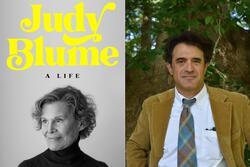
Episode 141: The Quiet Radicalism of Judy Blume

For generations of readers, Judy Blume's novels made growing up feel less lonely. In this episode, Judith Rosenbaum talks with Mark Oppenheimer, author of a new biography of Blume, about their favorite Blume titles, what’s Jewish about her work, and why her novels are radical in ways people often overlook. Throughout the episode, listeners share what Judy Blume's books mean to them.

Episode 140: A Jewish Iranian Expat Watches the War Unfold

It is a tense moment in the war between the United States and Israel, and Iran. A temporary ceasefire is set to expire, and it is unclear whether diplomacy will resume or violence will escalate. Roya Hakakian is a writer, journalist, and political commentator and the author of Journey from the Land of No, a memoir about growing up Jewish in Tehran during the Iranian Revolution. She and her family fled Iran for the United States in 1985. In this episode of Can We Talk?, Roya and Nahanni discuss what it’s been like for her to watch the conflict unfold, her hopes for the Iranian people, and what Western feminism can learn from Iranian women.

Paula Brown Doress-Worters

Working with Paula was always a joy. She was witty, hard-working, playful, and always so thoughtful. I continue to admire how she helped so many better understand the injustices we all face by drawing from her own and others’ lived experiences. 

A New Look at RBG

In the years since her death, Ruth Bader Ginsburg has been remembered as a feminist icon and, more recently, a figure some blame for the Court's sharp rightward turn, the fall of Roe v Wade—even the decline of American democracy. In this episode of Can We Talk?, we take a new look at RBG’s legacy. Actor Michelle Azar, who brings Ginsburg to life in the one-woman show All Things Equal, talks about changing audience reactions in a moment of deep political and legal upheaval. Then, journalist and Supreme Court expert Dahlia Lithwick dissects the stories we tell about Ginsburg—from the “Notorious RBG” phenomenon to the backlash that followed her death—and explores what those narratives get right, and what they miss. Together, we dig into Ginsburg’s legal strategy, her critiques of Roe, and the enduring impact of her commitment to equality and civility.

Micaela Feldman/Mika Etchebehere

Micaela Feldman, known primarily as “Mika Etchebehere/Etchebéhère,” was a Spanish-language writer who also published in French, bearing witness to several major political events and intellectual debates of the twentieth century in Argentina and Europe. In particular, she played a prominent role in the Spanish Civil War as the captain of a revolutionary militia fighting against Francisco Franco’s and the Falange’s fascism. She rose to wider fame in 1976 with the publication of her autofiction Ma guerre d’Espagne à moi/Mi guerra de España.

Episode 137: Word of the Week: Zaftig

The word zaftig has been used to describe everyone from 1930s burlesque dancers to Marilyn Monroe to buxom bubbies. But what does it really mean? Is it only for women? And is it a compliment or an insult?
Yiddish-English dictionary editor Gitl Schaechter-Viswanath helps answer these questions in our latest "Word of the Week" episode. Comedian Judy Gold, Talmud explainer Miriam Anzovin, and writer Lizzie Skurnick also share their takes.

Alicia Partnoy

Alicia Partnoy, a survivor of Argentina’s so-called “Dirty War” (1976-1983), is an Argentine author, activist, and scholar who lives in Los Angeles, California. Her best known work is The Little School: Tales of Disappearance and Survival, which was introduced as evidence in the trials against the perpetrators in charge of the secret detention camps in her hometown and in the South of the country. 

Women's Liberation Movement Protest 1970

From ‘Bread and Roses’ to ‘Raises and Roses’

Marlo Dabareiner

It’s our responsibility as Jews, and as women, to be activists. The chain of activism that stretches back to my great-grandmother will continue with my children. 

Topics: Feminism

Jewish Women and the Yippie Movement

The Youth International Party (YIP, or Yippie!) was best known for its role in the protests at the 1968 Democratic National Convention in Chicago. The Yippies, whose membership included many Jewish feminists, merged counterculture with New Left politics by staging theatrical direct actions in protest of state violence.

Episode 136: How Jewish Women Shaped SNL

From "Jewess Jeans" to "Coffee Talk" to "Jacob the Bar Mitzvah Boy," Jewish women have left their mark on Saturday Night Live as cast members and as characters. In this episode of Can We Talk? we look at the evolving role of Jewish women on the show over its 50 years on TV. Original cast member Laraine Newman talks about how her Jewish identity influenced the characters she played, and how the show reflects changing attitudes about being Jewish. Also, pop culture scholar Jennifer Caplan helps us dissect some iconic sketches—some of which have aged better than others.

Fight Like A Girl Protest Sign

How My “Wild Feminist” T-Shirt Made Me Rethink My Position in the Jewish Community

Marlo Dabareiner

As I read my classmate’s message to me, I was reminded of the same debate that I had been having in my head about what feminism should or shouldn’t look like.

Persephone Bookstore in Bath, UK

Persephone Books is Keeping Twentieth Century Women's Stories Alive

Zia Saylor

Based on the Greek mythology of Persephone, this bookstore focuses on bringing previously hidden stories back into the light.

Topics: Publishing, Feminism
Naomi Beinart and Classmates and Women's Hall of Fame event

The Fractions of Myself

Naomi Beinart

 I am not just one of my identities, I am all of them, shaped by every box I've had to circle, every affinity space I’ve been a part of.

Bonus Episode: Remembering Susan Stamberg

Public radio icon Susan Stamberg died on October 16, 2025, at the age of 87. In this special episode, we pay tribute to Susan by listening back to our 2018 interview in which she discusses her New York accent, how early NPR audiences responded to hearing a woman deliver the nightly news, and what she listens for in a broadcast voice. The interview was part of an episode about women's voices in broadcasting, called "Breaking the Sound Barrier."

Headshot of Mia Sherin

7 Questions for Sex and Dating Writer Mia Sherin

Sarah Groustra

JWA sat down with sex and relationship writer Mia Sherin.

Topics: Feminism, Writing

Bianca Eshel-Gershuni

Bianca Eshel-Gershuni (1932-2020) was a pioneering Israeli sculptor and jewelry designer known for challenging artistic conventions and redefining the boundaries between craft and fine art. In contrast to the dominant minimalist, conceptual, and abstract tendencies of her time, her work proposed an aesthetic of abundance—a profusion of materiality, color, narrativity, and personal expression—paving the way for generations of artists exploring gender, kitsch, and popular culture.

Selina Solomons

Selina Solomons was a turn-of-the-twentieth-century activist and writer, best known for her leadership role in the 1911 suffrage campaign that granted California women the right to vote. Solomons belonged to a prominent Jewish American family and spent her life in the San Francisco Bay Area. She employed multiple genres in advocacy of women’s rights, including speeches, poetry, drama, short fiction, and a manual-cum-suffrage history titled How We Won the Vote in California

Jacqueline Shohet Kahanoff

Jacqueline Shohet Kahanoff was an Egyptian-Jewish essayist, novelist, journalist, and literary critic. She is best known for promoting “Levantinism,” a social model for coexistence in Israel—a concept she articulates most fully in her “A Generation of Levantines” essays (1959). Her writings have inspired generations of Sephardi and Mizrahi writers in Israel.

Episode 128: Orthodox Women Rabbis Crack the Stained-Glass Ceiling

In June 2025, the thirteenth cohort of Orthodox women rabbis graduates from Yeshivat Maharat, the first Orthodox yeshiva in North America dedicated to ordaining women. In this episode, we look at the status of the so-called stained-glass ceiling for Orthodox women rabbis as they seek pulpit positions, and we talk about the unique challenges for women’s leadership in the Orthodox movement. We speak with Rabbanit Leah Sarna, Maharat Ruth Balinsky Friedman, and Yeshivat Maharat’s founder and president, Rabba Sara Hurwitz.

Episode 127: The Scribe and Her Quill

For centuries, writing a Torah scroll was a sacred task reserved for men. But a couple of decades ago, a handful of women decided to pick up the quill—without waiting for permission—and paved the way for other women to do the same. In this episode of Can We Talk?, we hear from women who write Torah scrolls and explore what it means to inscribe yourself into tradition.

Collage of the Kotel with a hand touching the wall and stars around.

Praying for a Feminist Future at the Kotel

Amia Kaplun

Learning about the Women of the Wall made me realize that my discomfort at the Kotel was part of a larger, ongoing struggle for religious equity. 

Collage of Diane Von Furstenberg

The Feminine Power of Diane Von Furstenberg’s Wrap Dress

Dany Dorsey

When I put my wrap dress on, it is a continuation of Von Furstenberg's legacy of empowerment. 

Collage of Blu Greenberg with a drawn asterisk in the background

The Contradiction of Orthodox Feminism

Lea Davis

Blu Greenberg for showed me that Orthodoxy can be more inclusive for women and other underrepresented groups.

Elaine Showalter

Elaine Showalter is a pioneer of feminist criticism. She is best known for inventing the term “gynocriticism,” a new theoretical framework that argued that that women had been using the language of men for far too long and that they needed to develop a new critical approach to better understand the female subcultures that operate within male-dominated power structures. 

Collage of the Seattle skyline including the Space Needle. There is a Jewish star in the sky with water colors.

Karen Treiger: An Inspiring Jewish Change-Maker

Yona Pianko

In the Seattle Jewish community, Karen Treiger is known for fighting for women’s involvement in Jewish ritual.

Donate

Help us elevate the voices of Jewish women.

donate now

Get JWA in your inbox

Read the latest from JWA from your inbox.

sign up now