

Alicia Partnoy

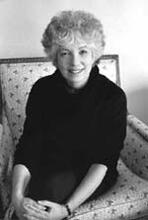
Alicia Partnoy was born in Bahía Blanca, Argentina, in 1955. She lived through one of the darkest chapters in the nation's history and emerged as a survivor of the infamous so-called “Dirty War”, where state-sponsored terrorism and human rights abuses ravaged the country between 1976 and 1983. Through her writing and activism, Partnoy not only bears witness to the atrocities of this era but also embodies the importance of remembrance, justice, and reconciliation: she provides generous insights on exile, solidarity, and the enduring impact of her voice as a witness and survivor of Argentina's dictatorship. Now as a professor at Loyola Marymount University in Los Angeles, CA, she continues to be active in various roles related to human rights advocacy, literature, and education.
They cut off my voice/so I grew two voices/in two different tongues/
my songs, I pour./They took away my sun/two brand new suns/like resplendent drums/I am playing, today, I am playing./
Isolated I was, from all my people/my twin songs are returning/like in an echo, echo, echo/and despite the darkness of this exile/my poem sets fire against a mirror.
"Song of the Exiled," by Alicia Partnoy
Family History


Born on February 7, 1955, into a society that seemed always on the brink of dictatorship, Alicia Partnoy experienced firsthand the escalating political tensions that ultimately culminated in the military coup of 1976. As the country descended into chaos, Partnoy found herself caught in the crosshairs of state repression, her life forever altered by the horrors of the state terror.
Partnoy's family history is deeply intertwined with narratives of resilience and resistance.
Her paternal grandfather, Moise Aron Portnoi, arrived in Argentina as an immigrant from Bessarabia in 1921, at which time immigration officers arbitrarily changed his name to Mauricio Partnoy. This alteration was emblematic of the chaotic processing many newcomers faced during that period. In the small town where he settled, he was affectionately known as Don Moise, while to Alicia he was always Zeide (Grandpa) Mauricio. Partnoy’s maternal grandmother, Dora Aronson de Schoj, arrived from Crimea and her grandfather Naum Schoj from Kriboy Roj (Kryvyi Rih) from Russia.

Partnoy’s family's lineage bears scars of persecution and survival. Moise, to avoid the harsh antisemitic treatment in his homeland, had self-inflicted injuries—a perforated eardrum to evade military conscription, echoing his father's similar act on his eye. These actions underscored the lengths to which Jews went to protect themselves. Partnoy later discovered the harrowing fate of their relatives in Hotin, Bessarabia, where Nazi followers executed those who remained.
Partnoy inherited not just her family's resilience but also a commitment to justice and storytelling. Her grandmother, Bubbe (Grandma) Dora Aronson, deeply influenced her with stories of their Crimean homeland, where amidst the idyllic tales lay unspoken reasons for their sudden departure. These familial legacies of survival and advocacy shaped Partnoy’s life and work, inspiring her to confront injustice, bear witness to human rights abuses, and use her words to effect meaningful change, both in Argentina and internationally.
Partnoy’s mother, Raquel Schoj de Partnoy, was first generation born in Argentina, in Rosario, in 1932. She is a painter, well known in Argentina, and later in life became a poet. At 93, her third poetry collection was published in 2025. Partnoy’s father, Salomón Partnoy, an accountant, college professor, and administrator, died in 2023 at almost 95. After her father’s retirement, in 1994, her parents moved to join Partnoy in Washington, D.C. He published two books of memoirs and short stories, written in the United States. Partnoy’s younger brother was an artist. Deeply affected by the disappearance of Partnoy and her husband and the repressive regime in the country, he developed a mental illness and died by suicide at 25. He is buried in the Jewish cemetery in Bahía Blanca.
Early Years and Young Adulthood
Partnoy's early years and adolescence were shaped by the political turbulence and social upheaval that characterized Argentina in the mid-twentieth century. Born in Bahía Blanca, a city in the province of Buenos Aires, she grew up in a society marked by growing political tensions and economic disparities.
Partnoy started to write poetry at around eight years old. She loved reading, writing, and literature but wanted to become a physician or a psychologist. However, she fell in love with Carlos Sanabria, her first husband, and, as there was no medical school in her hometown and she didn’t want to be far from him, she studied literature at the University Nacional del Sur (in Bahía Blanca) intending to become a high school literature teacher. Years later, in 1987, she obtained her PhD in Modern Languages at The Catholic University of America in Washington, D.C.
During Partnoy’s formative years, Argentina was marked by intense political instability, including the emergence of Peronism—a populist movement that polarized the nation—and repeated military coups that disrupted democratic governance. These turbulent shifts fostered a climate of repression and resistance, shaping the country’s deep ideological rifts. Drawn to the ideals of social justice and political activism, Partnoy became acutely aware of systemic oppression through her experiences as a student activist. Inspired by the student movements of the 1960s and 1970s, she became increasingly involved in leftist politics, advocating for the rights of the marginalized and oppressed and witnessing state violence, censorship, and the persecution of dissenting voices. Her idealism was soon met with the harsh realities of authoritarian rule, and her encounters with injustice deeply influenced her commitment to human rights and later shaped her powerful literary and activist responses to Argentina’s brutal dictatorship in the 1970s.
Argentina's Darkest Years: State Terror Under the Military Junta
field_section_text_value
Alicia Partnoy: Writer, Witness, and Advocate
Alicia Partnoy is a multifaceted writer, poet, and scholar whose work spans genres, languages, and disciplines. Her writing reflects her experiences as a political prisoner during Argentina’s Dirty War and her subsequent life in exile. Though she writes primarily in her native Spanish, many of her works have been translated into English, French, Bengali, and Hebrew, extending their reach to a global audience. Her literary output includes poetry collections such as Flowering Fires / Fuegos florales, Revenge of the Apple / Venganza de la manzana, and Little Low Flying / Volando bajito, as well as the memoir Happier as a Woman: Transforming Friendships, Transforming Lives, co-authored with Martina Giselle Ramírez.
Partnoy’s writing is distinguished by its testimonial power, fusing personal narrative with poetic expression to convey both the horror of political repression and the resilience of the human spirit. Her works serve as acts of resistance and remembrance, bearing witness to the atrocities committed during Argentina’s military dictatorship. She has also contributed essays and scholarly articles to collections such as Women Writing Resistance: Essays on Latin America and the Caribbean and Representing Humanity in an Age of Terror, establishing her as a vital voice in Latin American literature and human rights discourse.


Among her most influential works is The Little School: Tales of Disappearance and Survival (1986), a nonfiction account that stands as a powerful testimony to the crimes of the Argentine junta. Drawing on her own imprisonment, Partnoy exposes the mechanisms of state terror and the dehumanizing conditions of secret detention centers. The book, later used as evidence in human rights trials in Argentina, combines vivid prose and haunting imagery to honor the disappeared and confront the culture of silence that long surrounded the dictatorship’s crimes. In giving voice to the voiceless, Partnoy transforms testimony into empowerment, urging survivors to reclaim their agency and demand justice.
Once in the United States, Partnoy became deeply involved in human rights advocacy. She worked with Amnesty International, serving as press secretary for the Committee in Solidarity with the Argentine People (COSPAR) in Seattle, and later sat on Amnesty’s Board of Directors (1992–1993), where she served as Vice-Chair. In 1993, she co-founded and co-chaired the Survivors Committee with Palestinian activist Mubarak Awad, lobbying at the United Nations International Conference on Human Rights in Vienna for the creation of an international court of justice. The committee’s “Survivors Statement,” signed by hundreds of survivors including Elie Wiesel, Adolfo Pérez Esquivel, and the Dalai Lama, became a landmark declaration of solidarity and resistance.

Partnoy has continued this work through multiple initiatives, serving on the Boards of PEN West and the LGBTQ organization Roadwork. In 2003, she co-founded Proyecto VOS (Voices of Survivors), which brings survivors of state violence and relatives of femicide victims to speak at U.S. universities. As of 2025, she still serves as its president. From 2020 to 2022, she co-founded and chaired INOVAS (the International Network of Victims and Survivors of Serious Human Rights Abuses), further extending her lifelong commitment to justice and survivor advocacy.
Partnoy regards bearing witness as both an ethical imperative and a moral duty—an act that transcends individual suffering to preserve collective memory. For her, testimony functions not only as documentation but also as resistance against forgetting and denial. It calls for solidarity, which she views as a transformative force that binds people through shared responsibility and compassion. Solidarity, in Partnoy’s vision, is not merely empathy but a call to action: to stand with the marginalized, amplify their voices, and work collectively toward justice.

Through her literary and activist work, Partnoy continues to illuminate the ongoing struggle for truth, accountability, and human dignity. Her voice—shaped by survival, courage, and conviction—resonates across borders and generations, reminding us of democracy’s fragility and the enduring necessity of resistance.
Connection to Jewishness
Partnoy's connection to Judaism is deeply intertwined with her identity and experiences as a survivor of Argentina's dictatorship of 1976-1983. While it may not be always explicitly explored in her writings, it undoubtedly informs her perspective as a survivor, activist, and advocate for justice.
Judaism, as both a religious and cultural identity, carries with it a legacy of resilience in the face of adversity. The Jewish tradition of bearing witness to injustice and striving for justice aligns closely with Partnoy's own commitment to truth-telling and advocacy for human rights. Her dedication to confronting the atrocities of the past and working towards a more just and compassionate society also reflects the Jewish concept of tikkun olam, or repairing the world, which is central to Jewish ethics and values. By sharing her story and amplifying the voices of the disappeared and those of other victims and survivors worldwide, she embodies the spirit of tikkun olam, seeking to heal the wounds of history and ensure that the horrors of the so-called “Dirty War” are never forgotten.
In her doctoral dissertation, as well as in a 2005 article, Partnoy mentions the connections between the poetry written by victims and survivors in Latin America (Argentina, Chile, and Uruguay) and the work produced in ghettos and concentration camps during the Holocaust. Moreover, Rabbi Marshall Meyer, a member of the National Commission on the Disappearance of Persons (CONADEP) who provided spiritual support for Partnoy and her compañeros at the Villa Devoto prison and took messages to their families, was one of the first people to write a supportive review of The Little School. The concept of collective memory, deeply ingrained in Jewish culture, resonates with Partnoy's own efforts to preserve the memory of the victims of state terror.
Partnoy refers specifically to her Jewishness in The Little School, in which her Catholic compañeros comment on her Jewish identity and she makes fun of the ineptness of her torturers when they threaten her with Nazi references. She talks about how her big nose allowed her to see under the blindfold.
Conclusion

Alicia Partnoy’s biography stands as a critical testament to the enduring legacy of Argentina’s so-called “Dirty War” and underscores the necessity of bearing witness to historical trauma. Her life and work reveal how testimonial literature can function simultaneously as a form of personal catharsis and as a political act of resistance against state-sponsored violence. By recounting her experience as a political prisoner and exile, Partnoy exposes the systematic mechanisms of repression and the enduring effects of enforced silence within Argentine society. Her work on testimony directly challenges the culture of impunity that followed the dictatorship, asserting memory as both an ethical and political imperative.
As a survivor and human rights advocate, Partnoy transforms individual suffering into a collective narrative that demands recognition and accountability. Her works—particularly The Little School—illustrate how literary expression can serve as a site of memory and justice, bridging the gap between personal experience and national history. In doing so, she contributes to a broader transnational discourse on trauma, exile, and human rights, situating Argentina’s history within a global framework of post-dictatorial memory practices.
Ultimately, Partnoy’s legacy reinforces the essential role of testimony in confronting historical violence and preserving democratic values. Her voice exemplifies how survivors’ narratives can transcend geographical and temporal boundaries, reminding contemporary readers of the ongoing relevance of her call for truth, justice, and the protection of human dignity.
Selected Works by Alicia Partnoy
Books
“Infatuations.” “Metejones.” “Remedios.” “Remedies.” Poems. Translated by Julia Horton. In Soñando / Cantando: Latina Poetry across the Americas, edited by Norma Elia Cantú and Judith Santopietro. San Antonio, Texas: Trinity University Press, 2024.
La Escuelita-Relatos testimoniales. Santa Rosa and Bahía Blanca, Argentina: Siete Sellos Editorial Cooperativa and Hemisferio Derecho Ediciones, 2024.
La Escuelita: Sipurei 'Edut. Translated into Hebrew and forwarded by Yael Dekel and Eran Tzelgov. Beer-Sheva: Ra'av, 2020.
Happier as a Woman. Transforming Friendships, Transforming Lives. With Martina Giselle Ramirez. New Jersey: Cleis Press, 2019.
Ecos lógicos y otros poemares. El Salvador: Proyecto Editorial La Chifurnia, 2019.
Venganza de la manzana. Bahía Blanca: Hemisferio Derecho Ediciones, 2010, 2016.
Flowering Fires-Fuegos florales. Translated by Gail Wronsky. Silver Spring, Md.: Settlement House Press, 2014.
The Little School. Tales of Disappearance and Survival in Argentina. San Francisco: Cleis Press, 1986, 1998; London: Virago Press, 1987.
Edited by Alicia Partnoy
Para mi hija Silvia / For My Daughter Silvia. Evangelina Arce. Edited, prefaced, and translated in collaboration with LMU students. Los Angeles, CA: AVEditor, 2017.
Las ramas hacia el mundo. Antología familiar. Bahía Blanca: Hemisferio Derecho Ediciones, 2016.
Call Me Libertad: Poems Between Borders. With Christina Fialho and Kristina Shull. San Francisco: CIVIC, 2016.
You Can’t Drown the Fire: Latin American Women Writing in Exile. Pittsburgh: Cleis Press, 1988-London: Virago Press, 1989.
Translated by Alicia Partnoy
So Quick Bright Things/Tan pronto las cosas. Gail Wronsky. Los Angeles: What Books Press, 2010.
Rio de Sangre. An Opera Libretto. Kate Gale. Los Angeles: Red Hen Press, 2010.
Scholarly publications
“A Community of Solidarity to Chisel out Justice, Photograph the Truth, and Make Molds to Cast Memory.” In Dictators and the Disappeared. Democracy Lost and Restored, edited by Russ Davidson and Leslie Blaugrund Kim, 17-27. Santa Fe, U.S: Museum of New Mexico Press, 2023,.
“In Conversation: Susan Bassnett and Alicia Partnoy talk about Translation, Feminisms and Survival.” Feminist Translation Studies, Vol 1, No. 1 (2024): 6-13.
Appel, Molly Dooley. 2025. “On Willful Learning: Pedagogies of Testimonio in Alicia Partnoy’s The Little School.” College Literature 52, 2 (2025): 143-168. https://dx.doi.org/10.1353/lit.2025.a953858.
Bermúdez-Gallegos, Marta. “The Little School por Alicia Partnoy: el testimonio en la Argentina.” Revista Iberoamericana 56, 151 (1990) 463–476. https://doi.org/10.5195/reviberoamer.1990.4725
Detwiler, Louise A. “The Blindfolded (Eye)Witness in Alicia Partnoy’s ‘The Little School.” The Journal of the Midwest MLA 33/34 (2000): 60–72. https://doi.org/10.2307/1315342
Dunn, Kate. ”Clases de español’: Education and testimonio in the Poetry of Alicia Partnoy.” Bulletin of Hispanic Studies 93, 6 (2016). https://doi.org/10.3828/bhs.2016.41
Ghiggia, María. “Play in Memories of State Terror in Argentina: The Little School by Alicia Partnoy.” Journal of the Midwest Modern Language Association 45, 2 (2012): 187-215 https://doi.org/10.1353/mml.2012.0027.
Hintz, Suzanne S. “Prisons of Silence: The Little School by Alicia Partnoy.” Monographic Review / Revista Monográfica 11 (1995): 316-24.
“In Conversation: Susan Bassnett and Alicia Partnoy talk about Translation, Feminisms and Survival.” Feminist Translation Studies. Inaugural Issue, 2024.
Kaminsky, Amy. K. 1993. “Body/Politics: Alicia Partnoy’s The Little School.” Reading the Body—Politic: Feminist Criticism and Latin American Women Writers. Minneapolis: University of Minnesota Press, 1993: 47-59.
Khokha, Sasha. “This LA Poet Survived Torture and Exile. She’s Got Advice for Californians on How to Stay Resilient.” KQED, March 18, 2025. https://www.kqed.org/news/12030626/this-la-poet-survived-torture-and-exile-shes-got-advice-for-how-californians-can-stay-resilient
Michelson, Seth. “‘Cadáveres que transitan a las semillas’: State Violence and the Aporia of Alicia Partnoy’s Poetry.” Revista hispánica moderna 66, 2 (2013): 159-181. doi:10.1353/rhm.2013.0019
Rama, Cristian. “The reappearance of Alicia Partnoy: History of a survivor’s exile from clandestine detention spaces during the last dictatorship in Argentina (1976-1983). Avances de Cesor (December 2019): 83-103.
Simón, Paula. “Exilio y autotraducción en la narrativa testimonial concentracionaria argentina. El caso de The Little School. Tales of Disappearance & Survival in Argentina, de Alicia Partnoy (1986).” Orbis Tertius XIX, 20 (2014): 29-39.
Spoturno, María Laura. “Ethos colectivo, redes de lucha y prácticas de escritura y (auto)traducción en colaboración: El caso de Revenge of the Apple/Venganza de la manzana, de Alicia Partnoy.” Revista Letral 28 (2022): 46-72. https://doi.org/10.30827/rl.vi28.21366
“When Two Voices are not Enough. A conversation with Amy Kaminsky.” Ford Hall Forum, Suffolk University, March 11, 2021. https://forum-network.org/lectures/when-two-voices-are-not-enough/
“All We Can Rescue of Our Humanity is in Our Art.” Kathmandu Post, March 5, 2019. https://kathmandupost.ekantipur.com/news/2019-03-05/alicia-partnoy-all-we-can-rescue-of-our-humanity-is-in-our-art.html
More Like This
Double your impact to amplify Jewish women’s stories—
All gifts matched up to $35,000
Before you close this article, please consider supporting the Jewish Women’s Archive and uplifting Jewish women’s voices.
At JWA, we preserve the voices of Jewish women and gender-expansive people past and present, share them freely with millions online, and empower a new generation of Jewish feminists to lead with courage, creativity, and conviction.
But none of this happens without you. JWA is an independent nonprofit— we rely on people, like you, who believe that history belongs to all of us and that the voices of Jewish women must remain powerful, and heard.
This month, a generous JWA board member will match every gift dollar for dollar—up to $35,000—through June 30. Your contribution goes twice as far right now.
Every contribution—no matter the size—helps us document, teach, and inspire through Jewish women’s stories.
It takes less than a minute to make a difference.
Thank you for being a part of the JWA community,
Judith Rosenbaum, CEO

