
The Fractions of Myself


The room was stuffy, the kind of air that wraps around your neck like a scarf and tightens with every breath. I knew this room: it was home to my advanced geometry class in ninth grade and health class in 10th. So, in 11th grade, every wrinkle in the walls was familiar.
So were the faces in the room with me. I knew everyone by the sound of their voice and the stomp of their shoes. Those rusty, old Converse that pattered like rain on a Sukkah belonged to the president of the Girl Affinity Space, a senior whom I secretly mimicked in my movements. The thick Doc Martens belonged to the secretary, a junior and one of my good friends. As vice president, I tried to walk professionally, not to intimidate the freshman—although that was a plus—but to show that I took my position seriously. And I did. I looked forward to the jovial space. We met every Thursday at lunch, congregating on the eighth floor to talk about abortion rights and that one creepy English teacher. It was my haven in a world of sexism, and it became a greenhouse for my feminism to grow. I never expected that my place of respite could soon become the seed of stress.
I was the only religious Jew in that space, which meant bringing a new perspective into the atmosphere. I relished having alternate points of view in a feminist space. It canceled out the inevitable alienation that came with being the only one who knew and cared about certain topics, like the Torah and mechitzas. I was raised on a different type of female empowerment; One that used Hashem interchangeably with Steinem. But I never felt that my difference was unwanted. It used to feel isolating, but I’ve found beauty in being the self-appointed Rabbi of the affinity group, and on a larger scale, my entire high school. So, when the intersection of my Judaism and feminism was the topic of discussion, I put my frizzy hair in a ponytail and got ready for the conversation.
We were talking about religion that day. It started innocently, as most train wrecks do. We discussed figures like Judith Plaskow and Fateman Mernissi, both pioneers of inviting gender equality into the sphere of spiritual texts. Someone mentioned their mother’s tradition of modesty, and a few girls laughed, giggling about the absurdity of those outdated values. So, in a sort of nonchalance, I defended the so-called traditional beliefs.
“Modesty is crucial to how I attend synagogue,” I said.
“It signals to my brain that this is a day different from the others, and I appreciate how it makes me feel. I would never shame someone for not adhering to those principles, but it’s what I love, and I don't think it’s so outdated.”
I finished my monologue to an air of silence.
“That’s so sexist,” the secretary said. Modesty is used as an oppressive form of sexism, and she couldn’t believe I was defending it. I agreed in some cases, but for me, it was never about oppression and more about my own form of religion.
“So, what would happen if you wore something immodest to synagogue?” She asked.
“I would probably get judged a little, maybe a few stares,” I admitted.
Her face had contempt written all over it, mirroring the disdainful looks of the other girls sitting quietly in the room. We bickered and argued, throwing out images of women who wear burkas in blistering heat and long skirts in July. Chewing on the idea of choice, the thought of defending something that she described as "inherently unfeminist" was uncomfortable. But the thought of letting someone else define my feminism was worse. Her concrete thoughts of religion being embedded in misogynistic ideals were hard to refute, especially when it was something I too was struggling with.
And, picking at my fingernails, I wondered if it would be easier for me to just denounce my Judaism. It would extinguish the argument, clear my name, and we could all move on, trashing the values I consider fundamental. Or, I could call an emergency Jewish Student Association meeting to discuss the debate that just happened. Whichever option I chose, I had to choose a fraction of myself.
But I couldn’t. That was never an option, and it never will be. I am not just one of my identities, I am all of them, shaped by every box I've had to circle, every affinity space I’ve been a part of. I am my South-African grandmother’s fish cakes, the recipe inherited from her mother, born in Egypt. I am the Brooklyn accent of my grandpa, who refused to buy anything full price and drove the same rustic Volvo for forty years. I am his daughter, who worked at the White House with two kids under five, taking time off, and then going to become a head lawyer at a firm. I am my great-grandmother’s thick, curly hair from the Isle of Rhodes, the eldest of four siblings, and a middle school dropout, still the smartest girl on the block. And I’m my great-grandpa’s Lithuanian nose, broad like a tree trunk.
I couldn’t reduce the roots of my heritage in that room on the eighth floor. Looking back, I pity the girl who couldn’t hold both the feminist and spiritual perspectives in her head. One day, I hope she will accept people for the multifaceted beings they are. But for now, I will keep going to Girl Affinity Space and Jewish Student Alliance, proudly, vocally, and authentically.
This piece was written as part of JWA’s Rising Voices Fellowship.
Double your impact to amplify Jewish women’s stories—
All gifts matched up to $35,000
Before you close this article, please consider supporting the Jewish Women’s Archive and uplifting Jewish women’s voices.
At JWA, we preserve the voices of Jewish women and gender-expansive people past and present, share them freely with millions online, and empower a new generation of Jewish feminists to lead with courage, creativity, and conviction.
But none of this happens without you. JWA is an independent nonprofit— we rely on people, like you, who believe that history belongs to all of us and that the voices of Jewish women must remain powerful, and heard.
This month, a generous JWA board member will match every gift dollar for dollar—up to $35,000—through June 30. Your contribution goes twice as far right now.
Every contribution—no matter the size—helps us document, teach, and inspire through Jewish women’s stories.
It takes less than a minute to make a difference.
Thank you for being a part of the JWA community,
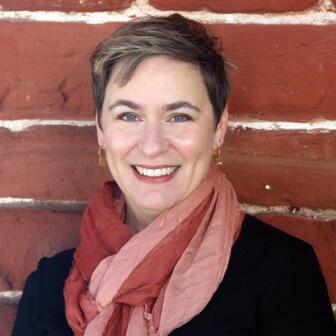
Judith Rosenbaum, CEO