
Jacqueline Shohet Kahanoff
Jacqueline Shohet Kahanoff was an Egyptian-Jewish essayist, novelist, journalist, and literary critic. Born in Egypt, she moved to the United States in 1940, where she pursued higher education. She launched her writing career in the United States, winning a fellowship to support the publication of her novel Jacob’s Ladder (1951). She later relocated to France and in 1954 settled in Israel, where she produced her most influential work. Shohet Kahanoff is best known for promoting “Levantinism,” a social model for coexistence in Israel—a concept she articulates most fully in her “A Generation of Levantines” essays (1959). Her writings have inspired generations of Sephardi and Mizrahi writers in Israel. Although she is best remembered for her work published in Hebrew translation in Israeli journals, Shohet Kahanoff wrote in English and French throughout her career.
Early Life
Jacqueline Shohet was born in Cairo, Egypt, on May 18, 1917. Her mother, Yvonne Chemla, was born in Egypt to a family of Tunisian Jews who owned the Chemla Frères department store in Cairo. Jacqueline’s father, Joseph Shohet, immigrated to Egypt from Iraq with his parents and became a successful cotton trader. Jacqueline grew up in a multilingual household; the family spoke French at home, but her father was most comfortable speaking and reading Arabic. The Shohet family was sufficiently well-off to employ a series of British nannies and governesses in their home to educate Jaqueline and her sister Josette in English.
Education and Early Fiction
Jacqueline attended the Lycée Français in Cairo and in 1935 earned her Baccalaureate—the French national academic qualification taken at the end of high school. In 1938-1939, she studied French law in Cairo, just at the time the mixed courts—the legal system in which French law was practiced in Egypt—were being disbanded. At this time she also began exhibiting her acute social awareness in early pieces she published in Francophone literary journals such as Images. Some light-hearted sketches she published in the late 1930s aimed to accurately represent the experiences of young women in Cairo.
In 1940, Jacqueline married Israel Margoliash, an Jews of European origin and their descendants, including most of North and South American Jewry.Ashkenazi resident of Cairo who held United States citizenship, and she sailed to America. The couple settled in Chicago; Israel lived in residence at the hospital where he trained, while Jacqueline, living on her own, enrolled in secretarial courses at the Central YMCA College and took odd jobs.
In 1942 Jacqeline left Chicago—and her husband—for New York, where she enrolled in Columbia University, earning a BA in History (1944) and an MA in Journalism (1945). She also took courses at the New School, where she circulated with European intellectuals who had found refuge in the United States from the war in Europe, including Claude Lévi-Strauss, Roman Jakobson, Alexander Koyré, and Claude Vigée. Jacqueline became intellectually and romantically involved with Lévi-Strauss at a critical moment in their respective intellectual development.
While in New York, Jacqueline began writing and publishing short stories that reflected her keen attention to ethnographic detail. She would later use the term “sociologically honest” to describe her approach to writing fiction. In 1946, her story “Such is Rachel” won an Atlantic First prize and was published in The Atlantic. She was awarded a Houghton Mifflin fellowship to develop the story into a novel, published as Jacob’s Ladder (1951). These semi-autobiographical works of fiction described the coming of age of a bourgeois Egyptian Jewish girl trying to assert her voice within in her patriarchal Lit. "Eastern." Jew from Arab or Muslim country.Mizrahi family, to wrest her independence from her overbearing British nannies, and to express her solidarity with Egyptian nationalists, even as she recognizes her exclusion from their movement.
Journalism, Essays, and Literary Criticism
field_section_text_value
Response to Peace Treaty with Egypt
In November 1977, Egyptian president Anwar Sadat visited Israel, launching peace negotiations that culminated in the 1979 peace treaty between Egypt and Israel. These developments were closely followed and celebrated by members of the Egyptian Jewish diaspora. In articles published between 1977 and 1979, Shohet Kahanoff expressed her hopes for a warm peace between Israel and Egypt. She sent a copy of From East the Sun to Jehan Sadat, the Egyptian first lady.
Legacy
field_section_text_value
Selected Works by Jacqueline Shohet Kahanoff
In English
Jacob’s Ladder. London: Harvill Press, 1951.
Mongrels or Marvels: The Levantine Writings of Jacqueline Shohet Kahanoff, edited by Deborah Starr and Sasson Somekh. Palo Alto, CA: Stanford University Press, 2011.
In Hebrew
Mi Mizrah Shemesh [From East the Sun]. Tel Aviv: Yariv, 1978.
Ben shene ʻolamot [Between Two Worlds], edited by David Ohana. Jerusalem: Keter, 2005.
Ba-Levant Noladu Kulanu [We were all born in the Levant], edited by David Ohana. Carmel, 2022.
Alon, Ktsiaa, “What Egypt’s Multicultural Past Teaches Us about Israel’s Present,” trans. Shaked Spier. +972 Magazine, December 28, 2014, https://www.972mag.com/what-egypts-multicultural-past-teaches-us-about-israels-present/
Hochberg, Gil Z. “‘Permanent Immigration’: Jacqueline Kahanoff, Ronit Matalon, and the Impetus of Levantinism.” Boundary 2: An International Journal of Literature and Culture 31, no. 2 (2004): 219–43.
Monterescu, Daniel, “Beyond the Sea of Formlessness: Jacqueline Kahanoff and the Levantine Generation.” Journal of Levantine Studies, Vol. 1 (2011). https://levantine-journal.org/product/beyond-the-sea-of-formlessness-jacqueline-kahanoff-and-the-levantine-generation/
Ohana, David. Jacqueline Kahanoff, A Levantine Woman. Indianapolis: Indiana University Press, 2023.
Rejwan, Nissim. “The Levantinism Scare.” In Outsider in the Promised Land: An Iraqi Jew in Israel, 68-90. Austin: University of Texas Press, 2006.
More Like This




Double your impact to amplify Jewish women’s stories—
All gifts matched up to $35,000
Before you close this article, please consider supporting the Jewish Women’s Archive and uplifting Jewish women’s voices.
At JWA, we preserve the voices of Jewish women and gender-expansive people past and present, share them freely with millions online, and empower a new generation of Jewish feminists to lead with courage, creativity, and conviction.
But none of this happens without you. JWA is an independent nonprofit— we rely on people, like you, who believe that history belongs to all of us and that the voices of Jewish women must remain powerful, and heard.
This month, a generous JWA board member will match every gift dollar for dollar—up to $35,000—through June 30. Your contribution goes twice as far right now.
Every contribution—no matter the size—helps us document, teach, and inspire through Jewish women’s stories.
It takes less than a minute to make a difference.
Thank you for being a part of the JWA community,
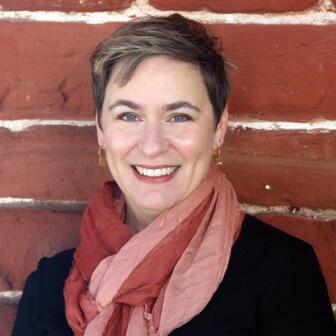
Judith Rosenbaum, CEO