
Julia Horn Hamburger
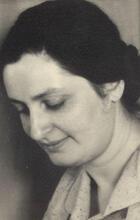
Julia Horn Hamburger dedicated her career to the health and education of women and children through both Jewish and secular organizations. A long-time volunteer, Hamburger helped create the first free kindergarten on the Lower East Side in 1921. She then became founding president of the Children’s Welfare League, which offered health and education services to immigrant children, a post she held until her death. She was also the founding vice president of the Jewish Theater for Children and founding president of Ivriah, the women’s division of the Jewish Education Association. From 1933 to 1936 she served as director of the Federation of Jewish Women’s Organizations. During WWII she shifted her focus to aiding the American Jewish Committee and the Anti-Nazi League.
Article
During her nearly lifelong career in social work, Julia Horn Hamburger focused on health and children. She founded and helped run a wide range of Jewish charities primarily serving the new Jewish immigrants.
Julia Horn was born to affluent German Jewish parents, Jacob Meyer and Hannah Horn, in New York on October 19, 1883, during the early years of the Eastern European Jewish immigration. Like many middle-class women in the Progressive Era, she was able to attain a high level of education, earning a B.A. in 1903. Also like so many women of her class, she turned to teaching. She was a New York public school teacher from 1903 to 1905, and in 1905 she became a teacher of “mental defectives.” Since teaching was a career for unmarried women, her paid career ended with her marriage to Gabriel Max Hamburger in 1910. The Hamburgers had two children, son Bernard and daughter Maxsina.
Even before her marriage, she became involved in volunteer social work as the vice president of the Maternity Aid Society from 1906 until 1910. Much of her early charity work focused on providing health and basic care, especially for children. Between 1916 and 1920, Hamburger was the secretary of the Hebrew National Orphan Home. She was the founder and, until her death, the president of the Children’s Welfare League, affiliated with the Educational Alliance, an umbrella organization on the Lower East Side funded and run by German Jews. Its purpose was to provide health, social, and educational services for Eastern European immigrants and to Americanize them. In 1921, Hamburger helped start the first free nursery school and kindergarten on the Lower East Side. She also helped found and was the vice president of the Jewish Theater for Children, affiliated with the Jewish Education Association.
Hamburger was deeply involved in Jewish women’s organizations. She founded and was for eighteen years the president of Ivriah, the women’s division of the Jewish Education Association. She also served as the director of the Federation of Jewish Women’s Organizations from 1933 to 1936.
With the rise of antisemitism in Europe, Hamburger joined the American Jewish Committee and the Anti-Nazi League. After World War II, she devoted much of her time to speaking for charitable, civic, and religious organizations.
Julia Horn Hamburger died on September 16, 1961, in New York City.
AJYB 64 (1963): 494.
Obituary. NYTimes, September 16, 1961, 19:4.
WWIAJ (1938).
More Like This




Double your impact to amplify Jewish women’s stories—
All gifts matched up to $35,000
Before you close this article, please consider supporting the Jewish Women’s Archive and uplifting Jewish women’s voices.
At JWA, we preserve the voices of Jewish women and gender-expansive people past and present, share them freely with millions online, and empower a new generation of Jewish feminists to lead with courage, creativity, and conviction.
But none of this happens without you. JWA is an independent nonprofit— we rely on people, like you, who believe that history belongs to all of us and that the voices of Jewish women must remain powerful, and heard.
This month, a generous JWA board member will match every gift dollar for dollar—up to $35,000—through June 30. Your contribution goes twice as far right now.
Every contribution—no matter the size—helps us document, teach, and inspire through Jewish women’s stories.
It takes less than a minute to make a difference.
Thank you for being a part of the JWA community,
Judith Rosenbaum, CEO