

Philanthropy in the United States

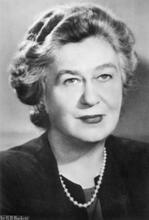
A suffragist who encouraged newly enfranchised women to go to the polls together to avoid harassment, Pauline Perlmutter Steinem was the first woman elected to the Toledo Board of Education. Her legacy of social activism can be seen in her granddaughter, Gloria Steinem.
Institution: The Jacob Rader Marcus Center of the American Jewish Archives, Cincinnati, OH, www.americanjewisharchives.org and the Toledo-Lucas County Public Library
Since the first Jews arrived in the seventeenth century, women have played central roles in American Jewish communal life. For many generations, Jewish women’s philanthropy generally occurred through autonomous women’s organizations, women’s organizations that included some men, and women’s auxiliaries of male-dominated groups. Although the forms and nature of their participation have changed, their contributions have always been critical in creating new organizations and initiating new programs, ranging from benevolent societies, Sunday schools, and tuberculosis sanitoria to health and human services in Israel and Birthright/Taglit. Once primarily involved in single-gender organizations, Jewish women are now taking their place in Jewish communal life in ways unforeseen in the past.
Introduction

Jewish law and custom, secular culture, institutional arrangements in the broader society, and gender roles have shaped Jewish women’s involvement in philanthropic activities. Although the term is often associated with the beneficence of the wealthy, philanthropy refers to giving time as well as money to charitable and community organizations.
Jewish tradition specifies that both men and women are obligated to perform acts of hesed [loving-kindness] and zedakah [social justice]. These are mitzvot—religious obligations—that specify the importance of visiting the sick; preparing the dead for burial; comforting mourners; donating money to the poor and the needy, especially widows and orphans; offering hospitality; supporting religious institutions; and providing brides with dowries. These actions are both individual and communal obligations.
There are qualitative differences in the ways that men and women have fulfilled these obligations at different times and in different contexts. Under strict interpretation of Jewish law, which governed most Jewish communities until the nineteenth century, Jewish women were not obligated to the same standards of ritual performance as men or expected to devote significant amounts of time to learning Jewish texts. Consequently, philanthropy has long been a principal vehicle for religious expression for Jewish women. Involvement in philanthropic endeavors also provided Jewish women with a separate sphere, an arena in which they could contribute to community life, often serving as a context for exercising influence in the larger community or society. In social settings where few Jewish women had paid jobs, philanthropic work provided them with “invisible careers.”
Over the course of American Jewish history, there has been a fusion of Jewish tradition and American values in the evolution of a culture of American Jewish philanthropy. Jewish philanthropy has been a unifying force in an otherwise geographically and religiously diverse community.
Jonathan Woocher outlines the evolution and contours of an American Jewish “civil religion” that animates giving and volunteering. Key ideas include the interdependence and unity of the Jewish people, the importance of Jewish survival, the primacy of supporting the State of Israel, and tolerance of the community’s denominational diversity. Since the 1970s, a complex shift has occurred in American Jewish life: a turn toward individual spirituality, a growth in nondenominational congregations, combined with an incorporation of religious practices in Jewish communal life. This shift is most apparent in the fact that the annual General Assembly of the Jewish Federations of North American now features Sabbathshabbat observance. Whereas in the mid-twentieth century donations to Jewish organizations functioned as a kind of “communal tax,” today the use of the terms zedakah and tikkun olam (to heal the world) have become much more prominent. Tikkun olam is also often used to justify donations to non-Jewish causes and to underscore that Jews have an obligation to promote social justice.
Histories of Jewish philanthropy during the nineteenth and twentieth centuries focus on the activities of middle-class Jews of European origin and their descendants, including most of North and South American Jewry.Ashkenazi women. There is limited information on Descendants of the Jews who lived in Spain and Portugal before the explusion of 1492; primarily Jews of N. Africa, Italy, the Middle East and the Balkans.Sephardi and Lit. "Eastern." Jew from Arab or Muslim country.Mizrahi women. These histories describe three types of organizations: autonomous women’s organizations, women’s organizations that included some men, and women’s auxiliaries of male-dominated groups. This article presents examples of these types of organizations and describes how recent trends in Jewish philanthropy and changes in gender roles have influenced contemporary styles of Jewish women’s philanthropy.
Autonomous Women’s Organizations
field_section_text_value


![AMIT-1 - still image [media]](/sites/default/files/styles/scale_width_1000px/public/mediaobjects/AMIT-1.jpg?itok=3BiHUu-p "AMIT-1 - still image [media]")
Before, during and immediately after World War II, AMIT (then known as Mizrachi Women's Organization of America) was at the forefront of Youth Aliyah, the rescue of Jewish children from Europe and their resettlement in Palestine. Pictured here is the AMIT Youth Village at Petah Tikvah, today the AMIT Kfar Blatt Youth Village and Mishpachton. This group of children were photographed in 1948.
Institution: AMIT Archives
field_section_text_value
Women’s Organizations that Included Some Men
A second pattern of organizational arrangements consisted of Jewish women’s groups that included some male donors and participants, often because men had the organizational skills that the women lacked.
Isaac Rontch and the Yiddish Writer’s Group surveyed home-town societies [landsmanschaftn] during the 1930s in a Work Projects Administration–supported project. A small number of the 2500 landsmanschaftn that responded to a survey were “ladies’ societies”: 71 were founded by women and 287 were women’s auxiliaries. A majority of the women’s landsmanschaftn had male presidents or secretaries. For example, the Proskurover Ladies Benevolent Society was founded in 1909 and incorporated in 1916 by five women and one man. A 1938 composite photograph of the officers and board members of the United Wilner Ladies Relief featured 40 women, including the author’s grandmother, plus five men whose responsibilities were not listed.
These mutual benefit societies provided a context for sociability, sponsoring numerous social functions. They also provided immigrants with social and economic capital, as well as welfare benefits including interest-free loans, burial plots, funeral expenses, and sickness and disability benefits. Like free loan societies, they had an enormous impact on the social and economic mobility of immigrants and were important building blocks in the development of viable Jewish communities.
Some women’s organizations recruited men as a way to sustain an enterprise that needed more money or organizational expertise. The Philadelphia Jewish Foster Home, established in 1855, and the Brooklyn Ladies Hebrew Home for the Aged, founded in Williamsburg in 1907, were established by women but found that they needed to recruit men as donors and board members. Adding male members saved the Hebrew Technical School for Girls in Manhattan from bankruptcy. Philadelphia’s Ezrath Nashim [Helping Women], founded in 1873, was reorganized as the Jewish Maternity Home and expanded its activities to personal visiting, a sewing circle to produce clothing and other items, a Nurses’ Training School, a seaside Home for Invalid Women and Children, and a temporary nursery. The inclusion of men did not lead to male dominance since, according to Evelyn Bodek, “The men added to the Board but never controlled the society.”
Women’s Auxiliaries
field_section_text_value
field_section_text_value
Conclusion
Women have played central roles in Jewish communal life in America since the first Jews arrived in the seventeenth century. Today, there is a greater range of options, since traditional women’s organization coexist with a broader range of opportunities as staff and lay leaders. While the forms and nature of their participation have changed, their contributions have always been critical in creating new organizations and initiating new programs, ranging from benevolent societies, Sunday schools, tuberculosis sanatoria, health and human services in Israel, and Birthright/Taglit. Once primarily involved in single-gender organizations, Jewish women are taking their place in Jewish communal life in ways unforeseen in the past. Perhaps the most significant change has been a shift from participation based on their membership in women’s organizations to a more freelance style of participation similar to the growth of paid labor in today’s “gig economy.”
Angel, Marc. “The Sephardim of the United States: An Exploratory Study. American Jewish Yearbook 13, 77-138, 1973.
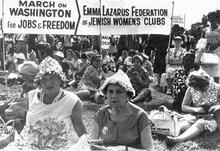
Antler, Joyce. “Between Culture and Politics: The Emma Lazarus Federation of Jewish Women’s Clubs and the Promulgation of Women’s History, 1944–1989.” In U.S. History as Women’s History, edited by Linda Kerber and Alice Kessler-Harris. Chapel Hill, NC: University of North Carolina Pres, 1995.
Bernstein, Julia. “The Trend to Lend: Gemachim in Action.” Jerusalem Post March 12, 1993, p. 11.
Block, Debra S. Virtue Out of Necessity: A Study of Jewish Philanthropy in the United States, 1880-1918. PhD Diss., University of Pennsylvania, 1997.
Brautbar, Shirli. From Fashion to Politics: Hadassah and Jewish American Women in the Post World War II Era. Brighton, MA: Academic Studies Press, 2012.
Goldberg, Emma. “Orthodox Women in Ambulance Corps Challenge Traditions.” New York Times, April 19, 2021, p A14.
Grunfeld, Faigy. “The Role of Women in the Founding of OU Kosher.” Jewish Action Spring 2020. https://jewishaction.com/from-our-archives/from-our-archives-the-role-of-women-in-the-founding-of-ou-kosher/.
Herman, Felicia. “From Priestess to Hostess: Sisterhoods of Personal Service in New York City, 1887-1936.” In Women and American Judaism: Historical Perspectives, edited by Pamela S. Nadell and Jonathan D. Sarna, 148-181. Hanover, NH: Brandeis University Press., 2001.
Joselit, Jenna. “The Special Sphere of the Middle-Class American Jewish Woman: The Synagogue Sisterhood, 1890–1940.” In The American Synagogue: A Sanctuary Transformed, edited by Jack Wertheimer. Cambridge: Cambridge University Press, 1987.
Hammack, David C. “Jewish Philanthropy in Cleveland to 1990.” In Cleveland Jews and the Making of a Midwestern Community, edited by Sean Martin and John J. Grabowski, 35-57. New Brunswick, NJ: Rutgers University Press, 2020.
Horowitz, Bethamie, Pearl Buck and Charles Kadushin. The Roles of Women and Men on the Boards of Major American Jewish Organizations: A Research Report. New York: Graduate School and University Center of the City University of New York, November 1997.
Kelner, Shaul. “Religious Ambivalence in Jewish American Philanthropy.” Pp. 28-49 In Religion in Philanthropic Organizations: Family, Friend or Foe? edited by Thomas J. Davis. Bloomington: Indiana University Press, 2013.
Kliger, Hannah, ed. Jewish Hometown Associations and Family Circles in New York: The WPA Yiddish Writers’ Group Study. Bloomington, IN: Indiana University Press, 1992.
Kosmin, Barry A. The Status of Women in Lay and Professional Leadership Positions of Federations. New York: Council of Jewish Federations, 1994.
Levin, Marlin. It Takes a Dream: The Story of Hadassah. Jerusalem: Gefen Books, 2002.
McCune, Mary. “Creating a Place for Women in a Socialist Brotherhood: Class and Gender Politics in the Workmen’s Circle.” Feminist Studies 28, No. 3 (Autumn 2002): 585-610.
McCune, Mary. “She Will Be the Mary Poppins We Have Been Searching For: The Rise of Organizational Change in the Cleveland Section of the National Council of Jewish Women.” In Cleveland Jews and the Making of a Midwestern Community, edited by Sean Martin and John J. Grabowski, 122-141. New Brunswick, NJ: Rutgers University Press, 2020.
Milamed, Susan. “Proskurover Landsmanschaftn: A Case Study in Jewish Communal Development.” American Jewish History 76, No. 1 (September 1986): 40–55.
Nadell, Pamela S. America’s Jewish Women: A History from Colonial Times to Today. New York: W.W. Norton, 2019.
Papo, Joseph. Sephardim in Twentieth Century America: In Search of Community. San Jose, CA: Pele Yoetz Books, 1987.
Rogow, Faith. Gone to Another Meeting: The National Council of Jewish Women, 1893–1993. Tuscaloosa, AL: University of Alabama Press, 1993.
Saxe, Leonard and Barry Chazan, Ten Days of Birthright: A Journey in Young Adult Identity. Waltham, MA: Brandeis University Press, 2008.
Skolnick Einhorn, Deborah, Power of the Purse: Social Change in Jewish Women’s Philanthropy. PhD Dissertation, Brandeis University Press, 2011.
Tenenbaum, Shelly. A Credit to Their Community: Jewish Loan Societies in the United States, 1880–1945. Detroit: Wayne State University Press, 1993.
Wenger, Beth S. “Jewish Women of the Club: The Changing Public Role of Atlanta’s Jewish Women, 1870–1930. American Jewish History 76, No. 3 (March 1987): 311-333.
Werthheimer Jack. Giving Jewish: How Big Funders Have Transformed American Jewish Philanthropy. Avi Chai Foundation, March 2018. https://avichai.org/wp-content/uploads/2018/03/Giving-Jewish-Jack-Wertheimer.pdf
Woocher, Jonathan. Sacred Survival: The Civil Religion of America’s Jews. Bloomington, IN: Indiana University Press, 1986.
More Like This

Double your impact to amplify Jewish women’s stories—
All gifts matched up to $35,000
Before you close this article, please consider supporting the Jewish Women’s Archive and uplifting Jewish women’s voices.
At JWA, we preserve the voices of Jewish women and gender-expansive people past and present, share them freely with millions online, and empower a new generation of Jewish feminists to lead with courage, creativity, and conviction.
But none of this happens without you. JWA is an independent nonprofit— we rely on people, like you, who believe that history belongs to all of us and that the voices of Jewish women must remain powerful, and heard.
This month, a generous JWA board member will match every gift dollar for dollar—up to $35,000—through June 30. Your contribution goes twice as far right now.
Every contribution—no matter the size—helps us document, teach, and inspire through Jewish women’s stories.
It takes less than a minute to make a difference.
Thank you for being a part of the JWA community,

Judith Rosenbaum, CEO

