
Cecilia Baram

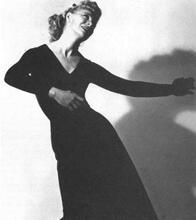
Born in Mexico City in 1943, Cecilia Baram Katz was one of the few Jewish women to become a professional dancer in the years between 1950 to 1980, which meant breaking with many of her family’s and community’s social conceptions. A highly talented dancer, disciplined, beautiful, and with a strong stage presence, she was a member of the main companies of the Mexican nationalist dance and later of the Mexican contemporary dance: Independent Ballet of Mexico and the innovative Expansion 7, a pioneer in self-management and interdisciplinary work, as well as in collective leadership.
Early Life and Education

field_section_text_value
Woman or Dancer
Soon after, Baram gave up dancing when a doctor recommended putting a stop to the excessive exercise that had kept her from growing. She was also torn “between being a woman (in the traditional sense that I understood at the time: having a boyfriend, getting married, and having children) and being a dancer” (Lynton, 1997: 15).
Baramhad previously studied at the New Israelite School (Nuevo Colegio Israelita) and Israelite School of Mexico (Colegio Israelita de México), and she now began to study psychology at National Autonomous University of Mexico (Universidad Nacional Autónoma de México, UNAM). In 1963, at the age of nineteenth, she married businessman Isaac Ginsburg, and by the age of 25, she already had three children. Before the wedding, Ginsburg “had made her swear that she would not dance again, but I began to feel a huge void, as if I were alive and dead at the same time” (Lynton 1997), so she went back to train with Francis in 1969.
Baram had to “confess” this to her husband, and, faced with his lack of empathy for her vocation, she divorced him in 1973. For her, this process meant “the recovery of herself” and of the private space that gave her the satisfaction that she was acknowledged by her peers and the public. In that space her shyness disappeared and dance allowed her to express herself and be creative (Tortajada 2020).
Returning to Dance
 view larger
Cecilia Baram with Miguel Ángel Palmeros in Us (Nosotros) at the Fine Arts Palace (Palacio de Bellas Artes), 1972. Choreographer: Miguel Ángel Palmeros. Company: Independent Ballet (Ballet Independiente). Courtesy of Cecilia Baram.
view details view larger
Cecilia Baram with Bernardo Benítez and Miguel Ángel Palmeros in Two of Three (Dos de tres). Choreographer: Miguel Ángel Palmeros. Courtesy of Cecilia Baram.
view details view larger
Cecilia Baram with Expansión 7 at the home of Amalia Hernández, 1975. Courtesy of Cecilia Baram.
view detailsBefore getting married, Baram had been a dance teacher for years and, after her divorce, she taught at the CDI. She now joined the school of the Independent Ballet, a contemporary dance company co-directed by Raúl Flores Canelo and Gladiola Orozco. There she took classes in the Graham technique, acrobatics, and ballet. She was invited to dance with the company and debuted in 1972; Tibol wrote of the occasion that “Cecilia Baram, one of Mexico’s most gifted dancers, has been reclaimed for dance” (Tibol 1972). She danced in Sokolow’s Deserts (Desiertos), John Fealy’s Changes (Cambios) and Arioso (Arioso), Graciela Henriquez’s Inventions (Invenciones) and Women (Mujeres), Flores Canelo’s Theme and Evasions (Tema y evasions), and Miguel Angel Palmeros’ Us (Nosotros), a duet for Cecilia and the choreographer. She felt very comfortable at the Independent Ballet but remembers that it was there that she was singled out as being Jewish in the dance world: at a work meeting someone gave her "a sharp reminder that everyone was accepted in the company, even blacks and Jews" (Tortajada 2020).
Before getting married, Baram had been a dance teacher for years and, after her divorce, she taught at the CDI. She now joined the school of the Independent Ballet, a contemporary dance company co-directed by Raúl Flores Canelo and Gladiola Orozco. There she took classes in the Graham technique, acrobatics, and ballet. She was invited to dance with the company and debuted in 1972; Tibol wrote of the occasion that “Cecilia Baram, one of Mexico’s most gifted dancers, has been reclaimed for dance” (Tibol 1972). She danced in Sokolow’s Deserts (Desiertos), John Fealy’s Changes (Cambios) and Arioso (Arioso), Graciela Henriquez’s Inventions (Invenciones) and Women (Mujeres), Flores Canelo’s Theme and Evasions (Tema y evasions), and Miguel Angel Palmeros’ Us (Nosotros), a duet for Cecilia and the choreographer. She felt very comfortable at the Independent Ballet but remembers that it was there that she was singled out as being Jewish in the dance world: at a work meeting someone gave her "a sharp reminder that everyone was accepted in the company, even blacks and Jews" (Tortajada 2020).
For Baram, Expansion 7 was a constant experimentation and search “to find a new form of language in which dance expressions, combined with the artistic contribution of other fields, would make a harmonious, visual and auditory whole” (“Expansion 7 or the Search” 1974).Their approach was interdisciplinary; they used improvisation and aleatory texts with the music groups Quanta and New Sound Experience and the Visual Experimentation Group of the National School of Plastic Arts of the UNAM). Baram danced in Palmero’s Four of Five (Cuatro de cinco) and Us (Nosotros); Castro’s In a Single Flame (En una sola flama); Aguilar’s Contact One (Contactouno), and in Integration (Integración), a collective piece.
Critics pointed out that Baram displayed “a magnificent mastery of her movements” (Ruiz 1973) and that she had “great capacity for projection, a strong presence and an extraordinary expressivity” (“Expansion 7 Today Begins a Great Ballet Season” 1976). For four years Expansion 7 performed in theaters and university forums in Mexico City and in other cities, made television programs, and gave lecture demonstrations.
Expansion 7 was very aggressive in its demand for financial support from the INBA. Members even staged a protest outside the Palace of Fine Arts that appeared in all the newspapers, including on the front page of some. Manyartistsopenlysupportedthem, including Amalia Hernández, Pilar Rioja, Luis Rius, MalkahRabell, Raquel Tibol, Juan de la Cabada, Álvaro Soriano y Bueno, Juan Bañuelos, and Jaime Labastida. However, Expansion 7 was not able to withstand the pressures of being an independent company with an avant-garde radical artistic program, and the company disbanded in 1977.
Baram studied one summer in New York at the Martha Graham, Alvin Ailey, and Louis Falco schools. It would have been impossible for her to do so had her children not been away on a trip;she “struggled all the time between being a mom and a dancer” and could not neglect her children (Tortajada 2020). An example of these struggles is her refusal to follow the suggestion of Tibol, who after the dissolution of Expansión 7, suggested she join Ballet Nacional de México, the contemporary dance company directed by Guillermina Bravo. Cecilia declined because the company’s rehearsal schedule was an evening one and she could not leave her children alone. Furthermore, at the time she was fighting over the custody of her children.
-
 view larger
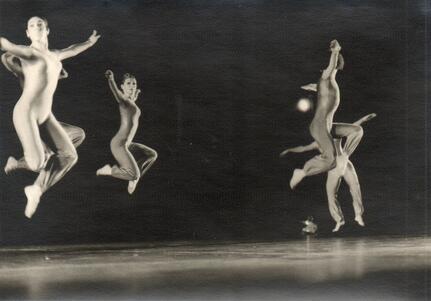
Cecilia Baram with the Independent Ballet (Ballet Independiente), 1976. Photographer: Ignacio Chávez. Courtesy of Cecilia Baram.
view details -
 view larger
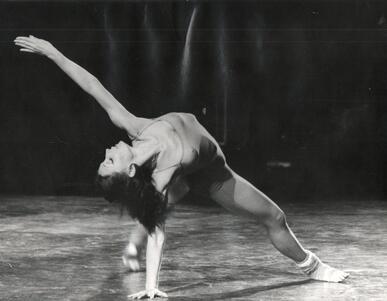
Cecilia Baram with Independent Ballet (Ballet Independiente) Rite for dance (Rito a la danza), Cuba, 1981. Choreographer: Víctor Cuéllar. Courtesy of Cecilia Baram.
view details -
 view larger
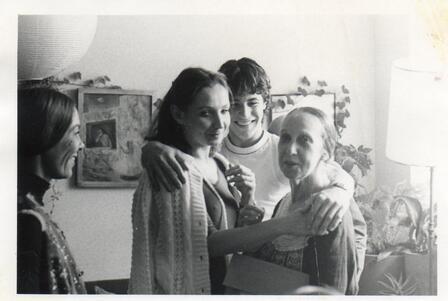
Cecilia Baram with Anna Sokolow, 1980. Courtesy of Cecilia Baram.
view details


Upon her return to Mexico in 1978, Baram joined the Independent Ballet. Baram, “the beautiful dancer” (Ruiz 1979), took part in Flores Canelo’s Man and the Dance (El hombre y la danza), Ejaculatory Prayer (Jaculatoria), and The Wait (La espera); Ladrón de Guevara’s Trio (Trío); Genkel’s Eternal Game (Juegoeterno); and Henriquez’ The Tent of Wandering Love (La carpa del amorerrante), Women (Mujeres) and Prayers (Oraciones). In 1980 the company premiered A Rite for Dance (Rito a la danza), choreographed by the Cuban Víctor Cuéllar, and Sokolow’s From the Diaries of Franz Kafka (De los diarios de Kafka), a very stimulating creative experience for Cecilia, as was the company’s successful ten-day and three-city Cuban tour in 1981.
This tour was her farewell to dance. Her departure came as a surprise to the company, of which its members considered her an integral part. Silvia Unzueta remembers “Ceci” as “a very vital dancer, with a great expressive power both in movement and in emotion. She had a strong and well-trained body, and at the Independent Ballet she was one of the soloists, that is, she was selected to interpret roles that required ‘that’ which she had” (Unzueta 2020). Baram had secretly made the decision to withdraw from the stage after returning from Cuba because she had set herself the goal of "dancing better than ever" in that second period at the Independent Ballet. She achieved her goal and, without announcing her decision to anyone, she lived out those last performances as her farewell (Tortajada 2020).
Baram’s separation from dance was very painful. “It was like death, because [in dance] you can bring out everything, you can live everything you can’t in real life. If you have the faculties and you are praised, that nurtures you. So far, I have not found anything that I am so passionate about as I am about dance.” This is how Baram conceives art and her profession: a passion that merged with her being: “it was my essence, what I am, a dancer. I can be in any place but what I am, my true self, my identity, is dance” (Tortajada 2020).
For many years Baram trained and gave dance classes. Due to her injuries, she turned to Pilates and became a certified instructor in 2011. In 1997 she was awarded the Tribute to a Life in Dance (Homenaje Una vidaen la danza) by the National Institute of Fine Arts.
Throughout her life, Baram faced the challenges of dance—its physical and emotional demands, the race against age and injuries—but also the joy and satisfaction of being an artist. She often found herself in situations of conflict but decided to dance in spite of everything; she overcame the tensions between teachers and directors in the companies where she worked as well as their struggle to survive, but especially those of Expansion 7 and the Independent Ballet. She braved family and social prejudices, because in the Jewish community performing and professional dance were not accepted (to the extent that her children never saw her dance).
Baram rebelled and made some brave decisions that were unusual in her time, such as choosing to divorce and dedicating herself to a profession that corresponded to her vocation and her expressive needs. However, she remained conflicted between “being a mother and being a dancer," and at odds with the Jewish community, because “they thought I was dancing in cabarets, including my ex-husband. He imbued a little in my children the idea that their mother danced around and, on top of that, that she danced barefoot. A thousand stories that were not true were made up about me. Breaking up with the community is very difficult. Dance helped me to be not so confined by the community and to interact with all kinds of people, and to break up with something that imprisoned you so much. I do not know now, but at that time the pressure was very strong. I now get along with the community, but not in a very close way" (Tortajada 2020).
Nevertheless, the Jewish community finally acknowledged Cecilia Baram by including her as the only woman in dance in the book Footprints. Notable Ashkenazi Jews in Mexico (Huellas. Judíos ashkenazitas destacados de México), published in 2017.
“Cecilia Baram, A Life in Dance” (“Cecilia Baram, una vida en la danza”). Diario Judío (December 4, 2013): https://diariojudio.com/comunidad-judia-mexico/cecilia-baram-una-vida-e…
“Expansion 7 or the Search” (“Expansión 7 o la búsqueda”). El Día, December 7, 1974.
“Expansion 7 TodayBegins a Great Ballet Season” (“Expansión 7 inicia hoy gran temporada de ballet”). Cine Mundial, February 27, 1976: 2.
Flores Guerrero, Raúl. “Dance 1956” (“Danza 1956”). Suplemento México en la Cultura de Novedades (November 1956).
“Jorge Baram, an Outstanding Businessman” (“Jorge Baram, empresario destacado”). Diario Judío (August 12, 2013): https://diariojudio.com/comunidad-judia-mexico/jorge-baram-empresario-d…
Lynton, Anadel. “Cecilia Baram.” Homenaje Una vida en la danza 1997. México: Cenidi Danza-INBA, 1997: 13-16.
Viskin, Vivian (coord.). Footprints. Notable Ashkenazi Jews in Mexico. (Huellas. Judíos ashkenazitas destacados de México.) México: La Kehile. Comunidad Ashkenazi México-Ed. Promente México, 2017.
Ruiz, Luis Bruno. “Ballet Themes. The Success of Expansion 7 with Sound 13” (“Temas de ballet. Éxito del Grupo Expansión 7 con sonido 13”). Excélsior (August 20, 1973).
---------- “AnotherVictoryfor Flores Canelo” (“Otro triunfo de Flores Canelo”). Excélsior (July 1st, 1979): 16-B y 18- B.
Tibol, Raquel. “A Successful Year for the Independent Ballet” (“Añorico del Ballet Independiente”). Excélsior (September 1972).
Tortajada Quiroz, Margarita. Dance and Power I and II (Danza y Poder I y Danza y Poder II). Biblioteca Digital Cenidi Danza. México: Conaculta-INBA-Cenart, 2008.
http://inbadigital.bellasartes.gob.mx:8080/jspui/handle/11271/754
Tortajada Quiroz, Margarita. Interview with Cecilia Baram (Entrevista con Cecilia Baram), March 5, 2020.
Unzueta, Silvia. “Cecilia Baram,” written communication with the author, April 8, 2020.
More on Cecilia Baram



Double your impact to amplify Jewish women’s stories—
All gifts matched up to $35,000
Before you close this article, please consider supporting the Jewish Women’s Archive and uplifting Jewish women’s voices.
At JWA, we preserve the voices of Jewish women and gender-expansive people past and present, share them freely with millions online, and empower a new generation of Jewish feminists to lead with courage, creativity, and conviction.
But none of this happens without you. JWA is an independent nonprofit— we rely on people, like you, who believe that history belongs to all of us and that the voices of Jewish women must remain powerful, and heard.
This month, a generous JWA board member will match every gift dollar for dollar—up to $35,000—through June 30. Your contribution goes twice as far right now.
Every contribution—no matter the size—helps us document, teach, and inspire through Jewish women’s stories.
It takes less than a minute to make a difference.
Thank you for being a part of the JWA community,


Judith Rosenbaum, CEO