

Victoria Marks

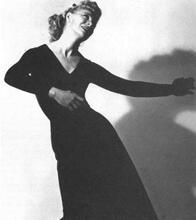
Victoria Marks is a choreographer and educator whose work investigates the social and political impact of dance, representation, and citizenship. She is also known for making what she terms “choreo-portraits” of nontraditional dancers and communities that focus on identity, human relationships, and visibility. Throughout her career, she has created a number of dance films with filmmaker Margaret Williams that offer rich and sensitive portrayals of diverse groups of people including mothers and daughters, elderly men, disabled and non-disabled performers, and veterans. She is the founder of the Dancing Disability Lab at UCLA, an experiment in creating fully accessible opportunities for disabled dance artists to build community and study choreography though the lens of disability justice and aesthetics.
Early Life and Dance Training
Victoria Marks was born on February 6, 1956, in Woodcliff Lake, NJ, a bedroom community outside of New York City. Her maternal great-grandparents came to the United States from Poland in the nineteenth century. Her paternal grandparents emigrated from what is now Ukraine in the early 1900s. Her paternal grandfather was a tailor, and her father, Raymond Marks, grew up living in the back of his father’s shop. The first in his family to go to college, he became a chemical engineer. Marks’s mother, Anne, was a homemaker.
Marks describes her parents as secular Jews who aspired to join the middle class. Despite not attending synagogue, they wanted their children to have a Jewish education, so they joined a Conservative synagogue in a neighboring town, which hired Hasidic men from Williamsburg as Hebrew school teachers. Marks recalls learning prayers but not their meanings, an experience she found alienating. The lack of female role models in her synagogue briefly prompted her to consider becoming a rabbi, an early indication of her intellect, curiosity, and leadership skills.
As a child Marks attended creative movement classes. Interestingly, much of her early dance education took place at dance centers founded by Jewish women. As a pre-teen, she studied ballet at the Joan (Levin) Wolf School of Ballet. As she moved into adolescence, her mother encouraged her to switch to modern dance. Initially resistant to this idea, Marks eventually acquiesced and began to study at the Center for Modern Dance Education in Hackensack, NJ, founded by choreographer, educator, and movement therapist Shirley (Leitman) Ubell. Ubell’s mission was to make dance accessible to anyone, which may have laid the seeds for Marks’s own commitment to making dances for diverse communities.
College and Early Dance Career
Marks attended Sarah Lawrence College, graduating in 1978. While there she studied with June Finch, Elizabeth Keen, Claudia Gitelman, Don Redlich, and Bessie Schönberg, who exposed her to critical concepts in choreography and mid-century modern-dance techniques (specifically those of Merce Cunningham, Hanya Holm, and Murray Louis). At Sarah Lawrence, Marks said, “I developed a strong appreciation of choreography as [the] centerpiece of dance.” From Schönberg she learned that teaching and making choreography were about “meddling”: “You kind of nudge, and push, and get in the way, and say, but why?” Marks explained. These ideas would become central to her teaching and choreographic process (Marks, interview with the author, 2022).
Early Career
 view larger
Alexx Schilling and Makisig Salcines in choreographer Victoria Marks’ Pastoral. Courtesy of Victoria Marks.
view details view larger
Alexx Schilling and Makisig Salcines rehearsing choreographer Victoria Marks’ Pastoral. Courtesy of Victoria Marks.
view details view larger
Alexx Shilling and Makisig Salcines rehearsing choreographer Victoria Marks’ Pastoral. Courtesy of Victoria Marks.
view details view larger
Still image from Action Conversations: Bellows Falls, 2014. Courtesy of Victoria Marks
view details view larger
Working on choreographer Victoria Marks’ Action Conversationswith Veterans, 2014. Photograph by Ann Kaneko. Courtesy of Victoria Marks
view details view larger
Dancer and choreographer Victoria Marks wrapped in bubble wrap, 2017. Courtesy of Victoria Marks.
view details
 view larger
 view larger
Men, choreography by Victoria Marks, directed by Margaret Williams. Courtesy of Victoria Marks.
view details view larger
Alexx Schilling and Willy Souly in Victoria Marks’ Solar Duplex, 2016. Courtesy of Victoria Marks.
view detailsAfter graduating from Sarah Lawrence, Marks moved to New York City, where she did a number of odd jobs to support herself. The most crucial of these was a janitor position at Dance Theater Workshop, where she advanced to bulk mailer and class scheduler. Working at DTW placed her at the center of New York City’s downtown dance scene in the late 1970s and early 1980s. As a dancer, she performed with Rosalind Newman and Arnie Zane, both of whom occasionally addressed their Jewish identities in their works.
Dancing in New York made Marks self-conscious about her own technical skills, one of the reasons she committed herself to making her own dances. Small Revolutions (1983), one of her first pieces, was partially based on the Italo Covino story “Baron in the Trees.” In one section, a dancer never touched the floor, held aloft by other dancers; in another section, the ensemble spun batons until everyone had dropped theirs. Anatomy of a Triangle (1984) was Marks’s first exploration with film. The dance utilized projections of Marks and her dance partner, filmed in silhouette and projected on window screen, against which she performed alone. In the summer of 1984, Marks was a resident choreographer at the Yard in Martha’s Vineyard, where she found the dancers who would ultimately join her company, including longtime company member Barbara Canner.
Victoria Marks Performance Company


Dance Films and Community-Based Performance
Marks returned to London in 1992 to serve as the Director of Choreography at London Contemporary Dance School. It was in London that she met filmmaker Margaret Williams, sparking a decades-long creative partnership. Their first dance-film, Outside In (1993), for Candoco Dance Company, features disabled and non-disabled dancers in sensual and empowering tangoes. More collaborations followed. Mothers and Daughters (1994) is a moving film that depicts deep and complex bonds between actual mothers and daughters. Men (1997) offers a tender and playful portrayal of elderly men, life, death, and love, set within the Canadian Rockies. Father/Daughter Dances (2001), based on a series of duets in the late 1990s, was an interfaith, multigenerational project for Houston-based clergy and their fathers or daughters.
During this period, Marks began to think of herself as a “portrait-maker,” rather than as a choreographer, who creates “choreo-portraits” of people and their relationships. These projects also reflect Marks’s mission to question and explore what dance can do socially, emotionally, and politically, and how dance can offer visibility to people whose bodies, lives, and experiences have been overlooked or misunderstood. Similarly, Marks’s developed what she calls “action conversations,” a method that brings together groups of people without a shared social anchor to find common ground through embodied dialogue. Marks developed this process through her work with combat veterans dealing with PTSD. These engagements resulted in the stage work Action Conversations (2008), which placed veterans of the Iraq War in conversation with artists opposed to the war, and the short film Veterans (2008), co-created with Williams. Additionally, Action Conversations: Bellows Falls (2014), co-created with filmmaker Ann Kaneko, brought a group of teen mothers together with an older generation of women in a rural Vermont town.
Teaching and Leadership

Marks has taught workshops at festivals, universities, and dance centers nationally and internationally. After completing her term as Director of Choreography at the London Contemporary Dance School in 1995, she joined the faculty of the University of California-Los Angeles’s Department of World Arts and Cultures/Dance, where she has since served as Professor of Dance, Associate Dean of Academic Studies for the School of Art and Architecture, and Chair of the Disability Studies Minor. At UCLA she has mentored hundreds of undergraduate and graduate students in choreography, improvisation, and performance. In 2019 she founded the Dancing Disability Lab at UCLA, later gaining support from the Mellon Foundation and National Endowment for the Arts. The Dancing Disability Lab provides disabled artists the resources and space to create their own work and is rooted in “the notion that aesthetic production (dance) can serve as a change agent for the continued progress of disability justice.”
Awards

Marks has earned numerous grants, fellowships, and awards. Her choreography has been supported by such entities as Fulbright (to work in London in 1987 and Bogota in 2015), the National Endowment for the Arts, New York State Council for the Arts, the National Performance Network, and the Rauschenberg Foundation. Her films with Margaret Williams have won numerous prizes at festivals in Austria, Bulgaria, Canada, Czech Republic, and France. As an artist, she has earned a Cal Arts’ Herb Alpert Award for Choreographic Achievement (1997) and a Guggenheim (2005).
Anderson, Jack. “Acerbic View of Society in Victoria Marks Trio.” New York Times, November 26, 1989.
Anderson, Jack. “Dance: Victoria Marks.” New York Times, December 10, 1986.
Anderson, Jack. “In Performance: Dance.” New York Times, January 29, 1996.
Anderson, Jack. “Minimalism by Marks.” New York Times, November 27, 1988.
Borger, Irene Marian. The Forces of Curiosity. California Institute of the Arts and Herb Alpert Foundation, 1998.
Dancing Disability Lab. https://dslabs.ucla.edu/labs/dancing-disability/
Josephs, Susan. “These Vets are Moved to Action.” Los Angeles Times, February 6, 2008.
Marks, Victoria. Email correspondence with the author, April 2003.
Marks, Victoria. Interview with the Author, May 31, 2022.
Rossen, Rebecca. Dancing Jewish: Jewish Identity in Modern and Postmodern Dance. New York: Oxford University Press, 2014.
“Victoria Marks: Choreographing Conversation.” https://arts.ucla.edu/single/victoria-marks-choreographing-conversation/
More on Victoria Marks
Double your impact to amplify Jewish women’s stories—
All gifts matched up to $35,000
Before you close this article, please consider supporting the Jewish Women’s Archive and uplifting Jewish women’s voices.
At JWA, we preserve the voices of Jewish women and gender-expansive people past and present, share them freely with millions online, and empower a new generation of Jewish feminists to lead with courage, creativity, and conviction.
But none of this happens without you. JWA is an independent nonprofit— we rely on people, like you, who believe that history belongs to all of us and that the voices of Jewish women must remain powerful, and heard.
This month, a generous JWA board member will match every gift dollar for dollar—up to $35,000—through June 30. Your contribution goes twice as far right now.
Every contribution—no matter the size—helps us document, teach, and inspire through Jewish women’s stories.
It takes less than a minute to make a difference.
Thank you for being a part of the JWA community,
Judith Rosenbaum, CEO

