In the last two decades of the twentieth century, Jewish women in America achieved parity with their male counterparts on college campuses, but only after many decades of struggle.
In her short life, Rose Gollup Cohen was a unionized factory worker and a domestic servant, was helped through an illness by Lillian Wald, became educated, and wrote short stories. Her moving 1918 autobiography Out of the Shadow offers a vivid account of her life as an immigrant Jewish woman in the sweatshops of New York.
Ruth Cohen, Principal of Newnham College, Cambridge, from 1954 until 1972, was the first Jewish principal of an Oxbridge College, a distinguished agricultural economist, and, after her retirement from college life, a dedicated local councillor.
Felice Cohn was one of Nevada’s first women lawyers in the early twentieth century, an author of suffragist legislation in Nevada, and one of the first women allowed to argue before the United States Supreme Court.
For many centuries, Cochin Jewish women have sung Jewish songs, both in Hebrew and in the Malayalam language of Kerala, their ancient homeland on the tropical southwest coast of India. Kerala Jews are unusual among halakhically observant communities in the complex intertwining of female and male knowledge and performance throughout their musical repertoire.
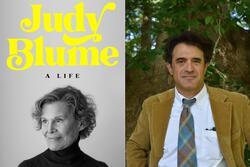
Children’s literature in the United States would not be the same without Jewish women. From Sydney Taylor to Judy Blume to Lesléa Newman, Jewish women have written books read by millions of children and teenagers in the U.S. for more than a century.
Dr. Phyllis Chesler is a feminist, best-selling author, and scholar whose career spans more than five decades and 20 books. An early and radical second wave feminist, she has focused on topics such as feminism, women’s rights globally and domestically, Islamic gender apartheid, academic freedom, Judaism, anti-Semitism, and freedom of speech.
During the Nazi regime, the political participation of the League of Jewish Women in the affairs of the Jewish self-help organization the Reichsvertretung was initially unwelcomed by male leaders, despite the fact that women attended its meetings. Following the dissolution of the League in 1938, four of its members created their own network in order to present a united front for Jewish women’s interests and continued to participate in important functions of the Reichsvertretung.
The positive aspect of the Canadian mosaic has been a strong Jewish community (and other communities) which nurtured traditional ethnic and religious values and benefited from the talent and energy of women and men restrained from participation in the broader society. The negative aspect has included considerable antisemitism and, especially for women, the sometimes stifling narrowness and conservatism of the community which inhibited creative and exceptional people from charting their own individual paths.
German-born scientist Edith Bülbring was renowned for her work in smooth muscle physiology, which paved the way for contemporary cellular investigations. She pursued this work through a large and flourishing large research group at Oxford University, which she led for seventeen years. In 1958 she was elected to the Royal Society.
Cécile Brunschvicg was one of the grandes dames of French feminism during the first half of the twentieth century. Although her chief demand was women’s suffrage, she also focused on a range of practical reforms, including greater parity in women’s salaries, expanded educational opportunities for women, and the drive to reform the French civil code, which treated married women as if they were minors.
Anita Brookner was a British Jewish novelist and accomplished art historian known for her elegaic, gloomy novels depicting the bleak and disappointed lives of women. Receiving the Booker Prize in 1984 for Hotel du Lac, Brookner achieved international fame and recognition as one of the most accomplished writers of English fiction in the later twentieth century.
Suzanne Brøgger is a Danish journalist, cultural critic, author, and essayist. With more than twenty books to her name, Brøgger has received widespread acclaim for her novels, essays, anthologies, poems, and plays.
Rohkel Brokhes offered an intimate and poignant glimpse into Jewish family life in Russia in the early 20th century. Her short stories, novellas, and plays documented the often-harsh lives of Russian Jews, especially women. She was born and raised in Minsk, and she would also die there in the ghetto.
Hansi Hartmann started helping escaped Jewish refugees in Hungary with her husband Joel in 1938. She later played a central role in The Relief and Rescue Committee, founded by Joel in 1942, and went on to save thousands of Jews. After the war, she emigrated to Palestine and gave critical testimony at the Kasztner and Eichmann Trials.
A member of the first generation of modern dancers in Vienna, Gertrud Bodenwieser developed her own style of modern Ausdruckstanz (expressionist dance). From her studio in Vienna, she established the Bodenwieser Dance Group and went on to tour Europe, Japan, and Columbia. In 1938, she immigrated to Australia and played a significant role in the development of modern dance there.
Ruth Bondy was an author, a journalist, and a gifted translator. Born in Prague to a large Zionist family, the majority of whose members perished in the Holocaust, Bondy survived Theresienstadt and Auschwitz-Birkenau and arrived in Israel in late 1948. She soon became a journalist, and eventually began to write biographies and translate from Czech to Hebrew.
Created at the beginning of the twentieth century, B’nai B’rith Women expanded its role during both World Wars. Although gender roles after World War II reverted to a more conventional structure, in the 1960s BBW shifted its efforts to reflect the antipoverty and feminist campaigns of the period.
From her first film role in Charlie Chaplin’s 1952 film Limelight to her performance in 2010’s The King’s Speech, Claire Bloom has been one of the most iconic and popular actresses of her generation. During her long career in theater and film, Bloom won multiple awards and was made a Commander of the British Empire.
Ilse Bing was known as the “Queen of the Leica” for her work in photojournalism, fashion, and advertising with this new camera, fast film, and darkroom techniques of polarization and cropping. Her work was highly influential in France in the 1930s when many émigré artists were energized by the cross fertilization of disciplines that contributed to modern photography.
German physicist Marietta Blau joined the Institut für Radiumforschung, where she developed an emulsion technique for recording the tracks of particles that allowed her to detect neutrons and observe nuclear disintegration caused by cosmic rays. Forced to emigrate in 1938, worked for the US Atomic Energy Commission and later taught at the University of Miami. Throughout her career, she faced discrimination for her religion and gender and was denied paid work.
A lawyer by training, Vienna-born Clementine Bern-Zernik produced broadcasts for the US Office of War Information in London during the war, served as the director of a Displaced Persons Camp in post-war Germany, and spent the last 50 years of her life as a UN liaison to the New York Public Library. Throughout her life she maintained a strong Austrian identity and was a founding member of the Austrian-American Federation.
Photographer and photojournalist Eva Besnyö was born in Budapest in 1910. In the 1930s Besnyö moved to Berlin, where she quickly became successful with numerous exhibitions and commissions and spent time with politically engaged intellectuals and artists. Following the war, Besnyö was active in the Dolle-Mina feminist movement and was awarded the Dr. Erich Salomon Award for her life’s work.