

Janet Yellen

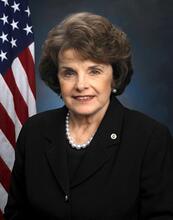
Official picture of Federal Reserve Chair Janet Yellen from the FRBSF website.
Janet Yellen was the first woman to lead the United States Department of the Treasury and to chair the Federal Reserve Board. After receiving her PhD in economics at Yale, Yellen spent much of her academic career studying wages and unemployment. She developed the “efficiency wage theory,” which argues that paying workers more than the market wage boosts productivity and is profitable for the employer, and pioneered in economics an appreciation of the human cost of unemployment. She served on the Federal Reserve Board of Governors, chair of the Council of Economic Advisors, and as president and CEO of the Federal Reserve Bank of San Francisco, before becoming vice-chair and then chair of the Federal Reserve Board. From her academic work, she brought to her government serve a sensitivity to the key contemporary issue of inequality.
On January 25, 2021, Janet Louise Yellen, an American economist, became the first woman to lead the United States Department of the Treasury. This historic appointment follows her 2014 appointment as the first woman to chair the United States Federal Reserve Board, one of the most powerful central banks in the world. Long known as “a small lady with a large I.Q.,” Yellen is known for her commitment to lowering unemployment, making the Federal Reserve Board more transparent, and being methodical in her approach to crafting policy. Beyond her scholarly and policy contributions that focus American monetary policy on maintaining employment, Yellen’s greatest achievement is breaking down many gender barriers as a woman in the fields of economics, public policy, and finance. At the US Treasury, she declared that her goal was to “rebuild the economy [so] that Americans can better compete in a globalized world” and to help the United States economy rebuild itself after the financial crisis set in motion by the COVID-19 pandemic. She served as Treasury Secretary until 2025, when she was replaced by Trump-appointee Scott Bessent. In an interview at the Wall Street Journal’s CEO Council Summit, Yellen enumerated her accomplishments as Treasury Secretary. She highlighted a strong and equitable recovery following the COVID-19 pandemic, reigning in inflation, enacting long-term bi-partisan economic legislation, addressing high-cost of living, and investing in clean energy and new jobs.
Family, Education, and Academic Career
Born on August 13, 1946 to Anna (née Blumenthal) and Julius Yellen, Janet joined an older brother John in the Brooklyn home where her parents of Polish-Jewish descent resided.
Yellen and her brother were raised by her mother, a former teacher, and her father, a physician who had an office in their home. Yellen’s intelligence was discernable from an early age: she was valedictorian of her Bay Ridge High school class and went on to Pembroke College at Brown University, where she studied economics and graduated summa cum laude. She rose without female role models: Yellen was the only woman among those earning PhDs in economics at Yale in 1971. She went on to teach at Harvard for five years, and from 1977 to 1978 she had her first experience with the Federal Reserve as an economist for its board of governors. She then taught at the London School of Economics for two years before joining the faculty at the University of California at Berkeley in 1980, where she continued to teach until 2006, when she became professor emerita.
Yellen devoted much of her academic career to studying issues involving wages and unemployment. Her dissertation under James Tobin examined “Employment, Output and Capital Accumulation in an Open Economy: A Disequilibrium Approach,” but as she advanced in her career, she drew from fields beyond economics, such as sociology and social psychology, to explain what she was seeing in the workplace. Married to Nobel-prize winning economist George Akerlof, Yellen is also the mother of Robert Akerlof, another highly regarded economist. Collaborating on some of her academic papers with her husband, Yellen developed what is known among economists as “efficiency wage theory.” The central idea of the theory is that paying workers more than the market wage boosts productivity and ends up being worth it for the employer. Her work argues that workers proportionately withdraw effort as their actual wage falls short of what they imagine to be a fair wage. Such behavior, she argues, then leads to their unemployment. She pioneered in economics an appreciation of the human cost of unemployment.
The Federal Reserve
But Yellen was not satisfied remaining in the walls of the university. She spent three years as a member of the Federal Reserve Board of Governors from 1994 to 1997 before becoming chair of Bill Clinton’s Council of Economic Advisors for two years. From 2004 to 2010, she served as president and CEO of the Federal Reserve Bank of San Francisco, then became vice-chair of the Federal Reserve Board under Ben Bernanke for four years before her appointment as chair in 2014.
Yellen’s tenure as chair of the Federal Reserve Board came as the United States, and the world, was still recovering from the financial crisis of 2008. Yellen’s thoughtful and deliberate moves, getting the economy to a much stronger footing, with the lowest unemployment in decades, low inflation, and record stock market levels at the end of her first term, is seen as a great achievement. Yellen appreciated that expansive monetary policy would not create inflation. Her deep understanding of macroeconomics enabled her to distinguish between real threats, like unemployment, and imagined ones, like inflation.
Yellen’s academic work also brought something else to the Federal Reserve Bank: a sensitivity to the key issue of our day, inequality, grasping that her decisions and regulatory policies “can have profound effects on both the poor and the rich.” Appreciating how deregulation led to the crisis of 2008, Yellen advocated expanding financial regulation. She oversaw the Fed's implementation of the Dodd-Frank Wall Street Reform and Consumer Protection Act, the most comprehensive financial regulation bill since the Glass-Steagall Act in the 1930s, in its regulation of financial institutions to protect consumers. She was consistent with the policies of her predecessor, Ben Bernanke, so her actions ensured a smooth transition following the volatile financial meltdown of 2008, enabling growth and recovery.
In 2018, before her full term was up, Donald Trump replaced Yellen with her apprentice, Jerome Powell, despite the fact that she was widely hailed for her sage, calm leadership. As some noted, this development captured perfectly the travails facing women in finance and economic policymaking, who, despite proving themselves as sound leaders, are replaced by less qualified men. Hardly seeing herself as a feminist icon, Yellen single-handedly blazed a trail into an area where no other women are working: In the 100 year since the Federal Reserve Board was founded, she has been both the first and thus far its only female chair. Once, when President Barack Obama referred to Janet L. Yellen as “Mr. Yellen,” she didn’t bother correcting him.
Diversifying the Field of Economics
Following her term as chair of the Federal Reserve, Yellen served as a Distinguished Fellow in Residence with the Economic Studies Program at the Brookings Institution, as well as an adviser to the Magellan Group. She is a member of the American Academy of Arts and Sciences, the Council on Foreign Relations, the Economic Strategy Group of the Aspen Institute, the Group of Thirty, and the Climate Leadership Council (of which she was a founding member). She serves on the advisory boards of the Bloomberg New Economic Forum, the Committee for a Responsible Federal Budget and Fix the Debt Coalition (CRFB), and the Washington Center for Equitable Growth Steering Committee.
Yellen is a Distinguished Fellow of the American Economic Association, for which she served as a Vice President (2004-2005) and President in 2020. She aimed to use this leadership position to diversify the field of economics. As she argues, women and minorities’ sensitivity to issues concerning gender, “such as the treatment of women (who are more than half the world’s population), the family (which is humankind’s most important institution), children (who at some point in our lives includes everyone) and health care (which also concerns all of us),” demand more attention. Yellen believes that by including more voices, the field of economics, along with the economy itself, can expand in unprecedented ways. She made history by breaking the glass ceiling for American women in the field of economic policy by being the first woman tapped to run the Federal Reserve Bank and the US Treasury. In 2019, Yellen was awarded the Brandeis School of Business and Economics Dean’s Medal “in recognition of her distinguished and trailblazing career.” At the 2026 annual meeting of the American Economic Association, the Committee on the Status of Women in the Economics Profession (CSWEP) awarded Yellen the inaugural Janet L. Yellen Award for Excellence in Public Service–named in her honor.
“Former Fed chair Janet Yellen on gender and racial diversity of the federal government’s economics.” Brookings Institution, September 24, 2019.
Matthews, Dylan. “Seventeen academic papers of Janet Yellen’s that you need to read.” Washington Post, October 9, 2013 (https://www.washingtonpost.com/news/wonk/wp/2013/10/09/seventeen-academic-papers-of-janet-yellens-that-you-need-to-read/).
Rappeport, Alan. “Yellen Readies Big Changes for Treasury.” New York Times, January 18, 2021 (https://www.nytimes.com/2021/01/18/us/politics/janet-yellen-treasury.html).
Stiglitz, Joseph. “Janet Yellen.” Time, 2017 (https://time.com/collection/2017-time-100/4742751/janet-yellen/).
Yellen, Janet. “Janet Yellen at WSJ's CEO Council Summit.” Interview by Greg Ip. Wall Street Journal, December 10, 2024. Video, 22:14. https://www.wsj.com/video/janet-yellen-at-wsj-ceo-council-summit/DCF09297-A357-4113-AE35-58E540EBCFAF.
Yellen, Janet. “Remarks by Janet L. Yellen on receiving the inaugural Janet L. Yellen Award for Excellence in Public Service from CSWEP.” Brookings, January 6, 2026, https://www.brookings.edu/articles/remarks-by-janet-l-yellen-on-receiving-the-inaugural-janet-l-yellen-award-for-excellence-in-public-service-from-cswep/.
More Like This


Double your impact to amplify Jewish women’s stories—
All gifts matched up to $35,000
Before you close this article, please consider supporting the Jewish Women’s Archive and uplifting Jewish women’s voices.
At JWA, we preserve the voices of Jewish women and gender-expansive people past and present, share them freely with millions online, and empower a new generation of Jewish feminists to lead with courage, creativity, and conviction.
But none of this happens without you. JWA is an independent nonprofit— we rely on people, like you, who believe that history belongs to all of us and that the voices of Jewish women must remain powerful, and heard.
This month, a generous JWA board member will match every gift dollar for dollar—up to $35,000—through June 30. Your contribution goes twice as far right now.
Every contribution—no matter the size—helps us document, teach, and inspire through Jewish women’s stories.
It takes less than a minute to make a difference.
Thank you for being a part of the JWA community,
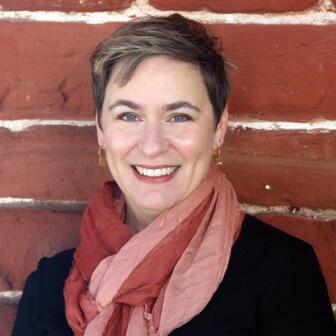

Judith Rosenbaum, CEO