
Barbara Boxer

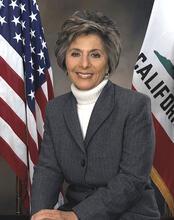
Barbara Boxer earned a reputation as a powerful voice for liberal causes by leading the charge on issues like sexual harassment, the Iraq War, and marriage equality. Boxer majored in economics and put her husband through law school by working as a stockbroker before the Vietnam War and the 1968 assassinations convinced her to turn her energy to forming grassroots organizations for peace, education, and women’s rights. Elected to the Senate in 1993, Boxer took strong stances on gun control and environmental issues. She served on the Senate committees for science and technology, the environment, foreign relations, and ethics, among others, and retired in 2017.
Barbara Sue Levy Boxer served four terms as United States senator from California, from 1993 to 2017. She ultimately became one of the most influential liberal political figures in the country. Boxer’s progressive agenda flowed above all out of an active and vocal commitment to feminist causes.
Early LIfe and Family
Boxer was born on November 11, 1940, in Brooklyn to lawyer Ira R. Levy and homemaker Sophie (Silvershein) Levy, who were immigrants. She attended public schools, graduating from Brooklyn’s Wingate High School. After what she characterizes as a Debbie Reynolds-type of life in the 1950s, she married Stewart Boxer in 1962 while a senior at Brooklyn College. The couple have two children. Doug, the elder, is a lawyer active in California civic and political affairs. Nicole is a documentary filmmaker. In 1994, Nicole married Hillary Rodham Clinton’s brother Tony in a White House wedding; that marriage ended in divorce, and she is re-married.
Boxer’s politicization was gradual. The same year she married, a professor sexually harassed her—something she did not publicly disclose until the Anita Hill-Clarence Thomas hearings that brought her national attention. In 1962, she organized tenants in her Brooklyn apartment complex to persuade a recalcitrant landlord to make necessary improvements.
After graduating from Brooklyn College in 1962 with a major in economics, Boxer hoped to become a stockbroker in order to put her husband through law school. No firm would hire her, however, so she had to study for the required exam while serving as a secretary. She was then able to ply her trade on Wall Street for three years.
In 1965, the Boxers moved to Greenbrae, in Marin County, California. The war in Vietnam and the 1968 political assassinations of Martin Luther King, Jr., and Robert F. Kennedy catalyzed her politicization. During the late 1960s and early 1970s, Boxer helped form, and participated in, a number of grassroots organizations involving education, day care, peace, and women’s empowerment.
Early Political Office
Boxer ran for political office for the first time in 1972, losing a race for the Marin County Board of Supervisors. She became a member of the Board of Supervisors in 1977 after working as a journalist and a congressional aide to Representative John Burton (who ultimately endorsed her for his seat upon his retirement from the House). Boxer went on to be the first female president of the Board of Supervisors in 1981 and was then elected to Congress the following year.
In her decade in the House of Representatives, Boxer specialized in feminist issues, particularly reproductive rights, and in exposing waste in defense spending. Yet it was the 1991 Supreme Court confirmation hearings for Clarence Thomas, where an all-white, all-male, panel of senators (including Joe Biden, chair of the Judiciary Committee) mercilessly grilled Anita Hill, that became the fulcrum of Boxer’s political life. Indeed, the narrative centerpiece of Boxer’s biography/political testament, Strangers in the Senate, is Boxer leading the march of seven congresswomen over to the Senate to demand a full consideration of the charges of sexual harassment against Thomas.
Senatorial Career
field_section_text_value
After the Senate
After retiring from the Senate, Boxer became involved in various political causes and supported a wide range of liberal candidates. In 2017, she founded the political action committee PAC For A Change and started recording the podcast Fight Back with her daughter, Nicole Boxer. More controversially, she began representing corporations. Employed by the ride-share company Lyft, she unsuccessfully fought against state legislation that would have made it harder for such “gig economy” businesses to categorize their workers as independent employees instead of employees who had more economic and legal rights. Boxer then supported the 2020 voters’ initiative, Proposition 22, that overturned that legislation. Such seemingly pro-corporate activity earned her the scorn of increasingly vocal left-wing progressives in Congress, such as Alexandria Ocasio-Cortez. Similar criticism followed when Boxer took on the position of co-chairwoman at Mercury Public Affairs, an influential bipartisan lobbying firm with strong connections to many larger corporations and foreign governments.
Conclusion
Boxer has not professed or discussed her religion much in public. Indeed, Strangers in the Senate does not refer to her Judaism at all.
Boxer came to the U.S. Senate in many ways as a classic Marin County liberal committed to individual liberties and government action on behalf of the underprivileged. Initially outside the national political mainstream, and not expected to become a powerful figure in Washington, D.C., she instead became one of the central figures in the Democratic Party during the Obama era. Boxer was, perhaps most significantly, responsible for making feminism respectable—if not always fully respected—at the highest levels of national politics.
“Barbara Boxer.” U.S. House of Representatives: History, Art, and Archives. N.d., https://history.house.gov/People/Detail/9704.
Boxer, Barbara, and Nicole Boxer. Strangers in the Senate: Politics and the New Revolution of Women in America. Washington, D.C.: National Press Books, 1993.
“Boxer, Barbara.” Current Biography Yearbook (1994): 63–66.
“Boxer, Barbara.” Who’s Who in American Politics, 1995–1996. (1995)
Meyer, Theodoric. “Barbara Boxer Joins D.C. Lobbying Firm.” Politico, January 7, 2020.
More on Barbara Boxer
Double your impact to amplify Jewish women’s stories—
All gifts matched up to $35,000
Before you close this article, please consider supporting the Jewish Women’s Archive and uplifting Jewish women’s voices.
At JWA, we preserve the voices of Jewish women and gender-expansive people past and present, share them freely with millions online, and empower a new generation of Jewish feminists to lead with courage, creativity, and conviction.
But none of this happens without you. JWA is an independent nonprofit— we rely on people, like you, who believe that history belongs to all of us and that the voices of Jewish women must remain powerful, and heard.
This month, a generous JWA board member will match every gift dollar for dollar—up to $35,000—through June 30. Your contribution goes twice as far right now.
Every contribution—no matter the size—helps us document, teach, and inspire through Jewish women’s stories.
It takes less than a minute to make a difference.
Thank you for being a part of the JWA community,

Judith Rosenbaum, CEO