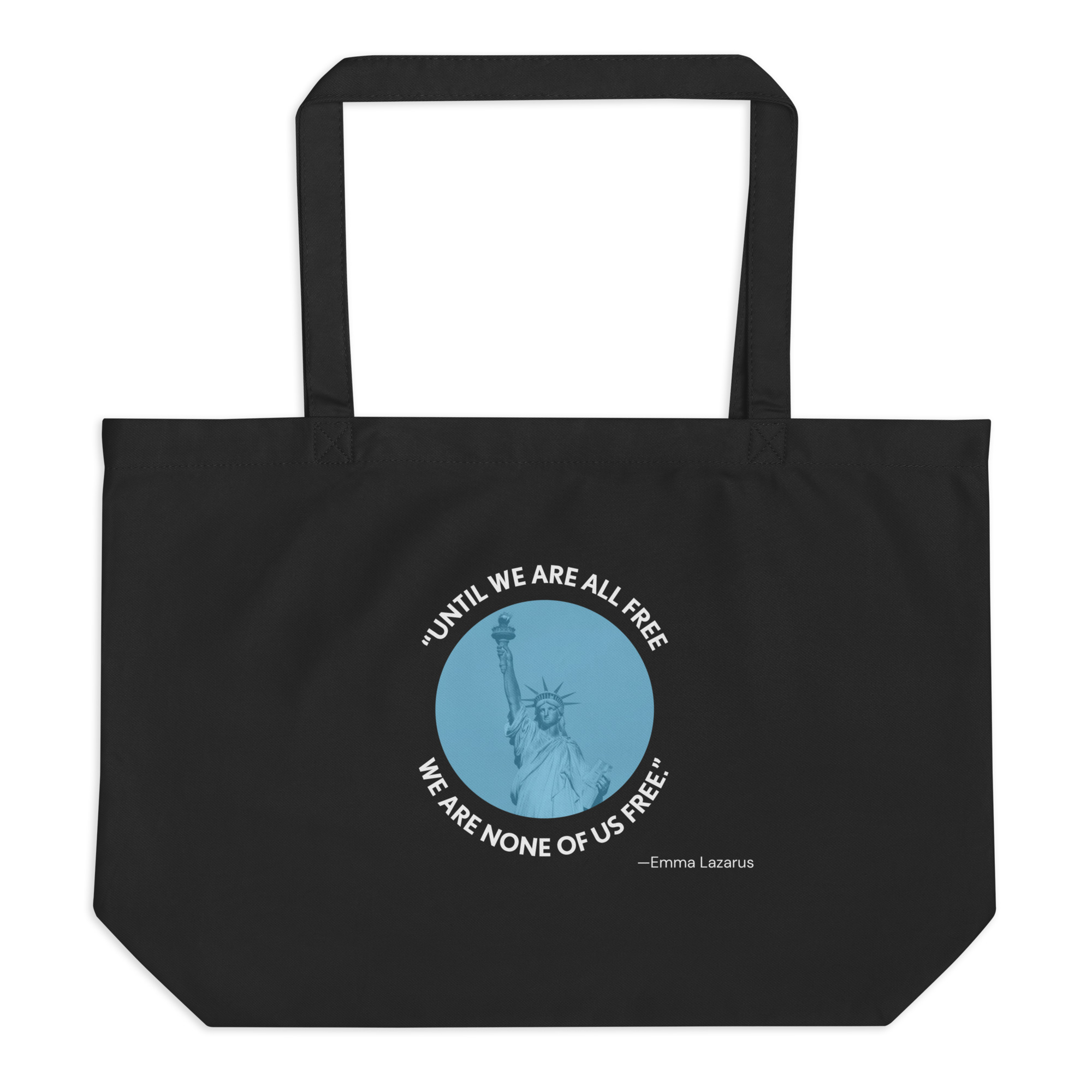

Bessie Thomashefsky

With suffragist spirit and comedic skill, Bessie Thomashefsky adapted great American and British plays for Yiddish-speaking audiences. Thomashefsky immigrated to Baltimore in 1883 and began working in a sweatshop at age twelve. At fourteen, she saw Boris Thomashefsky performing in a Yiddish play, joined the company a few years later, and married Boris in 1891. At Boris’ People’s Theater in New York, Bessie Thomashefsky performed Yiddish adaptations of plays by Chekov, Wilde, and Shakespeare, as well as modern Yiddish creations. She played several strong women, including the leads in Minke, the Housemaid, and Jennie Runs for Mayor. Although she separated from Boris, she ran the People’s Theater from 1915 to 1919 and renamed it for herself. She retired in 1930, wrote a memoir, and moved to California.
Bessie Thomashefsky, Yiddish actor and comedian, delighted audiences for over thirty years with leading roles in New York, and later on tour throughout the United States, in London and in Toronto.
Early Life
Born Brukhe Baumfeld-Kaufman in Kiev, Ukraine, Bessie Thomashefsky and her family arrived in America and settled near Baltimore in 1883. She attended school for two years until she was twelve and then went to work in a stocking factory and a sweatshop. At fourteen, she saw a Yiddish play that starred the young Boris Thomashefsky (1866–1939), who was then performing the women’s roles in the company. A few years later, she joined the Thomashefsky Players and married Boris in 1891. Although she was overcome with fright the first time she appeared onstage, she soon became the star of the company, playing the parts she had first seen her husband perform.
The People’s Theater
Boris Thomashefsky opened the People’s Theater in New York City, intending to bring Chekhov and Shakespeare to Yiddish-speaking audiences. Bessie starred in melodramas such as The Kreutzer Sonata and The Broken Fiddle and created the character of Beynishl in The Yeshiva Boy by Zolatarevsky.
As immigrants demanded more and more to see American plays, in 1901 the People’s Theater staged a Yiddish version of Uncle Tom’s Cabin. Like Irving Berlin, Boris Thomashefsky wrote songs such as “Der Yidisher Baseball Game” and “Der Yidisher Yankee Doodle,” many of which Bessie Thomashefsky made famous. In 1911 she starred in Das Meydl fun West, a Yiddish version of David Belasco’s Girl of the Golden West. In 1915 her husband wrote Di Sheyne Amerikaner [The beautiful American] for Thomashefsky, who shocked and delighted audiences by playing an emancipated woman in a riding costume.
Career Successes
field_section_text_value
Legacy
Few if any accounts of Bessie Thomashefsky’s professional career exist in English, where she is described only as “wife of” and “mother of.” The history of her career in the Lexicon of the Yiddish Theatre is probably the only account of her stage career in print today.
In 2005 Michael Tilson Thomas, now the music director of the San Francisco Symphony Orchestra, created a multi-media homage to his grandparents. The Thomashefskys: Music and Memories of a Life in the Yiddish Theater premiered at Carnegie Hall in New York in April of that year, with an on-stage band, singers and actors and Thomas as conductor and narrator.
AJYB 65:438.
EJ, s.v. “Thomashefsky, Boris”.
Lexicon of the Yiddish Theatre. Edited by Zalman Zylbercwajg. Vol. 2 (1934): 840–845.
Obituary. NYTimes, July 8, 1962, 65:2.
UJB, s.v. “Thomashefsky, Boris.”
Double your impact to amplify Jewish women’s stories—
All gifts matched up to $35,000
Before you close this article, please consider supporting the Jewish Women’s Archive and uplifting Jewish women’s voices.
At JWA, we preserve the voices of Jewish women and gender-expansive people past and present, share them freely with millions online, and empower a new generation of Jewish feminists to lead with courage, creativity, and conviction.
But none of this happens without you. JWA is an independent nonprofit— we rely on people, like you, who believe that history belongs to all of us and that the voices of Jewish women must remain powerful, and heard.
This month, a generous JWA board member will match every gift dollar for dollar—up to $35,000—through June 30. Your contribution goes twice as far right now.
Every contribution—no matter the size—helps us document, teach, and inspire through Jewish women’s stories.
It takes less than a minute to make a difference.
Thank you for being a part of the JWA community,
Judith Rosenbaum, CEO