

Shelomith 1: Bible
The story of Shelomith relates to the Egyptian practices concerning parentage and how a child is named. Shelomith herself is not explicitly described in the narrative, but the story of her son shows the punishment issued to blasphemers of God.
Article
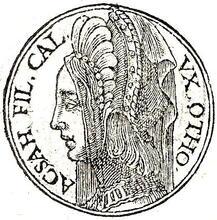
Daughter of Dibri of the tribe of Dan and wife of an Egyptian, Shelomith is the only woman mentioned by name in the Book of Leviticus. She appears in the narrative about her son, a man who pronounces the name of God in blasphemy during a fight with another Israelite man. Her unnamed son is brought to Moses and placed in custody to await the decision of God.
God then commands Moses to take him outside the camp and have the whole community stone him. At this point, a general policy is set forth, proclaiming that all who blaspheme God’s name, “aliens as well as citizens,” will be punished by being stoned to death (Lev 24:16). Stoning in ancient Israel was the penalty for very serious offenses—ones considered to endanger the universe.
This story may have served a pedagogical purpose by showing that blasphemy was a direct trespass on the holy and that stoning was sanctioned by God through special instruction to Moses. Other stories, such as the tale of the man who gathered wood on the Sabbath day (Num 15:32–36), carry the same message. Such stories also indicate the way a precedent might have developed into a general law.
The fact that the story, whether true or invented, presents a precedent for an important law may explain why it provides details of the man’s parentage: his father’s identity as an Egyptian and his mother’s name and lineage. The fact that the father is Egyptian helps justify the law’s application to non-Israelites (“aliens”) as well as Israelites. His mother’s name, along with her father’s name and tribe, is important in establishing him as an Israelite, perhaps because one’s lineage was usually reckoned through the father’s family. Shelomith’s name may have been preserved because she does not serve as an example of women in general.
Meyers, Carol, General Editor. Women in Scripture. New York: 2000.
Westbrook, Raymond. “Cuneiform Law Codes and the Origins of Legislation.” Zeitschrift für Assyriologie und Voderasiatische Archäologie 79 (1989): 201–222.
More Like This




Double your impact to amplify Jewish women’s stories—
All gifts matched up to $35,000
Before you close this article, please consider supporting the Jewish Women’s Archive and uplifting Jewish women’s voices.
At JWA, we preserve the voices of Jewish women and gender-expansive people past and present, share them freely with millions online, and empower a new generation of Jewish feminists to lead with courage, creativity, and conviction.
But none of this happens without you. JWA is an independent nonprofit— we rely on people, like you, who believe that history belongs to all of us and that the voices of Jewish women must remain powerful, and heard.
This month, a generous JWA board member will match every gift dollar for dollar—up to $35,000—through June 30. Your contribution goes twice as far right now.
Every contribution—no matter the size—helps us document, teach, and inspire through Jewish women’s stories.
It takes less than a minute to make a difference.
Thank you for being a part of the JWA community,

Judith Rosenbaum, CEO

