
Gella Sänger

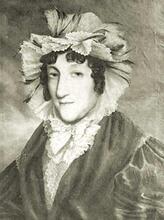
Gella Sänger (née Hirsch) was a Neo-Orthodox author, editor and bookseller. She was the first woman affiliated with (Neo-)Orthodoxy to write a guide to Jewish law and practice for women and girls. Sänger grew up in Frankfurt am Main, Germany, in its Neo-Orthodox community, which her grandfather, Rabbi Samson Raphael Hirsch, had established. Together with her husband and her twin sister (and later also her sister’s husband), she edited Hirsch’s collected writings. Their edition continues to be used in Jewish religious study and has served as basis for translations into English and other languages. After her husband’s death in 1936, Gella Sänger continued running their bookshop. She was deported to the Theresienstadt Ghetto in 1942 and perished a year later.
Biography
Gella Sänger (née Hirsch) was born on December 12, 1871, to Naphtali and Therese Esther Hirsch in Frankfurt am Main, where she grew up with her twin sister Rebecka. Gella’s family belonged to Frankfurt’s separatist, Neo-Orthodox community called the Israelitische Religions-Gesellschaft (IRG). Founded on the values of Torah im Derech Eretz (Hebrew, Torah with the Way of the Land), it understood itself as strictly observant of The legal corpus of Jewish laws and observances as prescribed in the Torah and interpreted by rabbinic authorities, beginning with those of the Mishnah and Talmud.halakhah. However, it also embraced various aspects of modernity and secular education, while at the same time rejecting more progressive developments within Jewish society, such as the Reform movement, and any cooperation with them.
In fact, it was Sänger’s grandfather, Rabbi Samson Raphael Hirsch, who had founded the Neo-Orthodox community and its most important institutions, such as the community’s own co-educational primary school and girls’ and boys’ secondary schools. The “Freie Vereinigung für die Interessen des Orthodoxen Judentums” (The Free Union for the Interests of Orthodox Jewry), also established by Rabbi Hirsch, lobbied for the Neo-Orthodox cause in the intra-communal and political realm. Gella and Rebecka attended the community’s girls’ secondary school, studying Biblical Hebrew and the Hebrew Bible, as well as sciences, French, and German. Little is known about their further education.
Both Naphtali and his daughters seem to have been particularly close to Rabbi Hirsch and his Neo-Orthodox worldview. Naphtali Hirsch was Rabbi Hirsch’s seventh son and trained as a lawyer. He was involved in the leadership of the “Freie Vereinigung für die Interessen des Orthodoxen Judentums,” which successfully campaigned for a secession from the Großgemeinde, the cross-denominational wider Jewish community. Supporters of Rabbi Hirsch felt it unacceptable that the compulsory fees they had to pay to the Großgemeinde would contribute to financing prayer services and other communal activities conducted in a way that disregarded Jewish law and tradition. The “Freie Vereinigung” also advocated for Orthodox Jews in the wider society, for example in the workplace, and vis-à-vis more progressive parts of the Jewish community.
Towards the end of his life, Naphtali Hirsch took on the task of collecting and editing the writings of Rabbi Hirsch that had previously been published in the monthly magazine Jeschurun (1854-1888). He was only able to complete the first volume, published in 1902, before he died, but his daughters continued his editorial work. Gella, Rebecka, and their husbands (in 1904, Gella married Simon Sänger; in 1907, Rebecka married Simon’s brother Joseph Sänger) published the remaining collected works by R. Samson Raphael Hirsch in six volumes, which appeared between 1902 and 1912.
Gella and Simon Sänger later moved to Fürth in Bavaria, where they were involved in the religious and communal activities of the Orthodox community, especially the Mannheimer-Schul. In 1919, Simon Sänger opened a bookshop in Fürth specializing in Hebrew books and Judaica, working closely with Joseph, who was also involved in book selling and publishing in Frankfurt am Main. Gella and Simon had no children.
In 1923, Gella, Simon, Rebecka, and Joseph Sänger published Naphtali Hirsch’s collected writings. These writings largely focus on the intersection of German secular and Jewish religious law and also include essays written on behalf of the “Freie Vereinigung.”
Einige Hinweise — Ishah El Achotah

field_section_text_value
Final Years and Forgotten Legacy
field_section_text_value
Works by Gella Sänger
Hirsch, Naphtali. Justizrat Dr. Naphtali Hirsch. Ein Blick in seine Geisteswerkstätte. Edited by Gella Sänger, Joseph Sänger, Rebecka Sänger, and Simon Sänger. Frankfurt am Main: Sänger & Friedberg, 1923.
Hirsch, Samson Raphael. Gesammelte Schriften von Rabbiner Samson Raphael Hirsch. Edited by Naphtali Hirsch, Gella Sänger, Joseph Sänger, Rebecka Sänger, and Simon Sänger, vols. 2-6. Frankfurt am Main: J. Kauffmann, 1904-1912.
Sänger, Gella. Ishah El Achotah: Einige Hinweise auf den Mizwaus-Kreis des täglichen Lebens speziell für Frauen und Mädchen. Fürth: Simon Sänger, 1927.
Breuer, Mordechai. Modernity Within Tradition: The Social History of Orthodox Jewry in Imperial Germany. New York: Columbia University Press, 1992.
Goldman Barash, Nechama. Uncovered: Women's Roles, Mitzvot, and Sexuality in Jewish Law. Jerusalem: Urim Publications, 2024.
Greenberg, Blu. How to Run a Traditional Jewish Household. New York: Simon & Schuster, 1983.
Magnus, Shulamit S. “How Does a Woman Write? Or, Pauline Wengeroff’s Room of Her Own.” In Gender and Jewish History, edited by Marion A. Kaplan and Deborah Dash Moore, 13–26. Bloomington: Indiana University Press, 2010.
Sufrin, Claire. “Telling Stories: The Legal Turn in Jewish Feminist Thought.” In Gender and Jewish History: Essays in Honor of Paula Hyman, edited by Marion Kaplan and Deborah Dash Moore, 233–248. Bloomington: Indiana University Press, 2010.
Wendl, Katharina Hadassah. “From Sister to Sister: Gella Sänger’s Guide on Jewish Law for Women.” Women’s Writing 33, no. 2 (2026). https://doi.org/10.1080/09699082.2026.2643564.
Yeshivat Har Etzion and Migdal Oz. “Deracheha – Women and Mitzvot.” Accessed June 21, 2025. https://www.deracheha.org/.
More Like This
Double your impact to amplify Jewish women’s stories—
All gifts matched up to $35,000
Before you close this article, please consider supporting the Jewish Women’s Archive and uplifting Jewish women’s voices.
At JWA, we preserve the voices of Jewish women and gender-expansive people past and present, share them freely with millions online, and empower a new generation of Jewish feminists to lead with courage, creativity, and conviction.
But none of this happens without you. JWA is an independent nonprofit— we rely on people, like you, who believe that history belongs to all of us and that the voices of Jewish women must remain powerful, and heard.
This month, a generous JWA board member will match every gift dollar for dollar—up to $35,000—through June 30. Your contribution goes twice as far right now.
Every contribution—no matter the size—helps us document, teach, and inspire through Jewish women’s stories.
It takes less than a minute to make a difference.
Thank you for being a part of the JWA community,
Judith Rosenbaum, CEO