

Feminist Jewish Ritual: The United States

Feminist seders have provided an important context for developing women’s spirituality. In 1975, a group of Israeli and American women decided to create their own Passover seder based on their experiences as Jewish women. Now an annual event held in Manhattan, it has been attended by Esther Broner, Gloria Steinem, Letty Cottin Pogrebin, Bella Abzug, Grace Paley and several other "Seder Sisters" who have played important roles in the development of Jewish feminism. Shown here are Bella Abzug, Phyllis Chesler and Letty Cottin Pogrebin at the Women's Seder in 1991.
Photo: Joan Roth
Ritual behavior is one of the fundamental pillars of Judaism, and of all religions, whose concern is precisely with ultimate meaning and purpose. Men in normative (rabbinic) Judaism have far more access to the sacred through personal and communal ritual than do women, in terms of sacralization of the body, family and public ritual, marriage and divorce, and much more. Jewish women have always elaborated rich sets of rituals with which the sacralized their daily lives, life-cycle events, and holidays, but these rituals did not enjoy the status of male rituals. Over the past several decades, Jewish feminists have elaborated a host of new rituals for women that have achieved remarkable acceptance and attained normative status. They have gained access to male-identified rituals, developed a wide variety of new rituals, and feminized core male rituals.
field_section_text_value
Gendered Difference in Traditional Jewish Ritual Observance
field_section_text_value
Traditional Jewish Women's Ritual, Its Fate in Modernity, and Feminist Innovation

field_section_text_value
Egalitarianism and Feminism

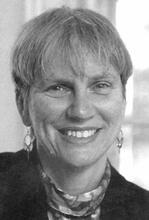
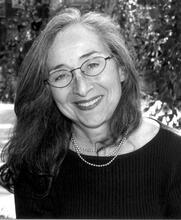
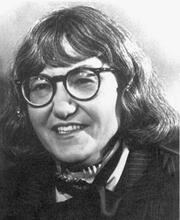
The first Jewish feminist to identify herself as a theologian, Judith Plaskow has created a distinctively Jewish theology that is at once academically rigorous, politically leftist and firmly woman-centered. The best known Jewish feminist theologian in both Jewish and non-Jewish circles, she appears here in 2004.
Photographer: Martha Ackelsberg
Institution: Judith Plaskow
field_section_text_value
Integrating Feminism into Mainstream Judaism

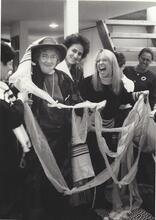
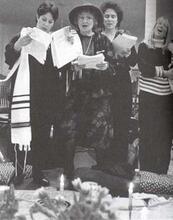
In the latter half of the twentieth century, Jewish feminists began to develop a repertoire of new feminist ritual. Yet they simultaneously sought a "usable past" within Judaism, so as to seamlessly link their own ritual creativity to the body of Jewish tradition. This Tashlikh ceremony in Riverside Park in New York City was sponsored by MA'YAN: The Jewish Women's Project. The cantor is Naomi Hirsch.
Photographer: Joan Roth
field_section_text_value
Resources and Their Significance

field_section_text_value
Creating Successful Ritual
field_section_text_value
Adelman, Penina V. Miriam’s Well. Rituals for Jewish Women Around the Year. Fresh Meadows, NY: Biblio Press, 1986.
Adler, Rachel. “Tumah and Taharah: Ends and Beginnings.” In The Jewish Woman, New Perspectives, edited by Elizabeth Koltun. New York: Schocken, 1976.
Adler, Rachel. “In Your Blood, Live: Revisions of a Theology of Purity.” Tikkun 8, no. 1 (January/February 1993): 38-41.
Adler, Rachel. Engendering Judaism, An Inclusive Theology and Ethics. Philadelphia: Jewish Publication Society, 1998.
Alexander, Bobby C. “Ceremony.” Encyclopedia of Religion 3:179–183.
Alpert, Rebecca T. “Exploring Jewish Women’s Rituals.” Bridges 2/1 (Spring 1991/5791): 66–80.
Alpert, Rebecca T. Like Bread on the Seder Plate: Jewish Lesbians and the Transformation of Tradition. New York: Columbia University Press, 1997.
Balka, Christie, and Andy Rose, eds. Twice Blessed: On Being Lesbians, Gay and Jewish. Boston: Beacon Press, 1989.
Antler, Joyce. Jewish Radical Feminism. New York: New York University Press, 2018.
Barack Fishman, Sylvia. A Breath of Life: Feminism in the American Jewish Community. New York: Free Press, 1993.
Berman, Phyllis. “Enter: A Woman.” Menorah 6, 1–2 (November/December 1984).
Berkowitz, Adena K. and Rivka Haut, eds. Shaarei Simcha, Gates of Joy. Jersey City, NJ: Ktav, 2007.
Broner, E.M. A Weave of Women. New York: Holt, Rinehart, and Winston, 1978.
Campbell, Joseph. The Masks of God: Primitive Mythology. New York: Penguin Books, 1959.
Cantor, Debra, and Rebecca Jacobs. “Brit Banot: Covenant Ceremonies for Daughters.” Kerem (Winter 1992–1993): 45–55.
Chesler, Phyllis and Haut, Rivka, eds. Women of the Wall, Claiming Sacred Ground at Judaism’s Holy Site. Woodstock, VT: Jewish Lights, 2003.
Cohen, Aryeh. Zeved habat (Hebrew) (1990).
Cohen, Tamara, ed. The Journey Continues: The Ma’yan Passover Haggadah. New York: Ma’yan: The Jewish Women’s Project, 2002.
Coppet, Daniel, ed. Understanding Rituals. London: Routledge, 1992.
De Sola Pool, David, ed. and trans. Book of Prayers According to the Custom of the Spanish and Portuguese Jews, 2d ed. (1986.
Diamant, Anita. The New Jewish Wedding. New York: Summit Books, 1985.
Elbaz, Vanessa Paloma, “Kol b’isha Erva: The Silencing of Jewish Women’s Oral Traditions in Morocco.” In Women and Social Change in North Africa: What Counts as Revolutionary?, edited by Doris Gray and Nadia Sonneveld, 263-288.Cambridge: Cambridge University Press, 2018.
Falk, Marcia. The Book of Blessings: A Feminist Reconstruction of Prayer. New York: HarperCollins, 1996.
Falk, Marcia. “Notes on Composing New Blessings: Toward a Feminist/Jewish Reconstruction of Prayer.” Journal of Feminist Studies in Religion 3 (Spring 1978): 39–53.
Green, Leona S. The Traditional Egalitarian Passover Haggadah. South Euclid, OH: Norlee Publishers, 2002.
Gross, Rita M. “Female God Language in a Jewish Context,” In Womanspirit Rising: A Feminist Reader in Religion, edited by Carol P. Christ and Judith Plaskow. San Francisco: Harper & Row, 1979.
Guren Klirs, Tracy, comp. and trans. The Merit of Our Mothers. A Bilingual Anthology of Jewish Women’s Prayers. Cincinnati: Hebrew Union College Press, 1992).
Heschel, Susannah, ed. On Being a Jewish Feminist. New York: Schocken Books, 983.
Hill, Helen. “Simchat Bat…” Jewish Chronicle, August 5, 1994.
Cardoza, Abraham Lopes (former hazzan of Congregation Shearith Israel, Manhattan), and Irma Lopes Cardoza. Interview. January 5, 2004.
JOFA (Jewish Orthodox Feminist Alliance) Journal.
Kaye/Kantrowitz, Melanie, and Irena Klepfisz. The Tribe of Dina: A Jewish Woman’s Anthology. Montpelier, VT: Sinister Wisdom Books, 1986.
Koltun, Elizabeth, ed. The Jewish Woman: An Anthology. Special Issue of Response, no. 17 (Summer 1973).
Koltun, Elizabeth. The Jewish Woman: New Perspectives. New York: Schocken, 1976.
Leifer, Daniel I. and Leifer, Myra. “On the Birth of a Daughter.” In The Jewish Woman, New Perspectives, ed. by Elizabeth Koltun. New York: Schocken, 1976.
Levine, Elizabeth Resnick, ed. A Ceremonies Sampler: New Rites, Celebrations and Observances of Jewish Women. San Diego, CA: Woman’s Institute for Continuing Jewish Education, 1991.
Lewin, Ellen. “‘Why in the World Would You Want to Do That?’ Claiming Community in Lesbian Commitment Ceremonies.” In Inventing Lesbian Cultures in America, edited by E. Lewin. Boston: Beacon Press, 1996.
Lilith: The Independent Jewish Woman’s Magazine.
Magnus, Shulamit S. “More Light on Menarche.” New Menorah, 2d series, 1 (Winter 1985).
Magnus, Shulamit. “Reinventing Miriam’s Well: Feminist Jewish Ceremonials.” In The Uses of Tradition, edited by Jack Wertheimer. Cambridge: Harvard University Press, 1992.
Magnus, Shulamit. “Simchat Lev: Celebrating a Birth.” In Lifecycles: Jewish Women on Life Passages and Personal Milestones, vol. 1, ed. by Debra Orenstein. Woodstock, VT: Jewish Lights Publishing, 1994.
Magnus, Shulamit. “Kol Isha: Women and Pauline Wengeroff’s Writing of an Age,” Nashim 7 (Spring 2004).
Magnus, Shulamit, ed. Memoirs of a Grandmother: Scenes from the Cultural History of the Jews of Russia in the Nineteenth Century, by Pauline Wengeroff. Vols. 1-2. Stanford, CA: Stanford University Press, 2010; 2014.
Magnus, Shulamit. A Woman’s Life: Pauline Wengeroff and Memoirs of a Grandmother. Oxford: Littman Library of Jewish Civilization, 2016./
Magnus, Shulamit. “Thinking Outside the Chains to Free Agunot and End Iggun.” https://blogs.brandeis.edu/freshideasfromhbi/thinking-outside-the-chains-to-free-agunot-and-end-iggun/ and https://blogs.brandeis.edu/freshideasfromhbi/thinking-outside-the-chains-to-free-agunot-and-end-iggun-2/
Myerhoff, Barbara. “Rites of Passage: Process and Paradox.” In Celebration: Studies in Festivity, edited by Victor Turner. Washington, DC: Smithsonian Institution Press, 1982.
Myerhoff, Barbara, et al. “Rites of Passage.” Encyclopedia of Religion 12: 380–387.
Ochs, Vanessa. Inventing Jewish Ritual. Philadelphia: Jewish Publication Society, 2007.
Plaskow, Judith. “God and Feminism.” Menorah 3/2 (February 1982).
Plaskow, Judith. Standing Again at Sinai. San Francisco: Harper & Row, 1990.
Prell, Riv-Ellen. Interpreting Women's Lives: Personal Narratives and Feminist Theory (with the Personal Narratives Group). Bloomington, IN: Indiana University Press, 1989.
Prell, Riv-Ellen. Fighting to Become Americans: Jews, Gender and the Anxiety of Assimilation. Boston: Beacon Press, 1999.
Rappaport, R.A. Ritual and Religion in the Making of Humanity. Cambridge: Cambridge University Press, 1999.
The Reconstructionist: A Journal of Contemporary Jewish Thought and Practice.
Reifman, Toby Fishbein, ed. Blessing the Birth of a Daughter: Jewish Naming Ceremonies for Girls. Englewood, NJ: Ezrat Nashim, 1976.
Response: A Contemporary Jewish Review
Ritualwell.org. www.ritualwell.org
Sered, Susan Starr. Women as Ritual Experts: The Religious Life of Elderly Jewish Women in Jerusalem. New York: Oxford University Press, 1992.
Turner, Kay. “Contemporary Feminist Rituals.” In The Politics of Women’s Spirituality, ed. Charlene Spretnak. Garden City, NJ: Anchor Books, 1982.
Turner, Victor. Ritual Process: Structure and Anti-Structure. Ithaca, NY: Cornell University Press, 1977.
Weidman Schneider, Susan. Jewish and Female: Choices and Changes in Our Lives Today. New York: Simon & Schuster, 1985.
Weissler, Chava. Voices of the Matriarchs. Listening to the Prayers of Early Modern Jewish Women. Boston: Beacon Press, 1998.
Weissler, Chava. “Images of the Matriarchs in Yiddish Supplicatory Prayers.” Bulletin of the Center for the Study of World Relations 14, no. 1 (1988): 45–51.
Weissler, Chava. “The Traditional Piety of Ashkenazic Women.” In Jewish Spirituality from the Sixteenth Century Revival to the Present, edited by Arthur Green, 245-275. Vol. 2. New York: Crossroad Publishing, 1987.
Weissler, Chava. “Traditional Yiddish Literature: A Source for the Study of Women’s Religious Lives.” The Jacob Pat Memorial Lecture, Harvard College Library, 1987.
Yoreh, Tzemah. “Reciprocal Oaths: A New Model for Jewish Marriage,” Jewish Law Journal, 2019 (forthcoming)
Zuesse, Evan M. “Ritual.” The Encyclopedia of Religion. Detroit, MI: Thomson/Gale, 1987.
More Like This

Double your impact to amplify Jewish women’s stories—
All gifts matched up to $35,000
Before you close this article, please consider supporting the Jewish Women’s Archive and uplifting Jewish women’s voices.
At JWA, we preserve the voices of Jewish women and gender-expansive people past and present, share them freely with millions online, and empower a new generation of Jewish feminists to lead with courage, creativity, and conviction.
But none of this happens without you. JWA is an independent nonprofit— we rely on people, like you, who believe that history belongs to all of us and that the voices of Jewish women must remain powerful, and heard.
This month, a generous JWA board member will match every gift dollar for dollar—up to $35,000—through June 30. Your contribution goes twice as far right now.
Every contribution—no matter the size—helps us document, teach, and inspire through Jewish women’s stories.
It takes less than a minute to make a difference.
Thank you for being a part of the JWA community,


Judith Rosenbaum, CEO

