
Lehi (Lohamei Herut Yisrael)

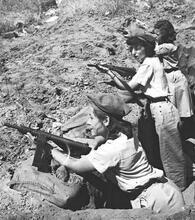
Three members of the underground Zionist paramilitary organization Lohamei Herut Yisrael (Lehi) during rifle practice, 1948. Source: Wikimedia Commons.
Led by Avraham Stern, Lohamei Herut Yisrael (Lehi) splintered from the underground group Irgun Zeva’I Le’ummi (I.Z.L.) when I.Z.L. called for an end to fighting with the British in 1940. The Lehi used force, blowing up transportation routes and other strategic sites and assassinating British officials, to pressure the British to follow through on the establishment of a Jewish state. Condemned by most Jewish leaders for their violent acts, members of Lehi tried to remain underground for risk of arrest, so the exact statistics about women membership is unknown. It is estimated that women comprised nearly 20 percent of Lehi members, active in all parts of the organization. This entry provides biographical sketches of a dozen of them.
Overview
field_section_text_value
Women of the “Break-Away”
Women were among the very first to join Stern’s faction upon his split from the I.Z.L. in 1940. Many were veterans of the Betar work brigades and the IZL; some had already taken courses in the use of firearms and provided first aid services during operations or served in the Intelligence Section, in communications, as youth counselors and the like. These bahurot (literally, “girls”), as the young women in the movement were called at the time, constituted the hard core and were a model to be emulated by the women who later joined the Lehi.
In this period, some Lehi members were single men and women who had come to Palestine alone. In order to facilitate the renting of rooms they used the “couples” method, masquerading as husband and wife, since a married couple aroused less suspicion.
The women were highly motivated to immediately participate in the war of liberation, but such rapid action was either prevented or delayed by the conditions existing after the split: lax organization, the loss of arms stores, and the thinning ranks. Many actions were planned, but only a limited number were actually carried out, and the majority of these failed.
Under such conditions, and in the face of the sharp criticism directed against the Lehi within the Yishuv, the organization’s members had to be highly motivated in order to continue the struggle, with unwavering faith in the justness of their cause. In everyday life, the members of the organization were forced to contend with numerous difficulties; some could not bear this constant danger of being shot by British policemen and, in an act of despair, surrendered themselves to the British and were imprisoned.
Not a single woman was among the Lehi members who surrendered themselves to the authorities, electing instead to contend with the existential everyday problems of work, studies, and a place to sleep. Every elementary need proved to involve a difficult and dangerous task. By their actions, these women earned the high esteem in which they were held by their comrades.

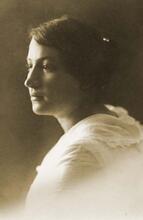
Known for her energy and resourcefulness, Juli Torenberg-Elasar (“Hava”), was born on December 20, 1917, to Moshe and Duda Behor, in the village of Kostrochowski, Bulgaria (today Serbia). She attended the main Hebrew school in Sofia and the state High School for Girls. As an outstanding pupil, she was exempted from taking the school-leaving examination. She immigrated to Palestine together with her family on May 19, 1935, and settled in the Lit. "village." The dominant pioneer settlement type of the Jews in Palestine between 1882moshav Bet Hanan. She joined the Rosh Pinnah group of Betar (Revisionist Zionist youth movement) on March 23, 1937, working in the tobacco fields as part of Betar’s work brigade. She joined the I.Z.L. in 1938, having completed her training as a group leader, and moved to Lehi in 1940, where she was appointed commander of the women’s group. Until her arrest in March 1942, she took part in surveillance, arms smuggling, and first aid, and was held in high regard by her comrades. Juli was forced to keep on the move, from one rented room to another. The general suspiciousness that pervaded the Yishuv and the alertness of the neighbors “to prevent acts of hooliganism” led to her being evicted time after time.
Juli relates: “The first operations by the Lehi aroused opposition and hostility. The operations against detectives [i.e., members of the British Criminal Investigation Division] in which Jewish policemen also were killed, the ‘requisition’ of funds from banks which was not well-received, and the libels by the British that we were a fifth column, all erected a wall of enmity around us.”
Ya’ir used her room for underground broadcasts to the Yishuv. His last letter, in which he rejected a suggestion that he seek shelter from the British, who had set a high price on his head, reached her after his murder on February 12, 1942. She perceived it as a bequest. A month later, on March 13, 1942, she was arrested and placed in administrative detention in the Bethlehem Women’s Prison. Released on June 16, 1946, she promptly resumed her underground activities.
After the establishment of the state Juli came to Jerusalem and participated in the battle to free the Old City.

field_section_text_value
Reorganizing after Stern’s Death
Lehi suffered a blow to its organization when Stern died in February 1942. Some eighth months later, however, following the escape from detention of “Michael” (Yizhak Shamir) the group began to recover and to reorganize. Almost a year later, on November 1, 1943, twenty Lehi members broke out of the Mazra’a detention camp through a 70–meter-long tunnel that they dug. The escape infused the underground with new energy and strength.
As a means for recruiting new members for underground activities, promotional material was regarded as extremely important by the members of the leadership, as it had been by the heads of Lehi since its inception. The Leadership sought to inform the public by means of the fliers and theoretical pamphlets which the organization distributed. While women did not participate in the writing, they were very active in the printing of the material, the pasting of fliers in the streets, and the distribution of written materials to supporters.
Women participated in most areas of the organization’s activity. They participated in individual acts of terror, in the mining of transportation routes—roads, railroad tracks, bridges, airfields, and the like—as well as of buildings connected with transportation, such as the railroad workshops and other such targets. A number of women were appointed as heads of sections, including the Youth and Recruitment Sections.

Geulah Cohen, a leading radio broadcaster for the underground Zionist paramilitary organization Lohamei Herut Yisrael (Lehi), during a broadcast, 1948. Photograph by Hans Pinn. Source: Wikimedia Commons.
field_section_text_value
Gender Equality in Lehi
The women in the Lehi underground considered themselves as enjoying the same rights and obligations as their male comrades. They also participated in missions that required physical strength, trained with arms, took part in combat, and were active participants in most of the organization’s sections. Women were appointed section leaders; in some actions, women participated as squad leaders and even as operation commander.
Leah Cohen-Granek-Osherov
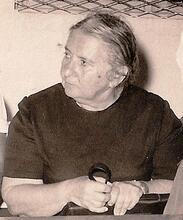
Leah Cohen-Granek-Osherov (“Yehudit”) was born in Tel Aviv in 1925, the daughter of Henya and Zaddok Oshrov, from whom she learned a love of the Jewish people and Erez Israel. While in high school, she and her friends joined the physical education unit of the Haganah and were sent to a course for unit (class) commanders. In 1943, while she was studying at a teachers’ seminary, she learned of the horrors of the Holocaust and of the concurrent British expulsion of survivor activists, which aroused great anger. While trying to decide on her own line of action, she met her husband-to-be, “Dov the blond,” a Lehi member who was impressed by her views and suggested she join the underground movement. She at once became an active member of the women’s section, engaging in tracking suspects, and in observation, as well as in instruction on the use of firearms and participating in acts of sabotage. One night, while she was affixing posters, she was arrested by the British police. She was imprisoned in Bethlehem for a year and a half and returned to her Lehi activities upon her release.
She was one of the women combatants in the organization. Her male comrades admired her courage, relied upon her ability to command and willingly accepted her authority, both as a weapons instructor and as a commander of operations in the field.
When the state was established she joined the IDF and was appointed an officer in the women’s corps. After the War of Independence she coordinated the organization commemorating the Eighth Brigade, in which most of the Lehi members had fought (1947–1948), and was involved in establishing a memorial at Ujja el-Hafir, a place that commemorated the war’s battles and fallen, among them her husband, the admired Dov (“the blond”) Yaakov Granek.
Leah Prisant
Leah Prisant (“Arielah”), was born on March 13, 1930, to Yaakov Shmuel and Malka Prisant in the town of Rakovitz in the Ukraine. In 1937 she immigrated to Palestine with her mother and brother in order to join her father. She attended the Talpiot elementary and high school in Tel Aviv. From the age of fourteen she was known for her special qualities and talents. Her strong character and passionate desire to live freely in her homeland led her to join Lehi at a young age. She quickly progressed to educational activities with young people and trained them in the use of light arms.
Prisant was renowned as a fighter and a commander. It was said of this charismatic young woman, who led armed actions in Jerusalem, that she was a born commander. Those under her command worshipped her and unquestioningly followed her orders. As “Ehud” relates: “I was placed in a squad commanded by Arielah, with Arielah in the lead, and myself as her second-in-command. I realized that she was quite familiar with the territory, and she unhesitatingly led the force in the dark. I noticed that all the men held Arielah in great esteem, the likes of which I did not witness towards other commanders.”
“Arielah” was killed in an accident in July 1948 that occurred in the weapons depot of Lehi’s Dror Camp in Jerusalem’s Talbiyyeh neighborhood. A detonator exploded, killing five people, including “Arielah.”
Women Prisoners Tried and Imprisoned under the Emergency Regulations
The battle between Lehi and the British authorities was unrelenting. The members of the organization lived under constant pressure of searches, arrests and imprisonment, and death. Numerous women members were arrested on suspicion of belonging to the underground. Even without the proof necessary to convict them in a court of law, they were incarcerated for one-year periods under the powers granted to the British authorities by the Emergency Regulations. After serving the year they were presented with a warrant for another year. Some were tried in British military courts and were sentenced to terms ranging from two or three years to life imprisonment.
When I.Z.L. member Rahel Ohevet-Ami became the first woman to be sentenced to life imprisonment in 1939, she was the only woman political prisoner among the women criminals and insane in the Bethlehem prison. Later, four Lehi women received similar sentences: Frieda Werkstal-Berlin (“Beruriah”), Esther Beckman-Greenstein (“Yael”), Yehudit Revdel-Yehezkel (“Avigail”), and Malka Hepner-Granvitz (“Ruth”), all of whom had participated in the attack on the roads leading to the railroad workshops in Haifa Bay on June 17, 1946. Their task was to prevent interference by the British police and army. The operation was successfully carried out, but the participants’ retreat from the scene was a failure; their car was ambushed by the British, who opened fire on them. Nine men were killed, in addition to two who died in the area of operation. While Frieda and Esther suffered slight wounds, Malka and Yehudit were among the seriously wounded and were disabled. Malka had many bullet fragments in her back and spine and Yehudit’s hands were injured. At their trial they were sentenced to life imprisonment and remained in prison until the establishment of the state.
Nineteen men who had taken part in the same operation, who were arrested and tried together with the women, were sentenced to death. Two weeks later their sentence was commuted to life imprisonment. Although the men initially received harsher sentences, the prison conditions endured by the women prisoners were worse than those of their male comrades-in-arms. At the time there were between twelve and sixteen women I.Z.L. and Lehi inmates in the Bethlehem prison; the number changed as some inmates were released, their places being taken by new prisoners. They were confined in their cells, in small groups of women. The Arab guards displayed a hostile and unbending attitude toward the Jewish prisoners. For most of the day and night, the inmates had only a kardal (the Arabic name for this public bucket) by way of latrine. Only one hour of daily exercise outside the crowded cells was permitted. For years the women had no writing materials or books; they were not even allowed a comb. They were given only spoons with which to eat. The meager prison food was supplemented for a few days each month by the food packages brought by their families during their monthly visits. The visitors also carried letters, which were concealed inside their shoes, in the false bottom of marmalade jars, and the like. Prisoners not granted “special treatment” slept on burshim, a sort of mattress made of rags, without sufficient blankets for the cold Judean Hills winters; nor did they have chairs or any other furniture in their cells. Those prisoners whose families brought them the necessary materials could occupy themselves in sewing or embroidery, but there was no possibility of engaging in intellectual or cultural activity. The single radio, in the corridor, played only Arab music. Most of the other women inmates in this wing of the prison were Arabs, who had been imprisoned for criminal acts.
During the first years of their incarceration, the veteran women prisoners felt abandoned, since the Lehi Central Committee did not maintain ongoing contact with them, but contact with the prisoners improved as time passed.
Frieda Werkstal-Berlin (“Beruriah”) was born in Vilna, Poland, on March 11, 1921, the only daughter of Selig and Adela Berlin. When she was twelve years old she joined the Revisionist youth movement Masada. She attended a Jewish high school and later the Biology Department at the University of Vilna. After the German occupation of Vilna in 1941, her father was sent to his death and Frieda was taken to a concentration camp in Riga. From there she was relocated in turn to twelve other labor camps, finally being liberated by American forces at Dachau. Refusing to be tempted by her relatives’ offers of visas to Australia and Mexico, she sailed for Palestine as a stowaway on a cargo boat. Upon her arrival she linked up with the Jewish underground fighters, where her steadfast spirit brought her to the activities unit of Lehi.
When the British came to search in the attic apartment of Tovah Savorai in Tel Aviv, she was already the mother of a little girl. They found Stern hiding in the apartment. There was a £1,000 reward for anyone who would turn him in, dead or alive. With great courage, she stood between Stern and the British officer who, with drawn pistol, threatened to shoot Stern. “You’ll have to shoot me first,” she said to the officer. Tovah was taken down from the apartment to the police van, and then a number of shots were heard and Tovah shouted, “They’ve killed Ya’ir!” Tovah Savorai spent over four years in the Bethlehem prison.
Summary
While women constituted twenty percent of members, positions in the organization were not apportioned in accordance with this 1:5 ratio. There were no women in the Lehi Executive, High Command, or Central Committee, nor did any write for the organization’s newspaper, thus retrospectively demonstrating the inequality in the underground organization. Nonetheless, there was a sense of equality that stemmed from the esteem in which the female comrades were held by their colleagues. Women fought to be included in the armed operations. Most women served as runners, provided first aid during operations, typed and pasted fliers, and were the cooks in courses.
The dangers they incurred because of these activities were the same as those faced by their male colleagues; a course in Ra’anannah, in November 1947, resulted in the deaths of three young women and two young men. Every activity and every operation entailed mortal danger for the sake of the same idea, the same ideal. This fact determined the egalitarian attitude within the organization, albeit without full equality in practice.
Bauer, Yehuda. From diplomacy to Resistance: A history of Jewish Palestine 1939-1945. Philadelphia: Jewish Publication Society of America, 1970.
Lehi anashim: sipur hayhem shel 840 lohamim velohamot (People in Lehi: An Encyclopedia of Members). Tel Aviv: Yair, 2003.
“Lohamei Herut Israel (Lehi or Stern Gang).” Jewish Virtual Library. https://www.jewishvirtuallibrary.org/lo-x1e25-amei-x1e24-erut-israel
Talmi, Menahem, Aviezer Golan, and Emmanual Katz. Lohamei ha-chofesh be-Yisrael: toldot ha-shomer, ha-haganah, ha-palmach, nili, etzel, lehi (Freedom Fighters in Israel: History of Hashomer, Haganah, Palmach, Nili, Etzel, Lehi). Tel Aviv: Hotsa’at S. Friedman, 1955.
More Like This

Double your impact to amplify Jewish women’s stories—
All gifts matched up to $35,000
Before you close this article, please consider supporting the Jewish Women’s Archive and uplifting Jewish women’s voices.
At JWA, we preserve the voices of Jewish women and gender-expansive people past and present, share them freely with millions online, and empower a new generation of Jewish feminists to lead with courage, creativity, and conviction.
But none of this happens without you. JWA is an independent nonprofit— we rely on people, like you, who believe that history belongs to all of us and that the voices of Jewish women must remain powerful, and heard.
This month, a generous JWA board member will match every gift dollar for dollar—up to $35,000—through June 30. Your contribution goes twice as far right now.
Every contribution—no matter the size—helps us document, teach, and inspire through Jewish women’s stories.
It takes less than a minute to make a difference.
Thank you for being a part of the JWA community,
Judith Rosenbaum, CEO