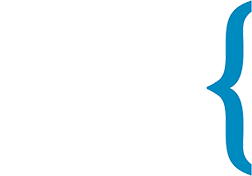

Rahel Katznelson

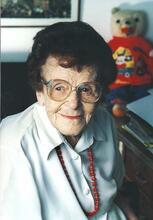
Rahel Katznelson, born in 1885 in Russia, moved to Israel in 1912 out of a personal desire for a life of meaningful Jewish creativity. While her education and abilities could have won her entry into the country’s intelligentsia, she chose to join the pioneers of the Second Aliyah, whom she viewed as the true proponents of the Jewish social and cultural “revolution.” Katznelson contributed greatly to the country’s emerging cultural life, laying stress on women’s participation within it. In addition to her work in the cultural sphere, she was also asked to fill a number of public positions, from representing Israel at international conferences for socialist women to appearing before the United Nations Special Committee on Palestine (UNSCOP) on behalf of the country’s Jewish women.
Background and Early Life
A thinker and teacher, Rahel Katznelson was one of the early activists in the Labor Movement and Mo’ezet ha-Po’alot in the Jewish community in Palestine prior to the establishment of the State of Israel. "Old Yishuv" refers to the Jewish community prior to 1882; "New Yishuv" to that following 1882.Yishuv and Israel.
In a letter to Dr. Yehudit Harari of August 28, 1956, Katznelson summed up her concurrent public activity in three areas: “Cultural activity among members of the Labor Movement; activity—mainly cultural—among women workers; and literary criticism.”
Katznelson was born in Bobruisk, Russia (now Babruysk, Belarus) on October 25, 1885 (15 Heshvan 5646), the second of the six children of Zelda (née Rozovsky) and Nisan Katznelson. The family was prosperous, modern-religious, and educated, earning their income as lumber merchants doing business with the southern region of Russia.
Rahel’s intellectual gifts were evident from childhood. After finishing her studies at the local grammar school at the age of twelve, she was sent to study at the gymnasia for girls in Kremenchuk in the Ukraine, where she spent six years. She absorbed culture and Russian literature to the point where she became “drunk on assimilation,” as she described it. In 1903 she graduated with honors, returning home with a gold medal that enabled her to open the doors of any university in Russia, despite being Jewish.
The reunion with her family and with her Jewish environment, coupled with the pogroms against the Jews of Kishinev that same year, led to an awakening and a decision to become acquainted with her own people’s culture before continuing her academic studies. She remained in Bobruisk for four years, studying Hebrew and Bible and becoming acquainted with the new Hebrew literature and with Yiddish popular literature. She joined the Zionist-Socialist Workers’ Movement in her city, taught Jewish women workers who had not received an education, taught Hebrew literacy to youth groups, and wrote an essay in Russian on the poetry of Hayyim Nahman Bialik (1873–1934).
She spent 1908 in Berlin, where she attended lectures at the seminary for Jewish studies, learned German and became acquainted with music, art ,and classic Western literature.
At the end of the year, Katznelson returned to Russia and registered to study Russian literature and history at the women’s university in St. Petersburg. At the same time, she registered for Jewish history at the Academy of Jewish Studies founded in the city that year. There she met a fellow student, Shneur Zalman Rubashov (1889–1974, later her husband, Zalman Shazar, third president of Israel), with whom she developed a relationship.
Early Writing Career and Relocation to Israel
Katznelson’s academic success strengthened her belief that she was meant to be a writer and literary critic. In St. Petersburg she had the opportunity to study both classical Russian literature and modern Hebrew literature in depth. Comparing the richness of Russian culture in the city with the feeble attempts to create a modern Hebrew culture there, she sadly wrote in her diary: “Have we no more than this?” On the other hand, she realized that as a Jewish woman she would never be able to put her achievements to use as an equal participant in the Russian artistic world. Hence her place was with her own people’s culture, though she felt that it was impossible to create true non-religious Jewish art in the Lit. (Greek) "dispersion." The Jewish community, and its areas of residence, outside Erez Israel.Diaspora.
Once she had reached this conclusion, Katznelson saw no point in continuing her studies. In addition, health problems and a (temporary) crisis in her relationship with Zalman Rubashov caused her to interrupt her studies and leave St. Petersburg in 1911. She searched for a place where she could find meaning in life and create freely. Her two close friends, Zalman Rubashov, who had returned from a trip to Palestine, and Berl Katznelson (1887–1944; not a relative), who had emigrated there the year before, tried to persuade her to move there as well. She recalls that as far as she was concerned, the deciding factor was a literary one—a story written by the The Land of IsraelErez Israel author Joseph Hayyim Brenner (1881–1921), “From Here and There” (1911). This story, which describes the emotional and material struggles of the pioneer in Erez Israel and Brenner’s own inner conflicts, aroused feelings of personal identification in Katznelson. She felt that this was the place where she herself would find an appropriate atmosphere. She reached the coast of Jaffa on November 7, 1912.
Working Woman
field_section_text_value
Family Life
When World War I broke out in 1914, Zalman Rubashov, who was studying at a German university, was arrested in Berlin as an enemy alien, due to his Russian nationality, and forbidden to leave the city until the end of the war. He reached Palestine in 1920 and resumed his relationship with Rahel Katznelson. They were married on April 19, 1920 (Rosh Hodesh Iyyar 5680), in Jerusalem. In the same year he was elected to the central committee of Po’alei Zion in Vienna, where the couple spent the next four years and where their only daughter, Rhoda, was born on February 14, 1921. Rhoda had Down Syndrome and her parents’ concern for her growth and education occupied them all their lives.
In 1924 they returned to Palestine and settled in Tel Aviv. Zalman Rubashov served on the editorial board of the workers’ newspaper, Davar (founded 1925), while Rahel joined the Histadrut’s cultural committee, where she helped develop its educational network, Hebrew-language studies for immigrants and a central library.
Writing Career
field_section_text_value
Selected Works by Rahel Katznelson
Massot u-Reshimot (Essays and Articles). Tel Aviv: 1944. Literary essays about Jewish and Russian authors and short articles written between 1918 and 1945. Most of them published in Devar ha-Po’elet; Al Admat ha-Ivrit (On Hebrew Soil). Selected Essays. Tel Aviv: 1966; Im Pa’amei ha-Dor (In the Steps of the Generation). Tel Aviv: 1964. A two-volume anthology of selected material from Devar ha-Po’elet, celebrating the journal’s twenty-fifth anniversary.
Divrei Po’alot (translated by Maurice Samuel as The Plough Woman). New York: 1932; Adam Kemo she-Hu (The Person as She Was). Edited by Michal Hagitti. Tel Aviv: 1989.
Personal diaries, letters and articles, 1907–1972. Ha-Hofim ha-Shenayim (The Two Shores). Edited by Michal Hagitti. Jerusalem: 1999.
Correspondence (281 letters) between Rahel Katznelson and Zalman Rubashov-Shazar, 1909–1963, from the time they met in St. Petersburg until his nomination as third president of the State of Israel.
Hebrew
Harari, Yehudit. “Rahel Katznelson.” In A Woman and Mother in Israel. Tel Aviv: 1959, 358–360.
Miron, Dan. “The Conquered Heart.” In Founding Mothers, Stepsisters: The Emergence of the First Hebrew Women Poets and Other Essays. Tel Aviv: 1991, 249–271.
Kolat, Israel. Interview with Rahel Katznelson. Jerusalem: July 1962. The Avraham Harman Institute of Contemporary Jewry at the Hebrew University of Jerusalem, File 161.
Unpublished Manuscripts
Katznelson, Rahel. A letter to Yehudit Harari (Hebrew). November 11. 1956. The Family Archive, Jerusalem.
Katznelson, Rivka. Rahel Katznelson: A Biography. The Family Archive, Jerusalem.
More on Rahel Katznelson
Double your impact to amplify Jewish women’s stories—
All gifts matched up to $35,000
Before you close this article, please consider supporting the Jewish Women’s Archive and uplifting Jewish women’s voices.
At JWA, we preserve the voices of Jewish women and gender-expansive people past and present, share them freely with millions online, and empower a new generation of Jewish feminists to lead with courage, creativity, and conviction.
But none of this happens without you. JWA is an independent nonprofit— we rely on people, like you, who believe that history belongs to all of us and that the voices of Jewish women must remain powerful, and heard.
This month, a generous JWA board member will match every gift dollar for dollar—up to $35,000—through June 30. Your contribution goes twice as far right now.
Every contribution—no matter the size—helps us document, teach, and inspire through Jewish women’s stories.
It takes less than a minute to make a difference.
Thank you for being a part of the JWA community,
Judith Rosenbaum, CEO