

ATS and WAAF in World War II

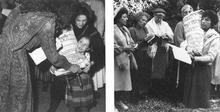
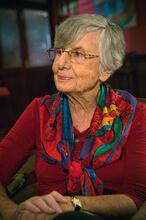
Brigadier General Israela Oron, O.C Women's Corps, and Esther Herlitz, presenter, at "Dor l'Dor Yabia Omer," a meeting held on the occasion of a visit of Women Veterans of ATS (Auxiliary Territorial Service) and WAAF (Women’s Auxiliary Air Force) to the Chen Training Camp in Sarafand, June 19, 1996.
Institution: Esther Herlitz
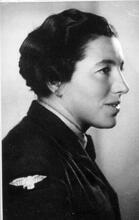
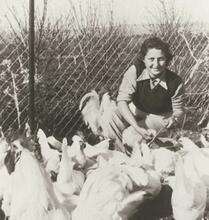
Thirty thousand men volunteered for the British Army between 1939 and 1946. Only when the Council of Women’s Organizations called for the recruitment of women as well was an agreement reached with the British authorities to enlist women into the forces. The first to join were a small group of sixty women to be trained as officers and N.C.O.s for the ATS (Auxiliary Territorial Service), followed by women joining the WAAF (Women’s Auxiliary Air Force). The women in ATS and WAAF were employed in a wide range of tasks, including working in arms and ammunition depots, photography, meteorological services, and driving. The experience of service in the British army was of great importance in the establishment of the IDF and the Women’s Corps.
Initiation of ATS and WAAF
The Jewish community in Palestine prior to the establishment of the State of Israel. "Old Yishuv" refers to the Jewish community prior to 1882; "New Yishuv" to that following 1882.Yishuv regarded the war against Nazi Germany (World War II) as its war. At the behest of the Jewish Agency thirty thousand men volunteered for the British Army between 1939 and 1946. Only when the Council of Women’s Organizations called for the recruitment of women as well was an agreement reached with the British authorities to enlist women into the forces. The first to join, on January 25, 1942, was a small group of sixty women to be trained as officers and N.C.O.s for the ATS (Auxiliary Territorial Service). Women for the WAAF (Women’s Auxiliary Air Force) were drafted only on May 25, 1943. The call was for women between twenty and forty-five years of age. Altogether 4,350 Palestinian women volunteers joined the British Armed Forces “for the duration of emergency.” Most were discharged in 1946.
The subject of women serving in the British army was at first controversial in the Yishuv. Questions were raised about the moral issue as well as with regard to the appropriateness of leaving the country at a time at which the German General Erwin Rommel was advancing on Egypt. Considerable effort was invested in a large-scale recruitment drive, which turned out to be successful.
Women of all walks of life and age groups, married and single, joined up. In some cases, both husband and wife joined. Some were illiterate and some were highly educated. A great many were recent young immigrants, mostly Youth Lit. "ascent." A "calling up" to the Torah during its reading in the synagogue.aliyah graduates who had no permanent homes in the country.

Basic training of a month took place in the central British military base at Sarafand in Palestine. The women were posted to sixteen ATS units in Palestine, Egypt, Syria and Lebanon. Toward the end of the war a number of ATS were sent to Italy and Austria. ATS camps were separate companies under women officers. The top echelon was entirely British; only two companies were fully under “Palestinian” command. The women’s army identification numbers ran as W/Pal and they wore the insignia “Palestine” on their sleeves.
Uniforms of the ATS were all khaki, from underwear to stockings, shirts, battle dress and skirts. Only the drivers wore trousers. The heavy material did not suit the Middle East climate. The blue WAAF uniforms were the envy of all, as were those of the United States and South African women contingents.
Tasks and Responsibilities

field_section_text_value
Impact of ATS and WAAF
field_section_text_value
More Like This

Double your impact to amplify Jewish women’s stories—
All gifts matched up to $35,000
Before you close this article, please consider supporting the Jewish Women’s Archive and uplifting Jewish women’s voices.
At JWA, we preserve the voices of Jewish women and gender-expansive people past and present, share them freely with millions online, and empower a new generation of Jewish feminists to lead with courage, creativity, and conviction.
But none of this happens without you. JWA is an independent nonprofit— we rely on people, like you, who believe that history belongs to all of us and that the voices of Jewish women must remain powerful, and heard.
This month, a generous JWA board member will match every gift dollar for dollar—up to $35,000—through June 30. Your contribution goes twice as far right now.
Every contribution—no matter the size—helps us document, teach, and inspire through Jewish women’s stories.
It takes less than a minute to make a difference.
Thank you for being a part of the JWA community,
Judith Rosenbaum, CEO

