
How Finding a Swastika Helped Me Find My Voice


When I was younger, I was loudly and proudly Jewish. When people said Merry Christmas to me, I corrected them. I took satisfaction in educating them. While in hindsight this must have been incredibly annoying, I look back on that little girl with pride: How confident she was, how she loved her identity out loud.
While this pride slowly faded as I entered high school, my real turning point was the October 7th Hamas attacks. After that day, I told very few people about my Judaism. Even my closest friends didn’t know; it was not a part of me I felt comfortable talking about at school. Instead of outwardly sharing my Jewish identity, I turned inward to my faith. I started going to services more, started wanting to be there. While I will forever be grateful that such an awful event pushed me closer to my faith, I now know that it took something incredibly valuable from me too: not just my voice, but my ability to feel safe when using it.
This hiding continued for nearly two years. Slowly, my closest friends learned I was Jewish. Then, my teachers, when I missed school for the High Holidays. By the start of this year, my junior year, all of my friends, most of my teachers, and some of my classmates knew.
Then, during Writers Late Night for my school newspaper, two days before Yom Kippur, one of my friends found a swastika in the bathroom outside of our classroom.
This was not like October 7th: tragic and deeply personal, but still halfway across the world. This was here, in my school. Drawn by someone I likely passed in the halls, perhaps even someone I knew. This felt targeted, personal. While this wasn't the first swastika I have ever seen in school—in fact, there has been at least one almost every year of my education—this one hit me the hardest. Maybe because I was older and more educated, maybe because I had finally started to open up about my identity.
I didn't process it until late that night, and I didn't even think to report it until the following day.
The next afternoon, erev Yom Kippur, I remember valiantly trying to wipe away my tears after reading the communication my principal finally sent out about the incident. I told my mom, “The thing I hate most is that they're taking [Yom Kippur] away from me. This is my favorite holiday; it should be the time I get to focus, reflect, and repent. Instead, I can't stop thinking about it.”
I remember sobbing in the shower on Thursday night after Yom Kippur ended, shaken. When I checked my phone, I saw the headlines about a deadly shooting at a synagogue in the UK. I remember screaming that I was terrified to go to school. I remember hiding out in my journalism teacher’s class most of the day, trying to calm myself down. I remember reaching out to my friends about how scared I was, and receiving mixed reactions. Some of them offered unconditional support, while many had no idea why I might be scared.
I had already decided to co-write an article for my school newspaper about my school and district’s decision to schedule many important events on Jewish holidays. I wanted to write it with a Jewish friend (one of just a few in that class) whom I had met that year, whom I didn't know well but had gone to services with that day. After finding the swastika, however, I knew we had to write about these incidents as well. Despite how scared I was, this had to be said, and we were the only ones who could say it.
Writing this article was one of the most difficult things I have ever done. It took countless late-night Facetimes and cries and breakdowns. I received a level of pushback from my editors and advisors that felt both unprecedented and deeply personal, although I do not blame them for trying to do their jobs to the best of their abilities.
There were so many setbacks, but throughout it, I felt support from my Jewish community. When my advisor and editor decided to delay publication, a decision that was, at the time, both heartbreaking and deeply frustrating, I felt that support more than ever. I was in Pennsylvania with my mom and one of her friends from college when I learned about this decision. My mom’s friend shared the ways she and her family had experienced similar situations—antisemitism, having their voices silenced—reassuring me that I was not—was never—alone.
This was the first time I really, truly, realized how universal an experience antisemitism is: not just the swastikas but the reactions, the microaggressions, and the double standards. Simultaneously, I realized that no matter the outcome, writing this piece would do something. Even if it did not change policy or response, it would at least be there for so many other people experiencing similar issues.
So instead of writing it for myself, I expanded. I wrote the article—which was uniquely my story—for the community of Jews all around the world who could relate, who had their own distinct but remarkably similar stories.
Instead of writing it just to share what happened and why it was wrong in the hopes of changing the opinions of non-Jewish readers and leadership, my perspective shifted. I started writing for the others in my Jewish community who had experienced the same things but didn't have the power to write about them like I did—because even if it didn't change district policy, I had the opportunity to be their voice too.
While my co-writer and I made many concessions and lost many fights, one of the most important sticking points for me was that there was a Jewish voice on the editorial side of this piece, because, fundamentally, it was a piece about, by, and somewhat for Jewish students. Once we were able to have a Jewish editor, much of the dynamic shifted dramatically. For the first time, edits felt collaborative rather than combative.
After the delayed publication, the response from my Jewish community was so overwhelmingly positive. From across the country, all over the political spectrum, all different ages, everyone supported me and told me how powerful the article was—how well written, how poignant, how important. They expressed how glad they were that I was speaking up, how proud of me they were.
Writing this article has taught me so much about how my words can spark change. It taught me how to raise my voice when I truly believe it matters, when I really need to. Despite the fear and setbacks, it has made me more confident in sharing my Judaism. While my faith—my personal relationship with Adonai—is mine alone, I want my culture, traditions, and rituals to be something I feel comfortable sharing.
I learned that despite hardships, setbacks, and fear, I can use my voice to speak up and out. And, in doing so, I connected even more to my Jewish community, my faith, my family, and my ancestors who experienced antisemitism but did not have the choice or voice to speak out about it. And in the end, one of the scariest events of my life took my voice away, and another scary event helped me find it again.
When I look back at the scared girl I used to be, afraid of her faith, I want to tell her: you can speak up, even when it is scary. I am so proud of the ways she was strong, and I hope she is proud of me, too.
This piece was written as part of JWA’s Rising Voices Fellowship.
Double your impact to amplify Jewish women’s stories—
All gifts matched up to $35,000
Before you close this article, please consider supporting the Jewish Women’s Archive and uplifting Jewish women’s voices.
At JWA, we preserve the voices of Jewish women and gender-expansive people past and present, share them freely with millions online, and empower a new generation of Jewish feminists to lead with courage, creativity, and conviction.
But none of this happens without you. JWA is an independent nonprofit— we rely on people, like you, who believe that history belongs to all of us and that the voices of Jewish women must remain powerful, and heard.
This month, a generous JWA board member will match every gift dollar for dollar—up to $35,000—through June 30. Your contribution goes twice as far right now.
Every contribution—no matter the size—helps us document, teach, and inspire through Jewish women’s stories.
It takes less than a minute to make a difference.
Thank you for being a part of the JWA community,
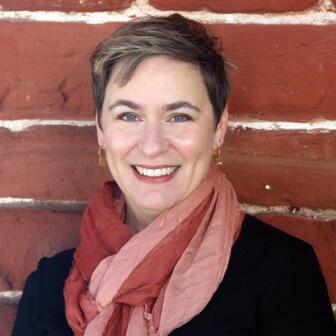
Judith Rosenbaum, CEO