
Finding Friedan in Barcelona

This month our Rising Voices Fellows respond to statements by and about Jewish feminist icons. Be sure to check the JWA blog each Tuesday for a new post from our fellows—and check out the great educational resources provided by our partner organization, Prozdor.
It was August of 1970, and a group of 50,000 women marched proudly together in New York, marking the 50th anniversary of women’s suffrage. Betty Friedan, a feminist activist, organized the event and was asked to address the crowd. At one moment during the march, she recounted, she suddenly found herself quoting a Hebrew prayer: “Down through the generations in history, my ancestor prayed, ‘I thank Thee, Lord, I was not created a woman’. From this day forward women all over the world will be able to say, ‘I thank Thee, Lord, I was created a woman.’” Later, she explained that she was surprised that she drew upon Jewish text when expressing feminist ideas.
At that very moment, two of Friedan’s worlds collided—her Jewish and feminist worlds. The quoted prayer connected the two—and ultimately created one powerful experience.
I am not surprised at Betty Friedan’s quoting a prayer in a seemingly not specifically Jewish context.
I often find myself in a similar situation. I tend to draw upon Hebrew stories or prayers to illustrate a point or experience in class. They offer me a framework that is familiar. I had a similar experience last summer, while walking through a neighborhood in the city of Barcelona, I found myself noticing the Hebrew words that were inscribed on the stone walls. Later, the guide told us that the words came from gravestones in a Jewish cemetery. Needing more stones, the workmen had used the markers from where the dead were buried. But now, amid the secular city, what resonated with me were the remnants of a Jewish presence. Jewish text has the power to make people look at situations differently. I think that Friedan felt this way during that march in 1970—she used her interpretation of the sacred text to make her experience as a feminist even more special. For me in Barcelona, it reminded me of the significance of Judaism in my identity—even though I was miles away from home, it was comforting to realize that I am surrounded by Judaism where ever I go.
Judaism is a significant part of my identity and as I explored Barcelona with my family, I continued to notice Jewish features around me. Barcelona is a beautiful city on its own, but the fact that I could see with my own eyes evidence of previous Jewish existence there moved me. During one walk in the city, a guide pointed out holes and marks where mezuzot had been torn out of the walls by Jews escaping persecution in Spain. A painful experience for Jews in the past now created a special moment for me in the present.
I understand why Betty Friedan turned to a Jewish prayer during that march. Judaism, including Jewish text and Jewish culture, is a big part of our identities. Betty Friedan used Jewish text to strengthen her argument because similar to feminism, Judaism has shaped her. Wherever we go or whatever we see, we connect back to our Jewish heritage and our roots—whether it is amid the stones of Barcelona, or in front of a crowd of 50,000.
This piece was written as part of JWA’s Rising Voices Fellowship.
Double your impact to amplify Jewish women’s stories—
All gifts matched up to $35,000
Before you close this article, please consider supporting the Jewish Women’s Archive and uplifting Jewish women’s voices.
At JWA, we preserve the voices of Jewish women and gender-expansive people past and present, share them freely with millions online, and empower a new generation of Jewish feminists to lead with courage, creativity, and conviction.
But none of this happens without you. JWA is an independent nonprofit— we rely on people, like you, who believe that history belongs to all of us and that the voices of Jewish women must remain powerful, and heard.
This month, a generous JWA board member will match every gift dollar for dollar—up to $35,000—through June 30. Your contribution goes twice as far right now.
Every contribution—no matter the size—helps us document, teach, and inspire through Jewish women’s stories.
It takes less than a minute to make a difference.
Thank you for being a part of the JWA community,
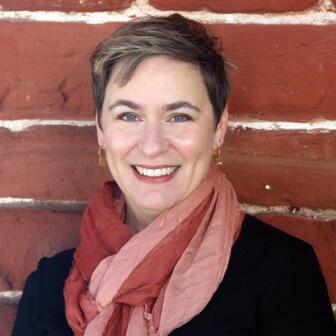
Judith Rosenbaum, CEO