Navigating Parenthood After Losing My Mother


I found out I was pregnant exactly seven months after Mom died, an unexpected ray of sunshine in what had been a dark year full of loss. In my twenties, I’d been told that it would be difficult for me to get pregnant without medical help; watching the two lines appear on that fateful pregnancy test felt like the universe was trying to make amends. But it was sobering to realize that I would become a mother without my own to guide me. It added a new dimension to my year of mourning.
Mom raised me on her own and sacrificed so much to make sure that I had a better life. I often quipped to her that I wasn’t sure I had the strength or emotional stability to raise a tiny human; she’d reply that she had total faith in me. I never really understood why she did, because she was the one who guided me through the deep depression that hit me in high school. She was the one who helped me find my way in adulthood. When she was diagnosed with breast cancer, she was the one who held me as I sobbed. She was the steadfast rock that weathered whatever life threw at her, while I was the soft, chalky stone that crumbled easily. How was I supposed to raise a child without her there?
I struggled, in the postpartum haze, to balance the sleeplessness and steep learning curve that comes with having a newborn and the deep and sorrowful pain I felt about my mom not being there for such a huge life change. Grief doesn’t pause just because life demands you keep moving; it settles into your bones and resurfaces in the quiet moments—during those 2 a.m. feedings, or when I sing Oseh Shalom to Eliza at bedtime, or when I watch her build a tower using blocks. I feel Mom’s absence most deeply in those small, unassuming moments.
I wish, fervently, that I had talked to her more about motherhood. All I can do now is compare my experiences with what I remember of her then, and it’s a poor substitute. I wonder what she would have told me, and what she would have thought of me as a mom. I see so much of her spirit in Eliza, and I mourn the fact that she never got to become Grandma.
Motherhood has cracked me open in ways I never expected. It sharpened my grief, but it also deepened my sense of responsibility to the life I have brought into the world. I’m no longer just navigating my own pain; I’m also tasked with shaping a human who will one day have to make sense of a complicated world, one that doesn’t always make space for her full self.
Raising a multiracial Jewish child today feels terrifying. I think constantly about how to give Eliza a strong sense of who she is while knowing that the world may try to flatten or question her identity. I worry about how she will be seen, about the questions she will be asked, about the moments when she will be asked to explain or defend parts of herself that should never need justification. I want to teach her pride without hardening her and resilience without instilling fear in her, but I’m not sure how to do that.
I ache most for my mom in those moments. She was so clear about who she was and where she stood, and she taught me how to move through the world with integrity. I wish I could ask her how to raise a child who is kind but not naïve, rooted but willing to explore, proud of her Jewishness and all the other tiny things that make her who she is.
And yet, even without her here, I feel Mom everywhere. In the way I soothe Eliza. In the fierce protectiveness that rises up in me. Mom believed in me long before I had faith in myself.
Some days I still feel like that chalky stone, worn down and unsure. But when I ask myself what Mom would have told me, I hear the same quiet confidence she had in me all those years ago, pointing out that even soft stones leave marks over time, that I’m making motherhood my own, in a way that feels true to me. I’m raising my child in a world that is messy and painful and beautiful, carrying my mother’s legacy forward even as I grieve her absence. And somehow, impossibly, I’m doing it—not perfectly, but in a way that makes sense for me, my daughter, and the world she is growing up in.
This piece was written as part of JWA’s Pomegranate Writing Fellowship for Jewish Women of Color.
Double your impact to amplify Jewish women’s stories—
All gifts matched up to $35,000
Before you close this article, please consider supporting the Jewish Women’s Archive and uplifting Jewish women’s voices.
At JWA, we preserve the voices of Jewish women and gender-expansive people past and present, share them freely with millions online, and empower a new generation of Jewish feminists to lead with courage, creativity, and conviction.
But none of this happens without you. JWA is an independent nonprofit— we rely on people, like you, who believe that history belongs to all of us and that the voices of Jewish women must remain powerful, and heard.
This month, a generous JWA board member will match every gift dollar for dollar—up to $35,000—through June 30. Your contribution goes twice as far right now.
Every contribution—no matter the size—helps us document, teach, and inspire through Jewish women’s stories.
It takes less than a minute to make a difference.
Thank you for being a part of the JWA community,
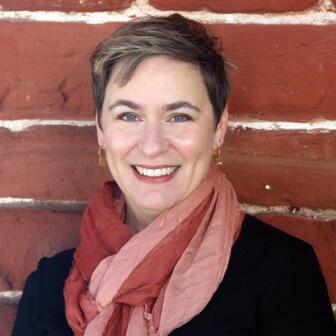
Judith Rosenbaum, CEO