Meet Faye Moskowitz, Writer and Teacher

You might expect a writer, at age 80-plus, to retire from the public eye. Not Faye S. Moskowitz. As chair of the English Department at The George Washington University, the acclaimed short story author still shapes the dialogue about Jewish American fiction and where it’s headed. She continues to give book talks and forge conversations between accomplished writers and aspirants. Her own work has sometimes been compared to that of famed Jewish American short story writer Tillie Olsen.
Born in 1930, Moskowitz spent her early years in Detroit and Jackson, Michigan. She married just out of high school when she was 18 and had her first child at 19. In Michigan, she worked for the Democratic Party, becoming county vice-chairman, until her husband’s job took the family to Washington. There she enrolled at GW. She credits a senior-year creative writing class—her first—with inspiring her to write.
She went on to earn a Master’s degree and later a doctorate from GW. She taught middle school for 12 years before returning to GW to teach and direct the creative writing program. Ten years later she became department chair.
She teaches creative writing and Jewish American literature. One of her most popular classes is “Jewish Literature Live,” which brings in leading Jewish American writers—including Tony Kushner, Nathan Englander, and Lisa Zeidner—to talk about their work and to take questions from students.
Moskowitz didn’t begin writing until she was nearly 40, the mother of four, and studying for her B.A. But she’d been mentally storing material for years—the colors, textures, and characters of her Depression-era childhood in Jewish Detroit.
There in “the ragtag contents of my dreambag,” she found inspiration for stories “of home, of the early years that shaped me, of the ghosts who peopled my dreams.”
Some of those alternately frank, funny, and compassionate tales became part of one of her best-known collections of short fiction, And the Bridge is Love, first published in 1991. The book was well received, with one critic praising the author for “a poet’s ear for language.” When the Feminist Press reissued the book in 2011, Moskowitz says she was humbled and honored.
Other books of hers include A Leak in the Heart (1985), Whoever Finds This: I Love You (1988), and Peace in the House (2002). She also edited Her Face in the Mirror: Jewish Women on Mothers and Daughters (1994).
Today, the author and winner of several literary awards says she writes to preserve memory. She urges students and listeners to do the same.
Double your impact to amplify Jewish women’s stories—
All gifts matched up to $35,000
Before you close this article, please consider supporting the Jewish Women’s Archive and uplifting Jewish women’s voices.
At JWA, we preserve the voices of Jewish women and gender-expansive people past and present, share them freely with millions online, and empower a new generation of Jewish feminists to lead with courage, creativity, and conviction.
But none of this happens without you. JWA is an independent nonprofit— we rely on people, like you, who believe that history belongs to all of us and that the voices of Jewish women must remain powerful, and heard.
This month, a generous JWA board member will match every gift dollar for dollar—up to $35,000—through June 30. Your contribution goes twice as far right now.
Every contribution—no matter the size—helps us document, teach, and inspire through Jewish women’s stories.
It takes less than a minute to make a difference.
Thank you for being a part of the JWA community,
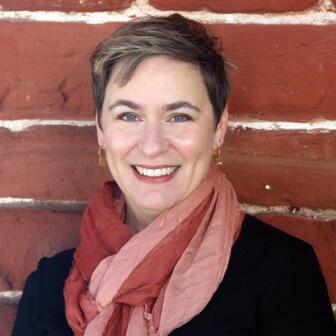
Judith Rosenbaum, CEO