
All the Generations Before Me: Remembering the Women of the 'Rescued of 1945'


At the end of the Second World War, upon the liberation of Bergen Belsen, the Swedish Red Cross conducted a humanitarian effort, known today as the White Boats. This effort followed an earlier, more famous, but also more controversial mission: the White Buses.
While the White Buses had rescued prisoners from concentration camps still under German control, the White Boats brought survivors—many of them women—to Sweden for medical treatment.
While these survivors came to be known in Sweden as the “Rescued of 1945,” it is debatable whether hundreds of them were survivors at all. Starving and sick, some died on the trip to Sweden, others within hours of their arrival. Many passed away within the days, weeks, and months after liberation, the toll taken upon their health ultimately insurmountable.
When I visited Stockholm this past November, on my way to Gothenburg, where I was a poet-in-residence in a Swedish Kulturhus, one of my hosts—whose mother had survived a death march through Hungary—referred to them as “non-survivors.”
Roughly a hundred of these non-survivors—nearly all of them women—are buried in the Jewish section of Stockholm’s Northern Cemetery. Most of them arrived in Sweden on the same boat, and they were buried with simple stone plaques for gravestones, listing only their name, date of birth, date of death, and country of origin. Initially, they were buried among the Swedish Jewish community’s own members. As their numbers grew, a special block was set aside for them.
Flat against the earth, easily stepped on, over the years, many of these gravestones sank into the soil and were overgrown with grass. In 2019, the Holocaust researcher Roman Wasserman Wroblewski spearheaded an initiative to restore them to their original state. Some gravestones are now accompanied by QR codes, telling visitors what is known of the women’s life stories, published by the Swedish Holocaust Museum.
Each gravestone contains the name of only one woman. In many cases, however, this woman was the last surviving member of her family, and the only one to have a gravestone, humble as that gravestone might be. While some of the “non-survivors” had been children as young as ten when the war began, others had been mothers with children of their own. They reminded me of some kind of inverted matriarch: the last in a family to die, and yet dying young.
In 1953, with the block nearly full, a memorial was erected, designed by the Swedish sculptor Margot Hedeman. I was more moved, however, by the graves themselves, which seemed to be not a memorial but a living, breathing remnant of the Holocaust itself. I learned of the cemetery’s existence on the day I planned to leave Stockholm for Gothenburg, and I arrived on a pitch-dark, misty November afternoon. My boots sank into the soft, wet soil as I used the flashlight in my phone to read the gravestones. Nearly every woman had passed away between the ages of seventeen and forty—the only age group that had a chance of surviving the concentration camps, though in the end, they hadn’t quite made it.
There were outliers: a few women who had made it to nearly fifty, a few men. While most victims passed away between 1945 and 1947, some managed to live to the early 1950s, trying to rebuild their lives in Sweden.
Toward the back, I was surprised to find the grave of a woman who had passed away over half a century later than the rest, in 2010. Her name was Lili Ödmark. Unlike other gravestones, hers included a maiden name—Shternberg—below her Swedish-sounding married name, in the space where others listed a woman’s country of origin. While other graves were spaced apart, hers was so close to the one left of it that they were practically touching, clearly intended to be a pair. I expected the neighboring stone to be for her husband. Instead, another woman’s name was engraved there, with the same maiden name as Lili, though it was faded. This woman—Márta —had passed away in 1946.
I googled the names later, on the train to Gothenburg, finding the blog of Roman Wasserman Wroblewski. There, I learned that Márta Shternberg had been Lili Ödmark’s sister. The two had been sent to Auschwitz together, but were separated at the very end. Márta passed away not knowing whether Lili was still alive. Upon her death in 2010, Lili requested to be buried next to Márta.
I have wondered if the age range of the victims—seventeen to forty—was the reason that the cemetery block felt so alive to me. Fairly or not, these are years typically thought of as being particularly vibrant in a person’s life. Perhaps I only suspect this was the reason because this is the age group in which I, a Jewish woman, find myself right now.
Perhaps that cemetery block felt so alive because its victims came so close to surviving. A poem by Yehuda Amichai replayed in my mind during my time in Sweden, as I read the stories of the women whose graves I had visited on the Swedish Holocaust Museum’s website: “All the generations before me, donated me, bit by bit…” It’s a poem with a slight male focus (and it’s not lost on me that in an essay on women’s stories, I am quoting a poem by a man). Amichai reflects on living past the age of his father’s death, ending with:
I’ve passed forty.
There are jobs I cannot get
because of this. Were I in Auschwitz
they would not have sent me out to work
but gassed me straightaway.
It binds.
(Translated by Harold Schimmel.)
I have had lifelong health struggles; I would not have survived the Holocaust, at any age, nor would have made it as far as these women did. As the Swedish Holocaust Museum notes, while many Holocaust survivors have been able to share their testimonies, those who did not survive are voices that have been almost completely lost—even Anne Frank’s testimony is incomplete. Still, I wonder how we are bound to this particular group of Jewish women before us, these strange matriarchs who came so close to surviving in Sweden.
Double your impact to amplify Jewish women’s stories—
All gifts matched up to $35,000
Before you close this article, please consider supporting the Jewish Women’s Archive and uplifting Jewish women’s voices.
At JWA, we preserve the voices of Jewish women and gender-expansive people past and present, share them freely with millions online, and empower a new generation of Jewish feminists to lead with courage, creativity, and conviction.
But none of this happens without you. JWA is an independent nonprofit— we rely on people, like you, who believe that history belongs to all of us and that the voices of Jewish women must remain powerful, and heard.
This month, a generous JWA board member will match every gift dollar for dollar—up to $35,000—through June 30. Your contribution goes twice as far right now.
Every contribution—no matter the size—helps us document, teach, and inspire through Jewish women’s stories.
It takes less than a minute to make a difference.
Thank you for being a part of the JWA community,
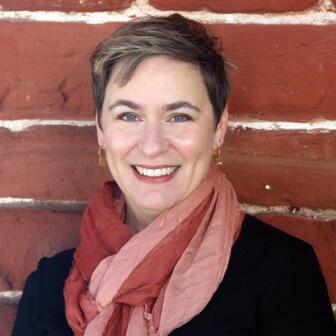
Judith Rosenbaum, CEO