
7 Questions for Rabbi Jill Hammer


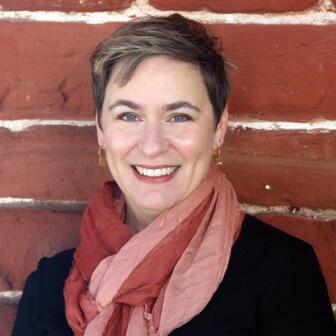
Rabbi Jill Hammer, PhD, is the co-founder of Beit Kohenet and of the Kohenet movement. She is an author, scholar, ritualist, poet, dreamworker, and midrashist, and serves as Director of Spiritual Education at the Academy for Jewish Religion and the Director of Learning and Ritual at Beit Kohenet. JWA recently sat down with Rabbi Hammer to discuss her experience with Kabballah and the Kohenet movement.
Emma Breitman: How did you first come to learn about Kabbalah?
Rabbi Jill Hammer: I first encountered Kabbalah when I was a teenager. My parents bought me The Thirteen-Petaled Rose, a little book about Jewish mysticism by Rabbi Adin Steinsaltz. I immediately knew there was something important I wanted to learn about Jewish mysticism. My parents also bought me The Jewish Catalog, which contained visualization journeys by Rabbi Zalman Schachter-Shalomi, and that made me understand that Kabbalah could be a personal practice and not just a body of knowledge.
Later on, in college, I discovered Jewish feminists like Alicia Ostriker, Rabbi Leah Novick, and Rabbi Rachel Adler who were working with Kabbalistic concepts in new ways—claiming Shekhinah as a full and powerful vision of the Divine. I knew I wanted to do that too, and so I set out on a learning journey that is still going on to this day. In rabbinical school and afterward, I began to study Kabbalah more seriously, particularly as a vehicle for divine feminine imagery in Jewish prayer and life.
Since then, I’ve written a book called Return to the Place: The Magic, Meditation and Mystery of Sefer Yetzirah, which is a translation of and commentary on the ancient Book of Creation/Sefer Yetzirah, a mysterious work of proto-Kabbalah. Sefer Yetzirah is my favorite book of Jewish mysticism because it feels ecotheological, feminist, and like a combination of magic and meditation. I want everyone in the Jewish world to know about the Book of Creation.
EB: Can you share a bit about the Kohenet movement and what drew you to start it?
JH: I founded the Kohenet movement with Taya Ma Shere in 2005 in the hope of creating a new vision of Jewish women’s spiritual leadership that was based in the spiritual lineage of women across time. We saw that important pieces of Jewish heritage were being lost because the experiences and practices of Jewish women, mystics, and others on the edges of the community were devalued. At our retreats, we prayed to Shekhinah, the divine feminine, encouraged embodied spiritual practice, and learned about thirteen pathways of sacred work, including the prophetess, the shrinekeeper, the wise woman, the mother, the lover, the seeker, and more. We called our ordinees kohanot—priestesses/priestexxes. The Kohenet Hebrew Priestess Institute existed from 2005 to 2023, and in that time, ordained over a hundred kohanot.
Beit Kohenet is an organization spreading the values and practices of the Kohenet movement to the wider Jewish community. We are a learning and ritual space that recovers, reclaims, and recreates Jewish spirit wisdom, with a focus on sources arising from mysticism, earth-based and women’s practices, folk magic, and sacred traditions from those throughout time whose voices have been marginalized.
EB: How does Beit Kohenet weave learning, ritual, and feminist values together?
JH: Beit Kohenet offers ritual that shifts the language of prayer to include feminine language as well as nonbinary and masculine language. This helps us to recenter liturgy on an image of God/dess/exx that is more diverse and can meet those of us who have felt alienated by the exclusive masculine language of traditional Jewish prayer and ritual. We invite devotion to Shekhinah—Divine presence—as imagined by medieval kabbalistic sources and reimagined by contemporary feminist liturgists.
Our learning seeks to include sources that speak about women and other marginalized groups, or are authored by people from such groups—everything from ancient Jewish magic to healing rituals from around the Jewish world to contemporary poetry. This is feminist work because it trains us not to center our lives exclusively around texts that center men and maleness (Jewish legal texts, Talmud, prayer, etc) but to widen our lens so that more imagination and creativity becomes possible.
When I teach Torah or other sources, I am looking for hints of the lives of female spirit workers, earth-based practitioners, mystics, and marginal folk. When we find those hints, we can better imagine a lineage that includes all of us—and we also get to expand our knowledge of the magic and wisdom of our ancestors.
EB: Your bio describes you as a dreamworker. How does Jewish thought navigate dreams, and how do you typically like to engage with them?
JH: In the Bible, dreams are a way that people can receive messages from the divine. In the Talmud, dreams are considered “one-sixtieth of prophecy,” that is, not everything in them relates to ultimate meaning, but if we examine them, we will find important truths about our lives. The Kabbalah understands dreams as a soul-journey we make each night to higher realms, and Rabbi Nachman of Breslov has said that dreams can show us our essence—I know contemporary dreamworkers who say the same. The Talmud, as well as Jewish folk practice, offers rituals for working with dreams, including a three-person “dream court” with whom we can share troubling dreams or dreams we don’t understand.
I work with people one-on-one and also in larger circles where the whole circle can share insights about one particular dream. I’ve heard some amazing dreams from people: dreams of loved ones who have passed, prophetic dreams, dreams that work through important life issues, and dreams that show us something fundamental about ourselves. Dreamwork and waking visualization practices both tap into the human capacity for journeys of the spirit and our gifts of sacred imagination. Both are core to mystical experience.
EB: Are there any rituals that you’ve found grounding during this tumultuous political moment?
JH: Working with my dreams, meditating on dream images, is grounding for me at just about every time, and certainly right now. I also walk in the park every day. For me, connecting with nature is one way I connect with God/dess. Staying with my knowledge that everyone and everything is sacred keeps me sane in this time.
This past fall, at the Isabella Freedman Jewish Retreat Center, I was part of a Simchat Beit haShoevah, a water-blessing ritual based on the ancient Sukkot water-drawing ceremony. We processed with water to the fire-pit and made water-offerings while calling out blessings for the world, and then we danced. Even in a time that’s so full of profound grief in all sorts of ways, I think we need joy and gratitude to keep us going.
EB: What role does Jewish history play in Beit Kohenet’s offerings and ritual engagement?
JH: In Beit Kohenet classes, we examine Jewish history through a lens that’s not often used. We might examine biblical women spirit workers, priestesses/priestexxes, or Jewish women’s folk practices regarding things like cemeteries or childbirth, herbalism, amulets and incantation bowls, divination, or mystical texts about the divine feminine. When we pray together, our liturgy draws on Jewish tradition and also on pieces of the tradition or Torah that speak to women, genderqueer folk, magical practitioners, and others on the margins. For us, it’s important to remember that the standard Jewish histories don’t include everyone’s history, and there’s so much richness in exploring the rituals and experiences that fall beyond the usual boundaries of what’s considered Jewish history.
EB: Are there any rituals or histories you’ve been exploring recently that have felt energizing?
JH: I’m always excited when new information or analyses come to light about Jewish priestesses! Right now, I’m exploring biblical vineyard rituals and women’s role in them as dancers and drummers. The idea that there were women in biblical times at the heart of blessing the land and its abundance is exciting for me. At the Big Jewish Gathering in Brooklyn, Jan. 24-25, of which Beit Kohenet is a co-sponsor, we will be conducting a re-enactment of this ancient Hebrew priestessing ritual, and that’s thrilling!
Double your impact to amplify Jewish women’s stories—
All gifts matched up to $35,000
Before you close this article, please consider supporting the Jewish Women’s Archive and uplifting Jewish women’s voices.
At JWA, we preserve the voices of Jewish women and gender-expansive people past and present, share them freely with millions online, and empower a new generation of Jewish feminists to lead with courage, creativity, and conviction.
But none of this happens without you. JWA is an independent nonprofit— we rely on people, like you, who believe that history belongs to all of us and that the voices of Jewish women must remain powerful, and heard.
This month, a generous JWA board member will match every gift dollar for dollar—up to $35,000—through June 30. Your contribution goes twice as far right now.
Every contribution—no matter the size—helps us document, teach, and inspire through Jewish women’s stories.
It takes less than a minute to make a difference.
Thank you for being a part of the JWA community,
Judith Rosenbaum, CEO