

7 Questions for Merav Opher


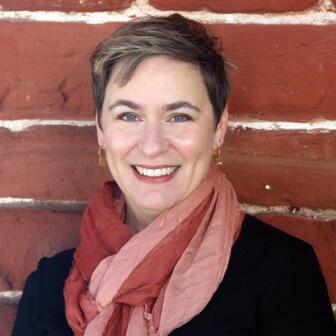
Merav Opher is a professor in the Astronomy department at Boston University. Opher’s research focuses on understanding the heliosphere, the cocoon around the solar system, and how it evolved through the Sun’s history and affected the evolution of life on Earth. She is currently the director of SHIELD, a NASA Drive Science Center with the goal to create a digital "twin" of the heliosphere.
Deborah Leipziger: What drew you to study astronomy and the heliosphere?
Merav Opher: I came to space physics in somewhat of a circuitous way. Some people know exactly which area of research they would like to pursue. In my case, it took several twists and turns for me to arrive at what is my passion. It was only upon my second postdoc that I stumbled into space physics. I had no idea what space physics was, but I decided to visit the Jet Propulsion Lab at UCLA and after giving a talk about my PhD work. They hired me on the spot and asked if I would be interested in studying the heliosphere, the cocoon formed by the solar wind as the Sun moves through the Galaxy. They had a grant and were looking for somebody to develop a numerical model of the heliosphere.
One of the things that attracted me to the project is that it involved studying the data collected by the Voyager spacecraft (the two that were launched in the 70s). The Jet Propulsion Lab even had the original VAX machine that received the spacecraft data. I absolutely fell in love with the whole idea that we were going to analyze the precious precarious data from the Voyager spacecraft that would allow us to infer our location in the Galaxy. The community of Voyager scientists was very much a closed community, but by then, I started collaborating with Ed Stone, the Principal Investigator of Voyager, and was introduced to the Voyager team and all of these giants of space physics. It was so thrilling to be part of it.
DL: I am fascinated to learn that your research now looks at the changing climate. Please tell us more.
MO: There have been a lot of studies of the characteristics of today’s heliosphere. We know that today it engulfs all the planets and filters some of the low energy radiation coming from the galaxy. But this was not always the case. The Sun, like other stars, is not static. It moves. It has traversed many different structures in its trajectory in the Galaxy. Recently, with my collaborators, we were able to map out which structures it encountered in the last 10 million years. We found there were instances where the heliosphere encountered massive cold clouds and collapsed, leaving Earth outside the heliosphere. These periods of collapse introduce climate and radiation changes in Earth’s environment. It seems that the frequency of such encounters could be as often as every couple of million years, making it a major external disturbance to the development of life on Earth.
DL: What was it like growing up in Brazil as a Jewish woman?
MO: My childhood was a very rich experience. My parents were Americans—New Yorkers to be specific. They made aliyah in the 60s, and my sister and I were born in Israel, where we lived until I was eight and a half. Hebrew was very important for my Dad. When they got to Brazil, though, they were not religious. My Dad decided that we should go to Colegio Yavne (Beith Chinuch) an orthodox school, since they noticed that the students from Beit Chinuch had the best Hebrew.
Attending an Orthodox school taught me how to connect to Judaism in a deeper way that carried me through other aspects of my life. But it was also a challenging upbringing. I went to the University of Sao Paulo to study physics, and almost no one in my class was Jewish. I realized then how sheltered my life had been up until then. I was always transitioning between two worlds—the traditional Jewish community and my friends from the University. These two worlds didn’t mix very well. I also came out later on when I came to the U.S. At that time, in the traditional Jewish communities, it was hard to be gay.
DL: You were born in Israel, grew up in Brazil and now travel around the world lecturing. How do your many identities impact you professionally and personally?
MO: My cultures and nationalities are an integral part of who I am. They allow me to see things from a different perspective. Being a woman in science is also another facet. In space physics in particular, there are so few women. Both Brazilian and Israeli cultures are so warm. They are similar in many ways—both very expansive. I learned early on to transit between cultures, and I make a point to not shy away from these different influences, but to embrace the complexity and richness of these different influences. I feel that it gave me a powerful toolkit to understand the world.
DL: What role does Judaism play in your life?
MO: Judaism is central for me. I am not religious, but I feel that my soul is a bit mystical, like my father’s. I am also very attached to the poetry of prayers. Yom Kippur is my favorite holiday —a day when we get to read all these wonderful prayers and connect to our ancient ancestors. Judaism also shaped the way that I teach and think about science. I find that when I teach, I am channeling the way that a rabbi would speak: The way Talmudic rabbis dissect every angle of a question.
I also think that being Jewish gives me a sense of history. This is one of the reasons that I am attached to the heliosphere and to studying how it changed over time, like an archeological record of our history in the Galaxy. This is very Jewish!
DL: You were recently selected as a 2025-2026 Guggenheim Fellow. What are your plans for the fellowship?
MO: I am super excited about winning a Guggenheim Fellowship. I started this process a couple of years ago when I was selected as a Radcliffe Fellow. I intend to continue that course of study with this fellowship, charting the path of the Sun going back millions of years and trying to connect its effects on Earth both in climate and in radiation. The ultimate goal is to see if it has affected how life has developed on Earth during moments when the Sun encountered massive cold clouds.
DL: What advice do you have for women scientists?
MO: Take time to find your passion. That will fuel you and ground you. Then focus on what drives you and tune out the rest. That will help you chart your own path, despite any challenges you will face.
Double your impact to amplify Jewish women’s stories—
All gifts matched up to $35,000
Before you close this article, please consider supporting the Jewish Women’s Archive and uplifting Jewish women’s voices.
At JWA, we preserve the voices of Jewish women and gender-expansive people past and present, share them freely with millions online, and empower a new generation of Jewish feminists to lead with courage, creativity, and conviction.
But none of this happens without you. JWA is an independent nonprofit— we rely on people, like you, who believe that history belongs to all of us and that the voices of Jewish women must remain powerful, and heard.
This month, a generous JWA board member will match every gift dollar for dollar—up to $35,000—through June 30. Your contribution goes twice as far right now.
Every contribution—no matter the size—helps us document, teach, and inspire through Jewish women’s stories.
It takes less than a minute to make a difference.
Thank you for being a part of the JWA community,
Judith Rosenbaum, CEO




Am so delightful to following your interested guidelines of Jewish successful intellectual job