

7 Questions for Ceramicist Melissa Felderman


Melissa Felderman is a ceramicist and industrial designer based in Colorado. Her work serves up aesthetic Judaica for today's design sensibilities, reimagining traditional ritual objects in vibrant colors and sleek shapes. Her work has been sold by the Jewish Museum and featured by outlets including Yahoo! Creators, Kveller, and Hey Alma. JWA recently sat down with Felderman to discuss her work.
Emma Breitman: When did you start making ceramics?
Melissa Felderman: I took my first ceramics class during my freshman year at NYU. As an art major, I had to take two semesters of sculpture. During my second semester, we began welding, but my professor didn’t emphasize safety gear. I happened to be wearing acrylic sweatpants that day, and when the sparks flew, my pants literally caught on fire. My teacher laughed while I panicked, and that was the end of sculpture for me. I went straight to my advisor and asked to withdraw from the class. She let me take ceramics instead, and from the first session, I knew I’d found what I was meant to do.

EB: What interested you in making ceramic Judaica?
MF: I’d been searching for a menorah that matched my style since my first semester of college. My mom wanted to buy me my first “adult” menorah, and we scoured the city looking for something beautiful, something that felt like me, but found nothing. Fifteen years later, after purchasing my first home with my husband, I tried again to find Judaica that fit our space and aesthetic, and still came up empty. By then, I’d been making and selling ceramic mugs for a few years, so I figured, if I couldn’t find it, I’d make it. When I posted my first menorah design on Instagram, the response was overwhelming. I realized I’d tapped into something my peers were also looking for: Judaica that felt both grounded in tradition and aligned with our design sensibilities.
EB: Are there any histories, artists, or styles that inspire your work?
MF: I am inspired by a wide range of people and places. I’m drawn to contemporary design and aim to create pieces that reflect today’s design sensibilities, so I’m always looking at trends in interior design, fashion, and architecture. I’m especially influenced by the curvaceous forms of Zaha Hadid and Karim Rashid. My ceramic process has also been shaped by my friend and mentor, Curt Hammerly of Hammerly Ceramics, whose technical precision and creative approach continue to guide how I work.
At the same time, I want my pieces to stay grounded in halachic law and Jewish symbolism. Within that framework, I am drawn to objects that feel a little chunky and cute. That balance between playfulness, tradition, and elegance is what I’m always chasing in my work.

EB: Your studio is called Feldi Studios. Can you tell us about the story behind that name?
MF: Yes! This one’s a cute story. My last name is Felderman, and my dad is a doctor whose office staff used to call him Dr. Feldi. When AOL first came out, we made a family screen name, feldi4@aol.com. Eventually, we realized we’d each need our own, so my dad took feldi1 because he was the firstborn, my sister took feldi3, and I took feldi4 because I was the youngest. Unfortunately, feldi2 was already taken, so my mom went with feldilisa.
Over time, people started referring to us by our screen names. I was always feldi4, my sister was feldi3, and it just stuck.
When I started my business, using Feldi Studios felt like the natural choice. It represents me, but it’s also an homage to my family, our history, and our heritage.
EB: You also teach courses at CU Boulder in industrial design. Does this background impact your ceramic work at all?
MF: Teaching continually shapes, challenges, and expands how I approach my work. My practice is a fusion of industrial design and ceramic art—something I’ve come to call ceramic product design. It’s a conversation between what I teach and what I make. I’m constantly learning from the people around me. My students’ curiosity pushes me to stay open and experimental, and my colleagues’ insight and feedback push me to refine and grow. The community that teaching provides is unlike anything else, and I feel deeply grateful to be part of it.
EB: Do you have any pieces of Judaica you haven’t made yet, but would like to?
MF: So many! I want to make everything: Seder plates, havdalah sets, Jewish jewelry, challah plates and covers, tzedakah boxes, Elijah’s cups, yads, and that’s just off the top of my head. Judaica is such a rich sandbox to play in because there are so many ritual objects to explore. Each one comes with its own halachic design requirements, but also allows for creative freedom, which makes it an exciting design challenge.

EB: What has been your most challenging project to date?
MF: The menorah has definitely been my most challenging project so far. I started designing it in the summer of 2024, unsure if the form would even be castable or survive the kiln. It was long, thin, and stubborn. Every time I opened the mold, it cracked.
After weeks of failed attempts, I was ready to give up. I told a mentor about what was happening, and she immediately asked what clay I was using. When I told her, she laughed and said, “Well, there’s your problem.” I had been using one of the hardest clays to cast. Switching to a more plastic clay solved it almost instantly.
Even then, the shape remained tricky, and I knew it needed refinement. I planned to make small updates early in 2025, but months of trial and error followed. Two redesigns failed before the third one finally worked just in time for production in September. The process took far longer than I expected and limited how much I could make this year, but every setback taught me something new. Good design takes time, and I’m proud of how much this piece pushed me to grow as a designer and maker.
Double your impact to amplify Jewish women’s stories—
All gifts matched up to $35,000
Before you close this article, please consider supporting the Jewish Women’s Archive and uplifting Jewish women’s voices.
At JWA, we preserve the voices of Jewish women and gender-expansive people past and present, share them freely with millions online, and empower a new generation of Jewish feminists to lead with courage, creativity, and conviction.
But none of this happens without you. JWA is an independent nonprofit— we rely on people, like you, who believe that history belongs to all of us and that the voices of Jewish women must remain powerful, and heard.
This month, a generous JWA board member will match every gift dollar for dollar—up to $35,000—through June 30. Your contribution goes twice as far right now.
Every contribution—no matter the size—helps us document, teach, and inspire through Jewish women’s stories.
It takes less than a minute to make a difference.
Thank you for being a part of the JWA community,
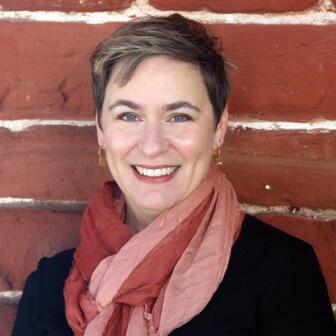
Judith Rosenbaum, CEO



I am The proud owner of some vintage Feldi Studios ceramic ware and LOVE all the pieces of my collection…old and new!