A Polish-born writer who survived the Holocaust, Ida Fink published several collections of short stories and a novel that explore the experiences and after-effect of the Holocaust. Her subtle and nuanced writing brings memory and imagination to bear on a traumatic past.
Literature by American Jewish women reflects historical trends in American Jewish life and indicates the changing issues facing writers who worked to position themselves as Americans, Jews, and women.
The explosion of writing by American Jewish women in the twentieth century produced not only serious fiction, poetry, essays, and autobiography but also a range of popular literature geared towards pleasure and light entertainment. Popular fiction by American Jewish women in the twentieth century featured genres from regional novels, sagas, historical novels, romances, mysteries, science fiction, fantasy, and humor.
Prolific writer Edna Ferber celebrated America in her many works, even as she exposed its shortcomings. Her novel So Big won a Pulitzer Prize in 1925, and the film Giant and the musical Show Boat were both based on her novels. Ferber’s work was shaped by her childhood experiences of antisemitism and frequently featured strong and talented women.
Elaine Feinstein was the preeminent Jewish woman literary author in late 20th- and early 21st-century England and a leading European Jewish writer. An award-winning poet, novelist, and translator, her works explore Jewish women’s identities as writer, wife, friend, and mother; assimilation; antisemitism; the Holocaust and its transgenerational impact; Soviet Russian poets; European Jewish life in the 20th century; Israel and Zionism; and the meanings of a literary life.
Writer and poet Ruth Fainlight’s work interweaves feminism and elements of Judaism, often using biblical imagery and reflecting on her own Jewish identity and the Holocaust.
An exemplar of the amalgamation of cultures in the Diaspora, Sara Riwka Erlich was a Brazilian-Jewish woman author and scientist whose writings drew from her work in psychiatry, her Jewish heritage, and her experiences in Brazil and Israel. The daughter of Polish immigrants, Erlich was born in Recife, Brazil, in 1935 and published memoirs, stories, poems, and essays in Portuguese until the early twenty-first century.
As a journalist, writer, and filmmaker, Nora Ephron used her provocative wit, biting sarcasm, and ability to make the mundane entertaining to write her way into the lives of millions. Heeding her mother’s advice that “everything is copy,” Ephron drew upon her own experiences – childhood dreams, observations about aging, and her two divorces – in her articles, books, and screenplays.
After making Aliyah in 1925, Elisheva Bichovsky (born in Russia as Elizaveta Zhirkova), helped shape the Yishuv’s literary scene as one of Palestine’s first Hebrew poets. Her 1926 Kos Ketannah and 1929 Simta’ot were, respectively, the first poetry collection and first novel written by a woman to be published in Palestine.
Lily Edelman, a dynamic and much-sought-after lecturer, committed her life to learning, to teaching, and to understanding multicultural society. She published books for adults and children and was able to unite her interests in adult education and writing with her work at B’nai B’rith.
A lightning rod for controversy, American feminist Andrea Dworkin denounced violence against women, advocated women’s self-defense, and drafted groundbreaking legislation claiming that pornography violated women’s civil rights. In 1974, Dworkin and Ricki Abrams co-wrote Woman Hating in which they charged that pornography incited violence towards women and that consensual sex subjugated women.
Celia Dropkin’s sexually explicit poetry expanded possibilities for the depiction of relationships between men and women in modern Yiddish poetry. Throughout the 1920s and 1930s, her poems appeared in avant-garde Yiddish literary publications. Infused with erotic energy, the themes of Dropkin’s poetry – sex, love, and death – shocked her contemporaries.
After finishing her education, Sophia Dubnow-Erlich became an active member of both the Social Democratic Labor Party and the Jewish Labor Party and wrote for Bund journals before fleeing Vilna for Warsaw in 1918. After emigrating to America in 1942, she remained politically active and continued her prolific writing career.
A determined and talented performer, Selina Dolaro raised four children alone while pursuing an illustrious acting and singing career in late nineteenth-century England and America. Dolaro performed in various London operas, most notably as the title role in the first English version of Carmen. She made her American debut as Carmen in 1879.
Writer Lucie Domeier is best known for her work critiquing the portrayal and role of women, especially as presented in literature. She wrote several books in the early nineteenth century, most notably her critique in German of Germaine de Staël’s De l’Allemagne, which often addressed the challenges faced by women authors.
Esther Dischereit, a German-Jewish writer living in Berlin, speaks for the second and third generation of children of Holocaust survivors. Her prolific production covers all genres, including prose, poetry, sound installations, and concept art. She uses her many talents to fight anti-semitism and racism and to give a voice to the persecuted and forgotten.
Molly Cone wrote for over four decades, producing more than 40 books. They include young adult novels, short story collections, middle-grade fiction, Judaica for young readers, and non-fiction on ecological and educational topics. Her work frequently incorporates bits and pieces of her family life, as well as the love of Jewish culture which so enriched her childhood.
In her short life, Rose Gollup Cohen was a unionized factory worker and a domestic servant, was helped through an illness by Lillian Wald, became educated, and wrote short stories. Her moving 1918 autobiography Out of the Shadow offers a vivid account of her life as an immigrant Jewish woman in the sweatshops of New York.
Jewish-Algerian-French writer Hélène Cixous published her first book in 1967 and approximately her eighty-seventh in February 2021. This “life writing” comprises poetic fiction and autobiography, literary and feminist theory, art criticism, and theatrical works. Cixous explores the myriad contradictions and consequences of loss and exile, of “being Jewish” and “being a woman.”
When Barbara Cohen died, she left behind an exceptional body of children’s literature. Cohen was adventurous, seldom repeating herself, always trying new ideas, settings and themes. In her books, she confronted taboo subjects of assimilation, racism, and cancer with both sensitivity and remarkable honesty.
Born in the Diaspora and continued in the Yishuv and the state of Israel, children’s literature in Hebrew participated actively in facilitating the construction of a national collective self. Female children’s book authors disseminated Hebrew as a secular language in both Palestine and the Diaspora and created a new prototype of the child as a native-born “child of nature.”
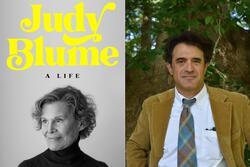
Children’s literature in the United States would not be the same without Jewish women. From Sydney Taylor to Judy Blume to Lesléa Newman, Jewish women have written books read by millions of children and teenagers in the U.S. for more than a century.
From poetry to the probing of women’s eating disorders, from autobiography to the story of a voice, from commentary on sexual identity to Israel and Palestine, Kim Chernin’s writing, “writing consultation,” and pastoral counseling practices all arose from the “spiritual politics” and deep examination of self and society that she considered the essence of her Jewishness.
Vera Caspary was a prolific novelist, playwright, and screenwriter, best-known for her book, Laura, a murder mystery adapted into the 1944 film of the same name, now considered a classic. The female characters in Caspary’s novels and plays are strong, emancipated women, and her own concern with issues of prejudice and class consciousness are reflected in her works.
The positive aspect of the Canadian mosaic has been a strong Jewish community (and other communities) which nurtured traditional ethnic and religious values and benefited from the talent and energy of women and men restrained from participation in the broader society. The negative aspect has included considerable antisemitism and, especially for women, the sometimes stifling narrowness and conservatism of the community which inhibited creative and exceptional people from charting their own individual paths.

![Fink, Ida - still image [media]](/sites/default/files/styles/scale_crop_336x336/public/mediaobjects/Fink-Ida.jpg?itok=TI7EXvVm "Fink, Ida - still image [media]")