

Rose Viteles
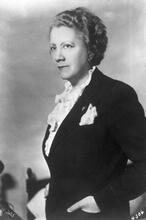
Born in New York City and raised in Cincinnati, Rose Viteles had little to no connection to her Jewish heritage. Viteles’ father, in a rebuke to his yeshiva education, made no effort to educate his children meaningfully about Judaism. Through social work, Viteles worked with local Jewish youth organizations, but her true introduction to Jewish culture as well as Zionism was through her husband Henry Viteles, a manager in the American Joint Distribution Committee, whose work took him across Europe and eventually to Palestine. She arrived in Jerusalem in 1925 and soon after joined the Histadrut Nashim Ivriot (Hebrew Women’s Organization), the Palestine Council of Hadassah, and, somewhat secretly, the Haganah, serving poor immigrant families, children and orphans, and the movement for an independent Jewish state, respectively. Through her years of service she came to love Erez Israel.
Introduction
field_section_text_value
Early Life
Little in Rose Viteles’s background would seem to have prepared her for her double life in Jerusalem. Born in New York City in 1892 and raised in Cincinnati, Ohio, she came from a family with minimal Jewish awareness. Her mother, originally from Lemberg (Lvov), was the only one of seven sisters to marry a Jew; her father, Jacob Rassell, who had immigrated to the United States from Minsk, had rebelled against his yeshiva education. Her mother observed some of the traditions, such as lighting candles on Friday night, and tried to keep a Term used for ritually untainted food according to the laws of Kashrut (Jewish dietary laws).kosher home, but her father was a freethinker, a member of the IWW (Industrial Workers of the World). Her two younger brothers did not have a Lit. "son of the commandment." A boy who has reached legal-religious maturity and is now obligated to fulfill the commandmentsbar mitzvah. The family never had a Lit. "order." The regimen of rituals, songs and textual readings performed in a specific order on the first two nights (in Israel, on the first night) of Passover.seder at home and celebrated Jewish holidays in a very perfunctory way. She “did not know an Aleph from a Bet.”
Her Jewish consciousness was stimulated to some extent by her involvement in Jewish social work. At the age of twenty she volunteered to work with teenagers at the local Jewish settlement house and later became Executive Secretary of the Big Brother Movement in Cincinnati. After her marriage to Harry Viteles in 1919, she moved to Philadelphia, where she worked for the Jewish Children’s Bureau and the Orphans Guardian Society.
However, her real introduction to Jewish life came through her husband, who had a much stronger Jewish background than she did. When Harry Viteles traveled throughout Europe on behalf of JDC, Rose accompanied him; in 1923, she had her first encounter with Orthodox Jewish life in a (Yiddish) Small-town Jewish community in Eastern Europe.shtetl in Eastern Europe.
Moving to Palestine
field_section_text_value
Work with Hadassah: Support for Children and Education
In 1931 Rose Viteles became a member of the Palestine Council of Hadassah, which had been established in 1930 to supervise Hadassah’s non-medical activities in Palestine. The Council consisted of about a dozen women, many of them American, and most of them wives of prominent Jerusalemites.
The Palestine Council of Hadassah was responsible for several projects which the women took turns directing. Rose Viteles’s first project for the Council was to head the Clothing and Supplies Committee, which distributed clothing and linens sent by Hadassah to hospitals, orphanages, and other institutions in Palestine. Carried out in cooperation with the Histadrut Nashim Ivriot, the project took on added importance in the 1940s, when supplies were distributed to three additional groups: illegal immigrants who arrived in Palestine, Jews expelled from the Old City of Jerusalem in 1948, and new immigrants who arrived in Israel during the early years of the State.
Rose Viteles’s second Hadassah project was the administration of playgrounds, a novel concept in the Yishuv, financed by the Bertha Guggenheimer Fund. These included not only play areas but also facilities for arts and crafts and other recreational activities. By 1944, the project had expanded from three playgrounds to 35 and included an overnight summer camp, a day camp and clubs for underprivileged teenagers; by 1950, there were nearly 50 playgrounds. These programs were eventually taken over by the Israel Ministry of Education.
The Palestine Council’s major project was the School Luncheons program, which had been established in the 1920s to provide needy schoolchildren with a hot cooked meal daily. In 1994, the program encompassed 27,000 children and included instruction and food preparation.
Rose Viteles’s most significant contribution, however, was in the area of vocational education. In 1941, with a grant from Hadassah, she organized the Alice Seligsberg High School for Girls, the first four-year girls’ vocational high school in the Yishuv. Viteles subsequently helped establish the Stephen C. Wise Fine Mechanics Workshop for boys, the Julian W. Mack Printing School for boys, part-time vocational programs for boys and girls, and a vocational guidance service. These programs, known collectively as the Brandeis Vocational Center, became an integral part of the educational system of the State of Israel.
In 1941 Rose Viteles joined the Hadassah Emergency Committee (H.E.C.), which had been established in 1940 to facilitate the distribution of funds to Hadassah programs in Palestine during World War II. She served on the committee first as Hadassah’s representative to Youth Aliyah and from 1941–1954 as chairwoman of Hadassah’s Vocational Education programs in Israel.
After the establishment of the H.E.C., the Palestine Council of Hadassah was renamed the Hadassah Youth Services Committee. Rose Viteles chaired this committee in the late 1940s. Her last project as a member of the Council was to supervise the distribution of surplus foods sent to Israel in the mid–1950’s by the American government.
What made Viteles unique among her colleagues in Hadassah was the fact that she felt comfortable not only with Americans but also with non-American members of the Yishuv. She became close friends with Yaacov Patt, commander of the Haganah in Jerusalem, and was able to adapt the skills she acquired in the women’s organizations of the Haganah and the other committees on which she served.
Work with the Haganah: Fundraising and Managing Finances
Rose Viteles became involved in the Haganah almost by accident, as a result of her work in the Vaad ha-Kehilla, the Jerusalem Community Council. In 1934 Rose Viteles was serving as a member of the volunteer supervisory committee of its Social Service Bureau. Her office in the Va’ad ha-Kehillah adjoined a room with the innocuous title “Social Assistance,” which served as Haganah headquarters and which received a steady stream of young men and women visitors.
When she asked the man in charge, Yaacov Patt, to explain the function of his office, he pledged her to secrecy, described the activities of the Haganah and asked for her help. Rose Viteles agreed, but only after Patt assured her that the Haganah was not anti-Arab, did not preach hatred and existed for defense purposes only.
The first project Patt outlined was to raise funds for a Magen David Adom, an emergency medical and disaster service. There already existed a Magen David Adom in Haifa and Tel Aviv but Patt wanted the Magen David Adom in Jerusalem to be an arm of the Haganah so that it could serve as a cover for Haganah activities. Within a few months, Rose Viteles had raised the funds, organized a committee of doctors, and arranged for the acquisition of an ambulance. When the Arab riots broke out in Jerusalem in the spring of 1936, the Magen David Adom was already functioning.
When Rose Viteles joined the local committee in 1934, the Haganah in Jerusalem was in the throes of a serious crisis, lacking the funds to purchase new weapons. The total income of the Jerusalem Haganah was only ?P 40 per month (about USD 160).
Rose Viteles managed to convince Patt that she could raise funds discreetly, without compromising the secrecy of the organization. It took six months for Patt and his committee to accept her offer to organize a closed campaign with the help of one paid worker who would solicit subscriptions from a screened list of individuals and institutions. Within a short time, she had increased the income of the Haganah to ?P 500 per month and eventually to ?P 1000 per month. With these funds, Patt was able to purchase arms which were used for the defense of Jerusalem during the Arab uprising. Rose Viteles organized the expense accounts in the Haganah office and became, in effect, the treasurer of the organization.
During the Arab uprising of 1936, Rose Viteles used her connections with Hadassah to assist the Haganah. She arranged for the School Luncheons program to prepare three meals a day for thousands of Haganah volunteers on duty in Jerusalem. When hundreds of Jewish refugees arrived from Hebron and from the Old City of Jerusalem, she arranged for them to receive meals from the Strauss Health Center as well. When the Yemenite Jewish community of Kefar ha-Shiloah near the Arab village of Silwan in south-east Jerusalem appealed to the Haganah for supplies of food, she arranged for the supplies to be delivered by one of her Hadassah colleagues.
Rose Viteles’s success as treasurer of the Haganah from 1934 to 1940 led to additional positions of responsibility. In 1938 she was asked to join the Kofer ha-Yishuv, which was established by the Va’ad Le’ummi to raise funds in a systematic manner for the defense of the Yishuv. Drawing on her experience in the Haganah, she solicited contributions from wealthy individuals in Jerusalem, negotiated with businesses for the payment of taxes and directed a staff of volunteers, Haganah soldiers, and paid collectors.
During World War II she assisted the Yishuv’s defense efforts through the Jewish Soldiers Welfare Committee, established by the Jewish Agency and the Va’ad Le’ummi in October 1940, to aid Jewish volunteers from the Yishuv who enlisted in the British army. In October 1941 she was invited by Moshe Shertok (later Sharett) to join the National Presidium of the Committee and in December 1941, she was appointed to the Executive of the newly-established Central Committee to Aid Soldiers’ Families.
Working with JDC: Aiding Refugees in Cyprus
The most dramatic period of Rose Viteles’s service to the Yishuv, apart from her work in the Haganah, came in August 1946, when she was appointed the Joint Distribution Committee’s (JDC) first representative on Cyprus, where 3,000 detainees were already crowded in camps with insufficient food, poor medical care, and a lack of basic necessities, as a result of the British government’s decision to deport illegal immigrants trying to reach Palestine. The JDC sent Viteles to Cyprus with a team of doctors, nurses, teachers, and social workers in the hope that, as an American citizen with close ties to British officials and a background in social work, she would be able to negotiate effectively with British army officers. During her three-month stay on Cyprus, she obtained supplementary food for the camps, organized a parcel service, arranged for shipments of clothing, religious supplies, medical equipment, and books; dealt with problems of religious observance—she arranged for the first Ritual bathmikveh to be built and for the first burial—and helped set up special facilities for babies and children.
Serving the Resistance during the War of Independence
field_section_text_value
Kadosh, Sara. “Rose Viteles: The Double Life of an American Woman in Palestine.” In American Jewish Women and the Zionist Enterprise, edited by Shulamit Reinharz and Mark A. Raider. Waltham, MA: 2005.
Shahori-Rubin, Zippora and Shifra Shurz. “The playgrounds of Guggenheimer-Hadassah: the matnassim of the 1920s” (Hebrew). Cathedra (January 1998).
Viteles, Rose R. An American in Israel 1926–1957. Jerusalem: 1960.
Darko Shel Adam: Kovetz Le-Zichro shel Yaacov Patt (Hebrew). Herzliya: 1958.
More Like This


Double your impact to amplify Jewish women’s stories—
All gifts matched up to $35,000
Before you close this article, please consider supporting the Jewish Women’s Archive and uplifting Jewish women’s voices.
At JWA, we preserve the voices of Jewish women and gender-expansive people past and present, share them freely with millions online, and empower a new generation of Jewish feminists to lead with courage, creativity, and conviction.
But none of this happens without you. JWA is an independent nonprofit— we rely on people, like you, who believe that history belongs to all of us and that the voices of Jewish women must remain powerful, and heard.
This month, a generous JWA board member will match every gift dollar for dollar—up to $35,000—through June 30. Your contribution goes twice as far right now.
Every contribution—no matter the size—helps us document, teach, and inspire through Jewish women’s stories.
It takes less than a minute to make a difference.
Thank you for being a part of the JWA community,
Judith Rosenbaum, CEO

