

Bethsabée Rothschild

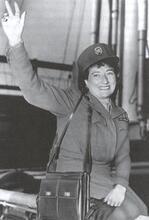
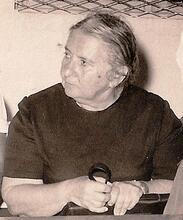
Baroness Bethsabée (Hebrew: Batsheva) was the scion of a well-known philanthropic family. She supported Martha Graham and, in 1956, brought Graham’s company to Israel. The performance left a lasting impression, prompting the abandonment of European expressionist dance and intensifying interest in Graham’s American dance style. In 1958 Rothschild settled in Israel and established the Batsheva de Rothschild Foundation for Arts and Sciences to finance various activities in Israel, such as translation of ancient literature into Hebrew, the Israel Chamber Orchestra, the Maskit shop that featured original Israeli-designed fashions, and the Israel Academy of Sciences and Humanities to further Science in Israel. Rothschild established the Batsheva and the Bat-Dor dance companies. In 1989 she was awarded the Israel Prize for her special contribution to Israeli society.

A member of the famous philanthropic family, Baroness Bethsabée (Bathseva) de Rothschild was a patron of the arts who created foundations to underwrite the arts and sciences in the United States and Israel, as well as the dance company that bears her Hebrew name.
Institution: Dance Library of Israel, Tel Aviv
Baroness Bethsabée (Hebrew: Batsheva) de Rothschild, scion of a well-known philanthropic family, was a modest and generous woman with a mighty vision. The foundations she established helped support numerous activities in the United States and Israel, especially dance, music, and science. Her philosophy of life called for assessing needs at a given time and place and supporting the people whom she believed capable of responding to those needs, thus effectively filling the gaps.
Early Life & Education
Bethsabée’s father Edouard (1868–1949) married Germaine Halphen (1884-1975) in 1905. They had four children: Alphonse (1906–1911), Guy (b. 1909-2007), Jacqueline (b. 1911-2012), and Bethsabée (Batsheva in Hebrew). Not long after Bethsabée’s birth in London, the family moved to Paris, where her father ran the French Rothschild bank he had inherited from his father, Alphonse (1827–1905). Here Bethsabée was raised. While her parents were not Zionists, they were, like all the French Rothschilds, Jewishly involved. The Dreyfus Affair had profoundly affected the family, who in consequence conveyed a strong sense of Jewish identity to their children and made Bethsabée particularly conscious of that identity. The Rothschild home had a rare art collection that accorded Bethsabée her aesthetic sensitivity and appreciation of quality and professional excellence.
Rothschild received her bachelor’s degree in biology at the Sorbonne. In 1940, at the very last minute, she and her parents fled to the United States. She began studying biochemistry and biology at Columbia University but never received an advanced degree. She enrolled at Martha Graham’s School of Dance as a student and saw how desperately Graham needed money to realize her talents. Without being asked, she started to help out financially. While in the United States, she signed affidavits for European refugees seeking entry to escape persecution.
During World War II, Rothschild joined the Free French Movement at its office in New York and volunteered for its armed forces. Assigned to London, she landed in Normandy during the Allied invasion, eventually reaching Paris, where she served as liaison between the French and the United States military forces. During her stay in Paris she started to write the book, La danse artistique aux U.S.A. -Tendances modernes (Paris, 1949; Artistic Dance in the United States: Modern Tendencies), which compares American modern dance with that of the European expressionist school (Ausdruckstanz).
Relationship with Martha Graham

After the war Rothschild returned to New York and became Martha Graham’s producer. In 1948 she married Donald Bloomingdale (1913–1954). The marriage ended in divorce. In 1952 she established the Bethsabée de Rothschild Foundation for the Arts and Sciences, which focused on supporting dance, music, and science. In the same year, she bought a house at 316 East 63rd Street, New York, to be used by the Martha Graham company and the school. The Foundation provided means for Martha Graham’s performances in the United States and her tours abroad and helped to document her achievements on film. The Foundation also provided modern composers with the means to finance concerts series and supported modern dance company performances on Broadway.
Rothschild and Graham were not only patron and supporter but also friends, and Rothchild stood by Graham during her difficult hours. While performing in London in 1950, Graham fell on her knee. The rest of the tour was canceled, and Rothschild opened her checkbook and paid all expenses and claims. In those years, there were no specialists in the treatment of sports and dance accidents, and Rothschild located a doctor in Texas, flew her to New York, and then flew with Graham to Santa Barbara to recover. When Rothschild left, she told Graham: "When you're ready - if you're ready - I'll come back and try again. I have all the means to realize it. Don't worry" (cited in Agnes de Mille, 1991: 300).
In 1956 Rothschild joined the Martha Graham Dance Company’s historic tour of the Far East (as a wardrobe assistant, since everyone on this tour had to have a specific performance-related function), which was sponsored by the United States government. The tour was to terminate in Iran, but Rothschild underwrote its extension to Israel with her private money. There the performance left a lasting impression, prompting the abandonment of European expressionist dance and intensifying interest in Graham’s American dance style.
Settling in Israel
Rothschild was a Zionist and made several visits in the 1950s to the young state of Israel. There she found a wide range of needs that she could address. Following Operation “Kadesh” (the Sinai Campaign) at end of 1956, she decided to settle in Israel. The war was fought to remove the Egyptian naval blockade of Eilat, which lies on the Red Sea. Rothschild identified with the people of Israel and wanted to take part in Israeli public life. She became the only member of her family to settle in Israel and took on the Biblical name Batsheva, King David’s wife.
At first Rothschild’s philanthropy was the result of chance, one-time responses to the needs of the hour. For example, when she saw the accelerated construction of neighborhoods built to house new immigrants, she gave money to a group of engineers to improve the shape of future housing. At the request of David Ben-Gurion, she contributed to the translation of ancient literature into modern Hebrew, and she established a loan fund for the needy administered by the Tel Aviv Municipal Social Services Department.
Supporting the Arts & Science in Israel
In 1958, Rothschild established the Batsheva de Rothschild Foundation for Arts and Science in Israel and chose to focus on providing long-term solutions for dance, music, and science, topics she understood and appreciated as important to the state. Unlike government offices, whose allowances were accompanied by a long bureaucratic process, Rothschild’s response was immediate and given directly to those in need.
In the 1950s there was no professional chamber music group in Israel. Conductor Gary Bertini convinced Rothschild of the need, and she believed he was the right person to implement the required response. In 1957, she founded the Chamber Music Society and appointed Bertini its head. Its purpose was not only to assist in the field of performance but also to commission works by innovative Israeli composers, including Mordechai Setter, Noam Sharif, Eden Partosh, and Paul Ben-Haim. In 1965, with Rothschild’s help, Bertini founded the Chamber Ensemble, which later became the Israeli Chamber Orchestra. At Bertini's request, Rothschild also purchased a large number of records for the music library.
Rothschild met with Prof. Ephraim Katzir of Israel’s Weizmann Institute (later President of Israel in 1973) and Prof. Alex Keynan of Hebrew University, who convinced her of the acute need to support basic scientific research in Israel. On July 23, 1957, Rothschild received a letter from Prime Minister Ben-Gurion in which he wrote that he was convinced that many of Israel’s problems could be solved by scientific research. In 1958 she established the fund bearing her name, which she personally headed with great devotion until her last days. The fund’s purpose was to encourage research in useful sciences, which would contribute to industry, agriculture, sanitation, energy utilization, and more. Rothschild was also one of the first to help scientists who came to Israel in the great wave of immigration from the former Soviet Union. She recognized the continuing need for science in Israel, and in 1993 she transferred the foundation to the Israel Academy of Sciences and Humanities.
In 1958, Rothschild founded the Batsheva Crafts Company, in a within the Maskit network of craft shops. Ruth Dayan, Maskit director, contacted Rothchild to help export Israeli art to the United States. Wishing to have an original and quality product, Rothschild contracted with local artists, mostly immigrants of Middle Eastern decent, and provided them with professional literature, training, and loans to purchase equipment. Through her connections, Maskit began to export jewelry and fashion to stores in Paris and New York. Rothschild supported Maskit until 1984, at which time the company was losing money and the “need” had vanished, as Israel developed a high level of design in jewelry products.
Israeli Dance
field_section_text_value
Batsheva Dance Company
The Batsheva Company, generously financed by Rothschild and inspired by her vision, was a giant step towards professionalism for dance in Israel. The Company premiere was a huge success. Theater and dance critic Yeshayahu Ben-Porat wrote, “Baroness Bathsheba de Rothschild’s new dance company has burst like a storm upon the desert that is Israeli dance and has achieved the impossible. This was truly a victory…. A wonderful evening…. And also, a true theatrical event at an international level.” (Ben-Porat, 1964)
Rothschild maintained a warm personal relationship with the dancers, as though they were her children, and she is remembered as a wonderful but lonely woman. At weekends and after premieres, she would invite them to her home, and she even helped them obtain loans to buy apartments. The Batsheva dancers were mostly young and at the start of their careers; some had not received professional dance training that included the necessary company discipline. Batsheva’s quick launch, therefore, led to some extreme cases of “star” and “prima donna” behaviors, which made managing the company unbearable; rehearsals lacked discipline, with the dancers “marking” the dances, and they did not attend class. Swollen egos and the yells that accompanied quarrels were routine. In an interview, Rothschild said: “After establishing the company, I was suddenly in a panic. Who’d conduct rehearsals? Who’d work with them? I hadn’t thought of that before…especially in Israel, that is a wild place.” (Interview with author) Rothschild desperately needed help.
That help appeared to come from Jeanette Ordman, a classical ballet dancer who came to Israel from South Africa and began conducting ballet classes. Rothschild’s and Ordman’s first meeting, which was supposed to be an introductory conversation during the search for a classical ballet teacher for Batsheva, would not have achieved its historic resonance were it not for the strong personal link forged between the two women and the need to find an answer to management problems.
Rothschild believed that destiny ordained her meeting with Ordman, who was the opposite of the “wild Israeli Sabras,” as Rothschild used to call her dancers. Impressed by Ordman’s expertise and discipline, Rothschild recruited her to the Batsheva Company, appointing her rehearsal director and even offering her some choreographic opportunities. However, Ordman’s style did not suit the company (not only did she have no background in modern dance, but she had a very cool, “British” personality) and she did not establish a good rapport with the dancers. Fearing that Rothschild was about to appoint Ordman as company director, the dancers rebelled.
Rothschild decided to disband Batsheva, but when her decision became public, a huge public outcry ensued. What was essentially Rothschild’s private company was seen as a national cultural asset, epitome of the “miracle” that had happened to Israeli dance. Rothschild thought it was rude to intervene in her private project and was furious that the dancers had approached the press. Eventually, she was obliged to give in to public pressure and continued to support Batsheva. The rift was so severe that Rothschild ceased to attend the Batsheva Company’s performances.
Bat-Dor Company
field_section_text_value
Legacy
To this day, most of Israel’s older generation of teachers, dancers, choreographers, and stage staff were students, teachers, dancers, and technical staff in the companies Rothschild founded or in the Bat-Dor studio. Their knowledge and experience were transferred to the present generation and became the foundation on which dance in Israel flourished in the early 2000s. The Batsheva de Rothschild Fund continues to provide support for innovative research in science, and the Batsheva Seminars have had a marked impact on the development of new fields of basic science in Israel.
Ben-Porat, Yeshayahu. “A Miracle Called Batsheva,” Laisha (December12, 1964).
De Mille, Agnes. Martha: The Life and Work of Martha Graham. New York 1991.
Dunning, Jennifer. “Batsheva de Rothschild, 84, a Patron of Graham,” The New York Times, April 22, 1999.
Eshel, Ruth. Dancing with the Dream: The Development of Artistic Dance in Israel 1920–1964. Tel Aviv: Sifriat Hapoalim 1990. (Hebrew.)
Eshel, Ruth. “The Batsheva Dance Company: The Graham Decade.” Mahol Akhshav (Dance Today), November 2004.
Eshel, Ruth. “And After… Requiem for Jeannette Ordman.” Mahol Akhshav (Dance Today) 14, October 2008. (Hebrew.)
Eshel, Ruth. Dance Spreads its Wings: Israeli Concert Dance 1920-2000. Tel Aviv: Israel Dance Diaries, 2016. (Hebrew.)
Eshel, Ruth. “Patroness Batsheva de Rothschild: What is Necessary Now?” In Bat-Dor Dance Company, edited by Henia Rottenberg. Tel Aviv: Resling, 2019.
“Jeanette.” Documentary film. Directed by Ruth Walk. Mozer Films Ltd, 2011. Hebrew and English, 2011.
Kol, Siki. “Jeannete Ordman: the woman who Realized a Dream and Broke it.” Mahol Akhshav (Dance Today) 14, October 2008. (Hebrew.) https://www.israeldance-diaries.co.il/issue_article/גאנט-אורדמן-אישה-שהגשימה-חלום-ושברה-א/
Manor, Giora. “Batsheva: The Flagship of Modern Dance in Israel.” Israel Dance 4 (October 1994). https://www.israeldance-diaries.co.il/en/issue_article/batsheva-de-rothchild-using-big-money-for-modern-dance/
Manor, Giora. “Batsheva de Rothschild: Using Big Money for Modern Dance.” Mahol Akhshav (Dance Today), 26, December 2004, 63-71. https://www.israeldance-diaries.co.il/en/issue_article/batsheva-de-rothchild-using-big-money-for-modern-dance/
Piatigorsky, Jacqueline. Jump in the Waves: A Memoir: Jacqueline Piatigorsky. New York: St. Martin’s Press, 1988.
Rottenberg, Henia, editor. Bat-Dor. Tel Aviv: Resling, 2020.
Sowden, Dora. “Building a New Dance in a New Country.” Dance Magazine (January 1969).
The Batsheva Dance Archive. “Batsheva de Rothschild.” Available at https://batsheva.co.il.
The Israel Academy of Science and Humanities. “The Batsheva de Rothschild Fund.”
More Like This

Double your impact to amplify Jewish women’s stories—
All gifts matched up to $35,000
Before you close this article, please consider supporting the Jewish Women’s Archive and uplifting Jewish women’s voices.
At JWA, we preserve the voices of Jewish women and gender-expansive people past and present, share them freely with millions online, and empower a new generation of Jewish feminists to lead with courage, creativity, and conviction.
But none of this happens without you. JWA is an independent nonprofit— we rely on people, like you, who believe that history belongs to all of us and that the voices of Jewish women must remain powerful, and heard.
This month, a generous JWA board member will match every gift dollar for dollar—up to $35,000—through June 30. Your contribution goes twice as far right now.
Every contribution—no matter the size—helps us document, teach, and inspire through Jewish women’s stories.
It takes less than a minute to make a difference.
Thank you for being a part of the JWA community,

Judith Rosenbaum, CEO

