

Orthodox Judaism in the United States

In September 1954, an inaugural class of thirty-two students enrolled at Stern College for Women, as Yeshiva University opened the first Jewish liberal arts college for women in America. In this picture from Stern's first commencement in 1958, New York City Mayor Robert F. Wagner, flanked by Yeshiva University Dean Dr. Samuel Belkin, presents certificates to Shirley Pasternak and Anika Wintner, members of the college's first graduating class.
Institution: Yeshiva University, New York
Throughout American Jewish history, the issues of if, and, how, women might participate in religious life has been a major point of differentiation among that group’s variegated leadership and laity. Until recently, among the most recurring issues were whether women could have all the rights of synagogue membership that men possessed and to what degree women could have access to both rudimentary and advanced religious educational opportunities. Until the post-World War II period, women took part in congregational life in their own circumscribed “special sphere,” the sisterhood. In recent decades, some Orthodox congregations have moved towards creating more gender egalitarian forms of ritual life within the halakhah. In the first decades of the 21st century, women have assumed Orthodox religious leadership roles, developments that have sparked much controversy within that community.
Introduction
field_section_text_value
1700–1850
The need to increase room for women within the Orthodox synagogue, as they observed services and rituals, was among the issues congregational leaders faced in the earliest periods of American Jewish history. (It must be remembered that the few synagogues established in this country before approximately 1840 adhered to Orthodox rules.) Jewish officials from New York to Philadelphia to Newport to Charleston were concerned that their services and edifices merit the approbation of their non-Jewish friends. They were apprehensive that gentile visitors might look askance at women segregated behind a closed latticed partition, “like a hen coop” as one visitor in 1744 described the women’s section in New York’s Shearith Israel. Accordingly, they designed open galleries that would improve women’s sight lines, without making men immediately aware of their presence. Often, these synagogues engaged Christian architects to facilitate their plans and to implicitly ensure that their synagogues were built for American-style worship. There were no religious discussions about the permissibility of this architectural innovation. It was a generally accepted Jewish adjustment to American life. Likewise, there were no calls, until the 1850s, for men and women to sit together. In colonial New England and elsewhere, separate seating was not uncommon in churches and meeting houses. Thus, the accommodating Orthodox synagogue was in consonance with American mores in having its modern gallery.

But even as women of this period, and men too for that matter, were unconcerned with advocating a role for females in synagogue ritual, some women were interested in greater recognition as members of these congregations. Typically, women’s identities within congregations were subsumed beneath those of their fathers and husbands. Many congregations did accord widows rights as “members” to retain their seats in the synagogue, to be buried in the congregational burial ground, and possibly to send their children to the Jewish school. But women could not vote on synagogue plans and policies. Ultimately, those women who wanted a sense of empowerment and participation within communal life established their own separate benevolent societies that were sometimes affiliated with, and other times separate from, synagogue life. The Female Hebrew Benevolent Society of Philadelphia was one of the most important of these independent organizations. Led by Rebecca Gratz and other women of that city’s Mikveh Israel, it established in 1838 the first Jewish Sunday school in the United States. Offering classes conducted initially by an all-female faculty, it attracted by its second year some eighty boys and girls and was praised by Rabbi Isaac Leeser, the most important Orthodox spokesperson of the pre-Civil War period.
Generally, Jewish education during this time was based in congregational schools where preference in enrollment was given to male applicants. Still, by the 1840s, most synagogue schools were coeducational, although both sexes received little more than rudimentary training in Jewish studies.
1850–1900
With the emergence of Reform congregations in the 1850s, policies on whether men and women could sit together during services was one of the essential points of demarcation between liberal and Orthodox congregations. In the pre-1880 period, membership disagreements over instituting family pews probably caused more splits in once-Orthodox congregations than any other proposed reform. Proponents of change spoke of their respect for women’s equality, the need to attract young people to services, and above all the importance of their synagogue conforming to American social trends. The accommodating Orthodox of that era also wanted to project a modern image to the larger world and were troubled by widespread disaffection from Judaism. But for most Orthodox groups mixed seating was a violation of Jewish law that could not be countenanced. It was also, to their minds, a harbinger of other ritual reforms that would further undermine traditional Judaism.
Despite the halakhic constraints, not all late nineteenth-century American congregations that defined themselves as Orthodox kept the genders apart during prayer. Indeed, when the Union of Orthodox Jewish Congregations of America was founded in 1898, a number of its charter constituents had family pews.
Nonetheless, consistent with American Orthodox political traditions, these synagogues, whether they countenanced mixed seating or not, did not ordinarily admit women as members. But in continuing to deny women (except an occasional widow) congregational suffrage, they seemingly differed little from their liberal religious counterparts who polemicized in favor of women’s equality but who denied them membership in their synagogues.
The issue of synagogue membership for women did not concern those Orthodox Jews from Eastern Europe who began arriving in this country as early as the 1850s, intent on transplanting the religious civilization they remembered from the old country to these shores. In the ephemeral landsmanshaft (associations based on home-town ties) synagogues, as well as in the larger, more established shuls on New York’s Lower East Side and elsewhere, women had no role in ritual life. Possibly as a concession to the American religious environment on the part of men just beginning to acculturate—or maybe because the gentile architectural firm they hired deemed it appropriate—in landmark synagogues like the Lower East Side’s Eldridge Street’s Kehal Adath Jeshurun, women were able to see services very well from the large open galleries. And women could be of service to their congregation and community through their ladies’ auxiliary fund-raising and mutual aid. Still, at least in the public sphere, men remained the focus of religious attention. For most immigrant rabbis, the key women’s issue had to do with the traditional requirement that proper Ritual bathmikvehs (ritual baths) be established for those who might use them. Leaders were also worried that poorly trained colleagues often issued improperly written Writ of (religious) divorcegittin (writs of divorce). Their great fear was that if remarriage occurred, children from a second union would be Jewishly illegitimate. In 1902, when the Agudath ha-Rabbanim (Union of Orthodox Rabbis of the United States and Canada) was founded, solving the problem of gittin was identified as an important organizational objective.
The central place men occupied in the worldview of those who tried to resist Americanization is best illustrated, however, in their attitudes toward Jewish education and the preventive socialization of their second-generation youngsters. In 1886, a group of the most religious downtowners pooled their limited funds to establish Yeshiva Etz Chaim, a small Lit. "room." Old-style Jewish elementary school.heder for boys. Its mission was to train boys the way young men had been traditionally educated in Eastern Europe and, as important, to keep them away from the assimilatory pressures imposed by this country’s public schools. Analogizing as they did from their Old World pasts, they assumed that in America, too, girls would receive their Jewish training as they always had: informally, at home, from their mothers or from a private tutor. In Russia, most Jewish girls did not go to the government schools. In America, however, they attended the public schools en masse. Because they were thus exposed to systematic English-language and secular training, the pace of acculturation of daughters from the most religious downtown families was far greater than it was for the small number of male scholars who were sent to Etz Chaim and its other yeshivah counterparts that were established around the turn of the twentieth century.
The transplanted Orthodox community’s sense that formal education was for boys alone was also reflected in early admission policies of both the ephemeral, independent heder melamdim (untrained teacher in a one-room tenement school) and of the metropolises’ first afternoon Talmud Torahs. Thus it was a major departure when, in 1894, leaders of the Machzike Talmud Torah, some of whom were also prime supporters of the Etz Chaim endeavor, instituted classes for girls. It was a signal recognition that American conditions required some new approaches toward indoctrinating and socializing young women into the traditional faith.
Outside of New York and other large Orthodox enclaves, where the pool of potential students was very limited, school officials could not as easily stand on law or ceremony in restricting education to boys. While heder melammeds (heder teachers) usually trained only boys in preparation for the youngsters’ Lit. "son of the commandment." A boy who has reached legal-religious maturity and is now obligated to fulfill the commandmentsbar mitzvahs, classes in fledgling congregational or communal schools were often coeducational.
1900–1970
field_section_text_value

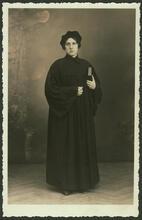
During the post World War I era, Sarah Schenirer, a Polish seamstress with a passion for Jewish tradition, developed the first school system for Orthodox girls in history. By the eve of World War II, the network encompassed over two hundred and fifty schools with more than forty thousand pupils, primarily in Eastern Europe. Pictured here is the second graduating class of the Bais Ya'akov in Lodz, Poland, in 1934.
Institution: Yehudis Bobker, Sydney, Australia.
field_section_text_value
1970s-Present

By the 1970s, there emerged from among the many graduates of these girls’ yeshivahs, seminaries, and day schools and Stern College for Women a coterie of highly educated and motivated women destined to make a significant impact upon their variegated community. At the same moment, the resisting segment within Orthodoxy benefited from the work of women dedicated to upholding traditional ideas and the status quo. For example, learned women writers for the Lubavitcher movement articulated counterattacks against Jewish feminists’ calls for change within Orthodox Judaism. Some of these spokeswomen also engaged in discussions and debates on college campuses in furtherance of their movement’s outreach programs to unaffiliated Jews.
Meanwhile, other women, products of Orthodox day schools and then secular university training or Stern College, or sometimes defectors from Bais Ya’akov schools, challenged the Orthodox community to address what they perceived to be disabilities imposed upon them by halakhah and to accord them a greater role in synagogue life and public Orthodox ritual. Often defining themselves as Orthodox feminists and attuned to the rhetoric and successes of their sisters elsewhere, they saw no place for a “special sphere” within congregational governance, explored the ways in which women might participate in the Orthodox service within the bounds of Jewish law, demanded that Orthodox rabbis revisit the laws and consequences that govern the Woman who cannot remarry, either because her husband cannot or will not give her a divorce (get) or because, in his absence, it is unknown whether he is still alive.agunah (a woman who has been denied a Jewish divorce by her husband and is thus unable to remarry within Jewish law) and ultimately pressed for women to have professional religious leadership positions
Accordingly, in the 1970s-1980s, many modern Orthodox congregations changed, without profound religious debate, their long-standing rules governing membership and board leadership. Since century-old exclusions were rooted primarily in political custom and social mores and not Jewish law, it was a relatively simple matter to accommodate what women and some men wanted. In most instances, it was only a question of whether other men in the synagogue would be comfortable with women in positions of lay power within the congregation.
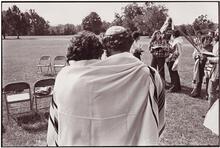
At the same time, the successful efforts of women to forward their participation within the Orthodox service provoked immense discussion and debate within Orthodox ranks. Unquestionably, the Hebrew Institute of Riverdale (Bronx, New York) was, and continues to be, the nation’s most avant-garde congregation in its championing of women’s involvement. There, with the expressed imprimatur of its rabbi, Avraham [Avi ] Weiss, beginning in the 1970s, worshipers regularly passed the Torah scroll from the men’s to the women’s sections during services. The parents and siblings of bar and Lit. "daughter of the commandment." A girl who has reached legal-religious maturity and is now obligated to fulfill the commandmentsbat mitzvah children stood together on the Lit. "elevated place." Platform in the synagogue on which the Torah reading takes place.bimah during services to offer a family blessing. Women and men recited the Lit. "scroll." Designation of the five scrolls of the Bible (Ruth, Song of Songs, Lamentations, Ecclesiastes, Esther). The Scroll of Esther is read on Purim from a parchment scroll. megillah at special egalitarian readings on Purim.

Then, in the 2010s, under the initiative of Rabbi Steven Exler, who, in 2015 succeeded Weiss as Senior Rabbi of the Hebrew Institute and in close association with Rabba Sara Hurwitz, the congregation instituted additional opportunities for women to participate in service activities. As of 2019, women ascend the bimah to return the Torah to the ark and on The Jewish New Year, held on the first and second days of the Hebrew month of Tishrei. Referred to alternatively as the "Day of Judgement" and the "Day of Blowing" (of the shofar).Rosh Ha-Shanah men and women, standing within their respective sides of the mehitza are accorded the honor of calling out the notes of the Ram's horn blown during the month before and the two days of Rosh Ha-Shanah, and at the conclusion of Yom Kippur. Shofar-blowing ceremony. Beginning during Weiss’ tenure, women present learned sermons and other words of Torah on a weekly basis. On The Day of Atonement, which falls on the 10th day of the Hebrew month of Tishrei and is devoted to prayer and fasting.Yom Kippur Tisha B’Av, women have led the reading of elegies (kinot). It is also noteworthy that when a man is called to the torah, he is now encouraged to be called by both his mother’s and father’s name.
Meanwhile, since the 1970s, this synagogue has been home to a monthly women’s tefillah, which begins its year’s calendar with women’s hakafot (Torah procession) and a Torah reading during Lit. "rejoicing of the Torah." Holiday held on the final day of Sukkot to celebrate the completing (and recommencing) of the annual cycle of the reading of the Torah (Pentateuch), which is divided into portions one of which is read every Sabbath throughout the year.Simhat Torah. As of 1996, the Riverdale Women’s tefillah was one of thirteen such prayer groups that met regularly in synagogues and homes in the metropolitan area. Seven other groups met in other communities across the United States. It was estimated that college campuses were then home to an additional eight prayer groups. By 2004, there were 33 women’s tefillah groups in the United States, 22 of which were in New York, as well as 57 additional prayer groups in cities around the world.
However, by that time, there were those from within the women’s tefillah cohort who often, with their spouses, began developing more egalitarian Orthodox partnership minyans where men and women shared the liturgical duties. Drawing inspiration from initiatives first hatched in Jerusalem, at these services, which meet on Sabbath and holidays, at women lead the recitation of psalms [psukei d’zimra] that begin the service, men conduct the central shacharit and mussaf services. Women may take the Torah out of the Ark before the weekly Torah portion begins and they return the Scroll at the conclusion of the Torah reading. The actual chanting of the Torah is divided between men and women and either a woman or a man chants the haftarah (Prophetic portion of the week). Throughout these religious activities men and women sit and stand on their respective sides of the mechitza. As of 2019, there were an estimated 31 such services in ten states and the District of Columbia.
While varying types of public bat mitzvah experiences have widely become part of the contemporary Orthodox girl’s coming of age within almost all segments of the community, the majority of Orthodox congregations have neither accepted nor integrated most Orthodox feminist activities or groups into their synagogues’ lives. Indeed, as early as 1982, women’s tefillahs were castigated by both the Agudath ha-Rabbanim and by a group of five roshei yeshivah (teachers of Talmud) at Yeshiva University’s Orthodox seminary (RIETS). Leaders of old-line Orthodoxy in the United States told Orthodox feminists and their supporters, “Do not make a comedy out of Torah” (Gurock, American Jewish Orthodoxy..., p. 61). Three years later, in 1985, colleagues of Rabbi Weiss and Rabbi Saul Berman—another spokesman for feminist Orthodoxy within the Yeshiva University community—unequivocally declared that prayer groups were a “total and complete deviation from tradition” (Wertheimer, A People, p. 133). (Weiss left the Yeshiva faculty in 2000 soon after he founded Yeshivat Chovevei Torah. As of 2019, Berman remains on the Yeshiva University faculty.) In all events, this resistant oppositional position continues to the present day. For example, in 2013, the Rabbinical Council of America, an organization made up primarily by men ordained by RIETS and under the sway of its roshei yeshivah, made clear that it opposed partnership minyans (Wertheimer, The New, 155). Spokesmen for the Agudath ha-Rabbanim and their brother associations have uniformly expressed antipathy to what they see as a deviant development.
On another communal front of importance to women, and arguably to many men as well, in Jerusalem in 1990, under the leadership of Rabbanit Chana Henkin, a program was established to train women to serve as Yoatzot Halacha (halakhic guide). Nishmat, now known as the Jeanie Schottenstein Center for Advanced Torah Study for Women, has provided its students with a classic halakhic and Talmudic curriculum, with supplementary instruction in women’s medicine, to qualify women to answer questions on Menstruation; the menstruant woman; ritual status of the menstruant woman.niddah niddah and sexual and fertility issues. Since 1999, its graduates have served communities all over the world. In 2004, Bracha Rutner was engaged as the first Community Yoetzet Halacha in the United States at the Riverdale Jewish Center. Soon thereafter, Shayna Goldberg began working in Teaneck and Englewood, New Jersey, followed by Atara Eis in Silver Spring, Maryland. As of the end of 2019, there were seventeen women employed as Yoatzot Halacha in 51 institutions in 22 communities in the United States and Canada.
This institutional innovation has been seen favorably by many otherwise resistant rabbinical authorities, not so much as the acceptance of a feminist demand but rather as a formalizing, with additional scientific training and sophistication, of an essential communal function that in the past was often carried out by the wives of Orthodox rabbis who ministered to the women in their communities.
Concomitantly, there has been widespread interest among Orthodox rabbis of many stripes in addressing and ameliorating the long-standing and tragic predicament of the agunah (chained women). Since 1981, Agunah Inc. founded by Orthodox feminists Rivka Haut and Susan Aranoff, has been in the forefront of applying necessary social pressure to advance this cause within their own community. The battle has been engaged on two fronts. In some individual cases and communities, pulpit rabbis and communal leaders have excoriated men who have refused to grant their wives the necessary writ of divorce that would permit them to resume normal lives and social relationships. These efforts have received mixed reviews among Orthodox feminists, who want their rabbis and men’s organizations to ostracize recalcitrant husbands more aggressively. Various religious legal remedies have been explored to bend halakhic rules appropriately. Their solutions have ranged from prenuptial agreements to ex post facto annulments of marriages. In 1993, the Rabbinical Council of America, the national organization of Orthodox rabbis made up primarily of men ordained by Yeshiva University, approved an innovative prenuptial document. Since that critical approbation, this document has become well-nigh de rigeur at weddings conducted by accommodating Orthodox rabbis. There has, however, been some resistance within other segments of the Orthodox rabbinate to this procedure.

Dushkin, Alexander M. Jewish Education in New York City (1918).
Fine, Jo Renee, and Gerard Wolfe. The Synagogues of New York’s Lower East Side (1978).
Furstenberg, Rochelle. “The Flourishing of Higher Jewish Learning for Women.” Jerusalem Center for Public Affairs 429 (May 1, 2000).
Goldman, Karla. Beyond the Synagogue Gallery: Finding a Place for Women in American Judaism (2000); Farber, Seth. An American Orthodox Dreamer: Rabbi Joseph D. Soloveitchik and Boston’s Maimonides School (2004).
Grinstein, Hyman B. The Rise of the Jewish Community of New York, 1654–1860 (1945).
Gurock, Jeffrey S. American Jewish Orthodoxy in Historical Perspective (1996), and The Men and Women of Yeshiva: Higher Education, Orthodoxy and American Judaism (1988), and Ramaz: School, Community, Scholarship and Orthodoxy (1989), and When Harlem Was Jewish (1979).
Joselit, Jenna Weissman. New York’s Jewish Jews: The Orthodox Community in the Interwar Years (1990), and “The Special Sphere of the Middle-Class American Jewish Woman: The Synagogue Sisterhood.” In The American Synagogue: A Sanctuary Transformed, edited by Jack Wertheimer (1987).
Lerner, Anne Lapidus. “‘Who Has Not Made Me a Man’: The Movement for Equal Rights for Women in American Jewry.” AJYB 77 (1977): 11–16.
Poll, Solomon. The Hasidic Community of Williamsburg (1962).
Rakeffet-Rothkoff, Aaron. The Silver Years in American Jewish Orthodoxy: Rabbi Eliezer Silver and His Generation (1981).
Sarna, Jonathan D. “The Debate over Mixed Seating in the American Synagogue.” In The American Synagogue: A Sanctuary Transformed, edited by Jack Wertheimer (1987).
Sussman, Lance. Isaac Leeser and the Making of American Judaism (1995).
Wertheimer, Jack. A People Divided: Judaism in Contemporary America (1993).
Women’s Tefillah Network Newsletter (August 1996).
More Like This

Double your impact to amplify Jewish women’s stories—
All gifts matched up to $35,000
Before you close this article, please consider supporting the Jewish Women’s Archive and uplifting Jewish women’s voices.
At JWA, we preserve the voices of Jewish women and gender-expansive people past and present, share them freely with millions online, and empower a new generation of Jewish feminists to lead with courage, creativity, and conviction.
But none of this happens without you. JWA is an independent nonprofit— we rely on people, like you, who believe that history belongs to all of us and that the voices of Jewish women must remain powerful, and heard.
This month, a generous JWA board member will match every gift dollar for dollar—up to $35,000—through June 30. Your contribution goes twice as far right now.
Every contribution—no matter the size—helps us document, teach, and inspire through Jewish women’s stories.
It takes less than a minute to make a difference.
Thank you for being a part of the JWA community,
Judith Rosenbaum, CEO

