

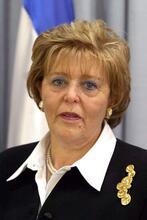
Miriam Naor

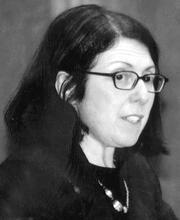
Miriam Naor was widely esteemed for her expertise in criminal law. After serving as deputy state attorney in the Ministry of Justice, she became a judge in the Jerusalem Magistrates’ Court in 1980; she became a judge in the Jerusalem District Court in 1989. Naor served on the panels of judges that dealt with highly complex cases that were widely publicized because they related either to the crimes of public figures or prominent businessmen, or to the most severe of crimes. Naor’s decisions were always based on profound legal knowledge and on rigorous analysis of the facts. In December 2004 Naor was appointed head of the Ministry of Justice Committee for Criminal Procedure that advises the Minister of Justice on matters relating to Criminal procedures.
Early Life, Education, and Career
field_section_text_value
Famous Cases
Justice Naor served on the panels of judges that dealt with highly complex cases that were widely publicized because they related either to the crimes of public figures or prominent businessmen, or to the most severe of crimes. Among such cases was the prosecution of what was known as the “bank shares manipulation of 1983,” in which managers and accountants of the principal Israeli banks were the defendants. They were accused of committing serious economic crimes since, for several years, they actively intervened to promote the share prices of their banks, causing a collapse of the shares in 1983. After writing a long, complex, and well-argued judgment, which won high praise from the Supreme Court justices sitting as a Court of Appeal, Naor did not hesitate to sentence the heads of the banks to unprecedentedly heavy punishment, ranging from one year’s imprisonment to a two-year suspended sentence, while also imposing fines of up to one million shekels. In 1999, after a long and complex trial, the District Court, with Naor on the panel of judges, found Aryeh Deri, a former minister in the Israeli government, guilty of having over a long period accepted bribes, received money on false pretenses and committed breach of trust. The court imposed a four-year term of imprisonment. In 2000, after the Supreme Court rejected part of his appeal, it reduced his sentence from four years to three. This was the first occasion on which a former member of the cabinet was jailed.
Another famous case was the indictment of a senior civil servant on three charges. The district court found the civil servant guilty of attempting to accept bribes and fraud and breach of trust in the first charge but exonerated him regarding all offenses in the second and third charges. The defendant appealed to the Supreme Court for his indictment in the first charge and the state appealed his exoneration. The Supreme Court, in a panel of three justices including Naor, acquitted the defendant because of lack of sufficient evidence in the first charge. However, Justice Naor added a minority opinion accepting the State’s appeal to indict the defendant for fraud and breach of trust in the third charge. Justice Naor decided that the accused was fully aware of the criminal nature of his actions, a fact that lent a degree of corruption to his actions. In a review in 2004 before nine justices, Naor’s minority opinion was accepted by the court, which in addition convicted the civil servant of fraud and breach of trust in the first charge.
Naor’s decisions in these and other, less famous, cases were always based on profound legal knowledge and on rigorous analysis of the facts.
In December 2004 Naor was appointed head of the Ministry of Justice Committee for Criminal Procedure, which advises the Minister of Justice on matters relating to Criminal procedures. In January 2015, she was selected to be the President of Israel’s supreme court; she served in this position until October 2017. She also served as the President of the Zionist Supreme Court of the World Zionist Organization beginning in 2018. In 2020, she was appointed by the Israeli government to lead the task force probing the disaster that occurred at Mount Meron on April 30, 2020.
From 1972 to 2001 Naor lectured on various subjects in the Law Faculty of the Hebrew University. In 1975 she married Arye Naor (b. 1940), a professor of public policy and administration at Ben-Gurion University of the Negev. Their twin sons, Naftaly and Michael, were born in 1976.
Miriam Naor died on January 24, 2022.
More Like This





Double your impact to amplify Jewish women’s stories—
All gifts matched up to $35,000
Before you close this article, please consider supporting the Jewish Women’s Archive and uplifting Jewish women’s voices.
At JWA, we preserve the voices of Jewish women and gender-expansive people past and present, share them freely with millions online, and empower a new generation of Jewish feminists to lead with courage, creativity, and conviction.
But none of this happens without you. JWA is an independent nonprofit— we rely on people, like you, who believe that history belongs to all of us and that the voices of Jewish women must remain powerful, and heard.
This month, a generous JWA board member will match every gift dollar for dollar—up to $35,000—through June 30. Your contribution goes twice as far right now.
Every contribution—no matter the size—helps us document, teach, and inspire through Jewish women’s stories.
It takes less than a minute to make a difference.
Thank you for being a part of the JWA community,

Judith Rosenbaum, CEO