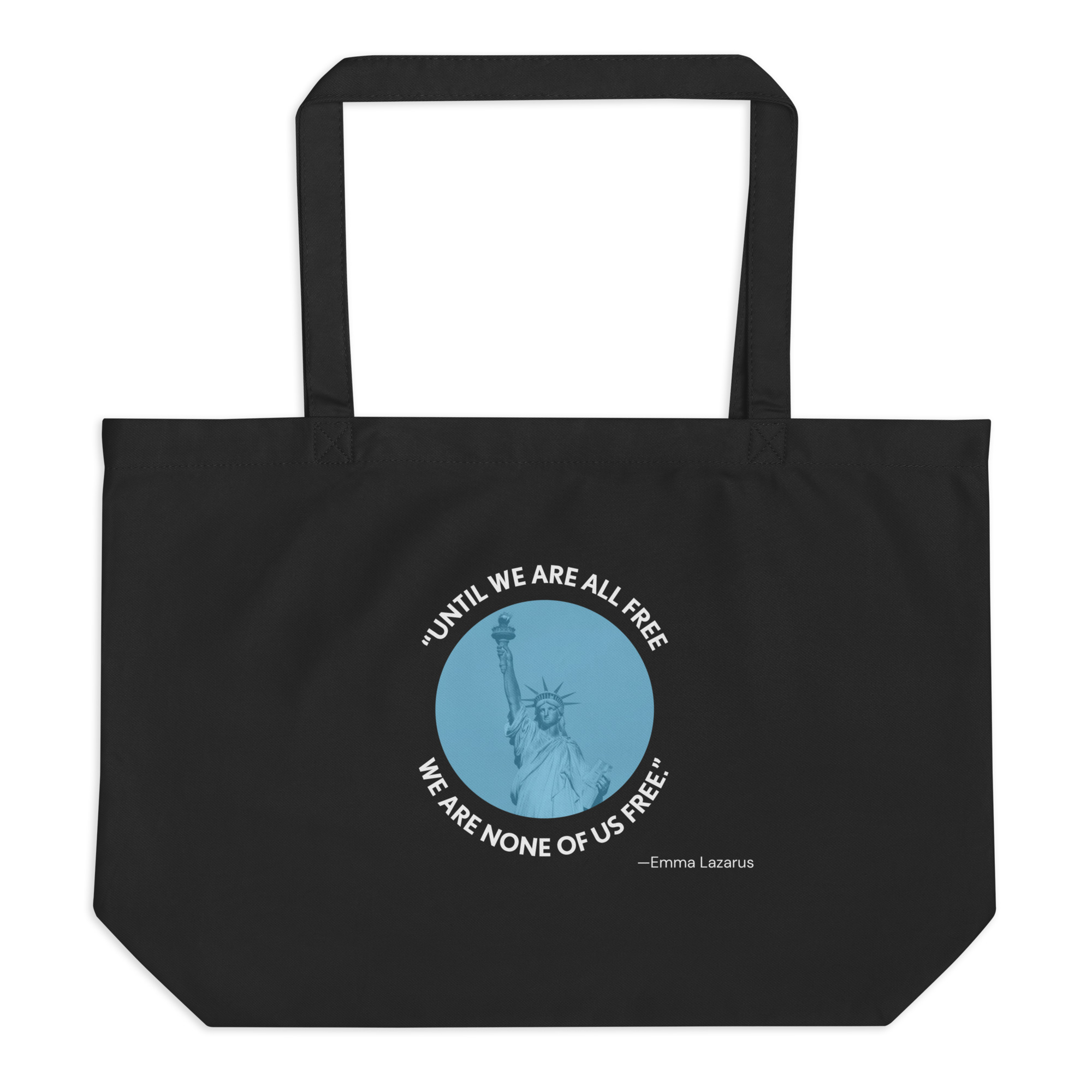

Naomi: Midrash and Aggadah

Midrash portrays Naomi favorably, referring to her as righteous and significant. When describing the distress felt by Naomi after the deaths of her husband and sons, the Rabbis emphasize Naomi’s dedication to her faith. Many of Naomi’s narratives involve her daughter-in-law, Ruth. Naomi is shown being suspiscious of and frustrated with Ruth because she is a gentile. However, she guides Ruth through her conversion, encourages Ruth to maintain her devotion, and raises the child to whom Ruth gives birth.
Lineage
field_section_text_value
Ruth and Naomi
The Rabbis also expand upon the dialogues between Naomi and her daughters-in-law (in, e.g., Ruth Rabbah 2:16) and seek to understand why she tried to persuade them to return to their home in Moab. Ruth Zuta indicates that Naomi was ashamed of her Gentile daughters-in-law and did not want them to return with her to Bethlehem; even when she allowed Ruth to come back with her, the midrash presents this as irksome for Naomi (Ruth Zuta 1:8, 12). This orientation does not appear in Ruth Rabbah, in which the exegetical expansions mainly explain and interpret the Biblical depiction of Naomi’s attempts to convince her daughters-in-law to go back to their home as relating to their chances of remarrying.
An additional element relates to conversion as the subject of a portion of the exchanges. Ruth Rabbah understands the wording “and they set out on the road” (Ruth 1:7) as referring to the laws of conversion (Ruth Rabbah 2:22). Ruth’s moving speech— “but Ruth replied, ‘Do not urge me to leave you, to turn back and not follow you. For wherever you go, I will go; wherever you lodge, I will lodge; your people shall be my people, and your God my God. Where you die, I will die, and there I will be buried. Thus, and more may the Lord do to me if anything but death parts me from you” (1:16–17)—is transformed by the midrash into a conversation between Ruth and Naomi.
What Ruth says in these verses is in response to Naomi’s depiction for her of the mores of the Jewish religion, which the midrash “completes” for the reader. Thus, for example, “For wherever you go, I will go”: “She told her, ‘My daughter, it is not the way of Israel to go to theaters or to circuses, but only to synagogues and study halls. Nor is it the way of Israel to go more than two thousand cubits on the Sabbath” (Ruth Rabbah 2:22). A similar transformation of a seeming statement into a dialogue, albeit with differing emphases, appears in Ruth Zuta (1:12).
The Rabbis dramatically portray Naomi and Ruth’s entrance to Bethlehem and find various reasons why masses of people were in the fields of Bethlehem at the time, such as the fact that this happened to be the beginning of the barley harvest; or that the crowds had gone forth for the funeral of Boaz’s wife, who had died that day (Ruth Rabbah 3:5–6). This crowd receives the two women.
The women of a city function in the Bible, and consequently in the midrash, as a sort of chorus. Their question: “Can this be Naomi?” is given a detailed treatment in the midrash, with a depiction of her present situation, as compared with her past standing: “They said: ‘Can this be Naomi?’—they said: Is this the one whose actions were fine and pleasant [na’im u-ne’imim]? In the past, she was garbed in her colorful and plush clothing, and now she wears rags. In the past her face was florid from eating and drinking, now her face is green from hunger.” Naomi’s response: “Do not call me Naomi, call me Mara [bitter]” (1:20) is explained by analogy to a cow whose owner praises it, while the bruises on its body attest that it is not such a good and obedient beast. This metaphor is meant to explain Naomi’s situation and her attitude toward it, one of justification and acceptance (Ruth Rabbah loc. cit.).
The midrash relates to different aspects of the singular relationship between Naomi and her daughter-in-law Ruth. The former is perceived as Ruth’s spiritual mentor, from the stage of conversion to her concern about the way in which Ruth will go forth to gather food. Her instruction to gather only from Boaz’s field is seen as an expression of her concern for Ruth’s modesty and innocence (Ruth Zuta 2:2, 18, 22). Naomi stresses that Ruth is to stay close to Boaz’s girls and not to his lads (Ruth Rabbah 5:11). Her directing Ruth to the threshing floor is perceived as intended solely for Ruth’s benefit (Ruth Rabbah 5:12), and Naomi’s precise instructions were meant to preserve her daughter-in-law’s spiritual wellbeing and ensure her affiliation to the people of Israel (Ruth Rabbah loc. cit.; Ruth Zuta 2:22).
Some of the tableaux in Ruth Zuta (2:2, 18, 22) imply strict supervision of Ruth’s ways, perhaps ensuing from Naomi’s continued wariness concerning her daughter-in-law, which is indicated by this midrash’s tendency to depict Naomi as embarrassed by Ruth’s Gentile status. Thus, for example, when Ruth goes forth to gather food, Naomi takes care that she “not engage in misconduct nor be dependent upon others” (2:2) and fears lest “Heaven forfend, she join the licentious ones” (2:18).
After Ruth gives birth to a son, the neighbors say: “A son is born to Naomi” (Ruth 4:17), who is the child’s foster mother. The Rabbis observe that the child is attributed to Naomi because she raised him (BT Sanhedrin 19b). This fact is also related to another midrashic testimony that Boaz died immediately after the wedding, and so Naomi raised the boy (Ruth Zuta 4:13).
Opinion of Naomi
The midrash is generally quite positive in its appraisal of Naomi, who is called “a righteous woman” in various places, and is included among the upright women outstanding in their righteousness with whom Israel was blessed throughout the generations (Ozar ha-Midrashim [Eisenstein], p. 474). Thus, for example, Midrash Eshet Hayil applies to her the verse (Prov. 31:20): “her hands are stretched out to the needy” and describes her as feeding the poor. According to Ruth Rabbah (6:4), Boaz was blessed with children only after Naomi prayed for him.
Naomi’s leaving the country of Moab is compared with Jacob’s departure from Beer-sheba, with the same effect: “The great one in the city is its splendor, its glory, its praise. If he left there, its splendor has departed, its glory has departed, its praise has departed” (Ruth Rabbah 2:12).
Interestingly, “Naomi took the child […] She became its foster mother” (Ruth 4:16) is the reason given by Ozar ha-Midrashim for Naomi’s inclusion in the list of righteous women. This may possibly express the view that Naomi’s greatness consisted primarily of her taking pains so that this child be born, thus resulting both in Ruth’s personal redemption and in the redemption and restoration of the family as a whole. By Naomi’s merit King David and the Messiah would be born.
Naomi’s great distress is attributed to her husband’s and sons’ sin of jealousy (Ruth Zuta 1:2) or, alternately, to the family’s having left The Land of IsraelErez Israel (BT Bava Batra 91a; Midrash Eshet Hayil).
Naomi’s name also attests to her essential nature. As with other characters in the Book of Ruth, the Rabbis expound her name in a manner that corresponds to the Scriptural depiction: she was named Naomi “because her actions were fine and pleasant [na’im u-ne’imim]” (Ruth Rabbah 2:5); and in Zohar, Lekh Lekha, as “May the favor of the Lord, our God, be upon us” (Ps. 90:17).
More Like This


Double your impact to amplify Jewish women’s stories—
All gifts matched up to $35,000
Before you close this article, please consider supporting the Jewish Women’s Archive and uplifting Jewish women’s voices.
At JWA, we preserve the voices of Jewish women and gender-expansive people past and present, share them freely with millions online, and empower a new generation of Jewish feminists to lead with courage, creativity, and conviction.
But none of this happens without you. JWA is an independent nonprofit— we rely on people, like you, who believe that history belongs to all of us and that the voices of Jewish women must remain powerful, and heard.
This month, a generous JWA board member will match every gift dollar for dollar—up to $35,000—through June 30. Your contribution goes twice as far right now.
Every contribution—no matter the size—helps us document, teach, and inspire through Jewish women’s stories.
It takes less than a minute to make a difference.
Thank you for being a part of the JWA community,

Judith Rosenbaum, CEO