

Jewish Museums in the United States

American Jewish women have played an outsized role in the foundation of Jewish museums. Barred from traditional spaces of power in the early twentieth century, many women—adjacent to power as Rebbetzins (wives of rabbis), philanthropists (daughters and wives of major recognized philanthropists), and secretaries of libraries and other Jewish organizations—leveraged their connections to establish new kinds of cultural institutions: museums. The National Federation of Temple Sisterhoods was responsible for the founding of the first American Jewish museum at Hebrew Union College in Cincinnati in 1913, and in 1944 Frieda Schiff Warburg donated her neo-Gothic mansion to found the Jewish Museum in New York. Jewish women were also some of the first people to establish culturally specific museums, laying the groundwork for the “identity museum” movement of the last few decades.
Jewish women have often played prominent roles as founders, directors, curators, artists, and patrons of Jewish museums in the United States. Though men have also served in each of these capacities, women have been particularly critical and essential as creators and developers. Women were the visionaries who spearheaded the founding of Jewish museums in places as diverse as Cincinnati, New York, and Boston.
History
field_section_text_value
Women and Jewish Museums
field_section_text_value
Curators
Grace Cohen Grossman, curator at the Skirball Museum, advanced cataloging of Judaica at the Smithsonian Institution as research collaborator for the National Museum of American History. Her other achievements include the core exhibition and Project Americana of the Skirball Museum and the publication of the comprehensive Jewish Art (1995) and Jewish Museums of the World (2003).
Working in other repositories, such as the JTS library, Evelyn Cohen pioneered the creation of a new Jewish Art Department. Sharon Liberman Mintz continued this work, which resulted in an extensive collection and exhibition program relating to all aspects of the Hebrew book, manuscripts, and related art objects.
Collectors and Patrons
Jewish museums bear testimony to the husbands and wives who have collected Judaica together, and who have, in many cases, made considerable financial contributions. A few donors stand out in generously shaping museums. Frances Pascher and her husband Abram Kanof established the Tobe Pascher Workshop at the Jewish Museum as a studio center for the creation of Jewish ceremonial art; Erica Pappenheim Jesselson and her husband, Ludwig Jesselson, have long been identified as the patrons of the Yeshiva University Museum; and Audrey Skirball Kenis, with her support of the new Skirball Cultural Center and Museum, has continued Jack Skirball’s vision of a new kind of cultural and educational entity to reinforce Jewish identity.
Educators
Jewish museums have transformed themselves from repositories to vital centers of Jewish education and identity formation. Esther Netter, of My Jewish Discovery Center, targeted assimilated Jews and intermarried families through a series of traveling exhibitions. Adele Lander Burke, of the Skirball Museum, developed the groundbreaking MUSE program, which uses ethnographic approaches to compare ceremonial objects among diverse cultures. Judith Siegel, for many years director of education at the Jewish Museum, helped develop programs for Bridges and Boundaries, an exhibition exploring Jewish and African-American identities.
Docents
Volunteers continue to play a significant role in Jewish museums. Women have predominated as docents, conducting tours and programs. Most of each of the above are women. In recent years, there has been a slight yet notable shift toward male retirees whose volunteer efforts mark a search for a fulfilling experience, while new, full-time career opportunities have been made available to women.
Synagogue Museums
Since the 1970s, a growing number of synagogue Judaica collections have been made accessible through the establishment of interpretive exhibitions and the creation of gallery space. For the most part, these small museums are projects developed and run by women from congregations or their sisterhoods. Collections range in size from a few pieces in a showcase to several rooms.
Other stand-alone museums have developed their own shows by taking an interpretive approach to their donor-created collections. The Sylvia Plotkin Judaica Museum in Phoenix, Arizona, the Temple Judea Museum of Keneseth Israel in Elkins Park, Pennsylvania, and the Mizel Museum of Judaica in Denver, Colorado, are a few such museums.
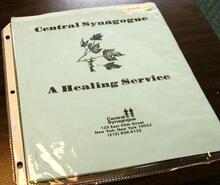
With the publication of A Temple Treasury: The Judaica Collection of Congregation Emanu-El of the City of New York, by Reva Goodlove Kirschberg and Cissy Grossman, the collection of New York’s Congregation Emanu-El has also become well known. The Herbert and Eileen Bernard Museum includes both the functional objects formerly used in the synagogue and a formal collection inaugurated in 1928, when the present building at Fifth Avenue and 65th Street was erected. Cissy Grossman, curator of the collection, has also developed numerous Judaica exhibitions as assistant curator at the Jewish Museum and as curator of the collection at New York City’s historic Central Synagogue collection.
In addition to the numerous synagogues whose buildings have landmark status, significant collections include the Congregation Beth Ahabah Museum and Archives Trust, in Richmond, Virginia, and the Dr. Edgar R. Cofeld Judaic Museum of Temple Beth Zion, in Buffalo, New York. The Elizabeth S. Fine Museum at Congregation Emanu-El, in San Francisco, bears the name of the wife of longtime rabbi Alvin Fine, while the Janice Charach Epstein Museum Gallery of the Jewish Community Center of Metropolitan Detroit bears the name of this young artist, also in memoriam. The mission of this gallery is to show and support the work of young Jewish artists.
Conclusion
The traditionally strong presence of women in the Jewish museum field has shaped and defined the scope and influence of these institutions. Women make enormous contributions as builders of institutions. Yet their strong presence fails to give museums priority of place for Jewish communal budgets, where museums struggle to carve their identity against a backdrop of more pressing social service demands. Consequently, even today, Jewish museums still occupy a modest position in the Jewish communal roster. Perhaps in part because women direct them, Jewish museums are compelled to continue to struggle to achieve even a modest degree of visibility within the philanthropic community.
Nonetheless, Jewish museums have played an enhanced role in recent decades as educational and cultural centers, as well as sources of preservation and documentation of significant historical events. Their ability to recognize the changing social and religious needs of their communities assures both an important and vibrant future for these institutions. Furthermore, Jewish women were some of the first people to establish culturally specific museums, and the “identity museum” movement, as it has been subsequently named, led to the National Museum of the American Indian, the National Museum of African American History in Washington, D.C., and many more. Even if Jewish museums are no longer the centerpiece of the identity museums of our country, they were the first—thanks to Jewish women.
AJYB 91 (1991), s.v. “American Jewish Museums: Trends and Issues”.
Balin, Carole, Dana Herman, Jonathan Sarna, and Gary Zola, eds. Sisterhood: A Centennial History of Women of Reform Judaism. Cincinnati, Ohio: Hebrew Union College Press, 2013.
Bilski, Emily D. “The Art of the Jewish Museum.” In The Jewish Museum New York, edited by Vivian B. Mann and Emily D. Bilski. New York: Scala Books, Jewish Museum, 1993.
Cohn-Wiener, Ernst. Jewish Art: Its History from the Beginning to the Present Day. Yelvertoft Manor, Northamptonshire: Pilkington Press LTD, 2001.
Glaser, Jane R., and Artemis A. Zenetou. Gender Perspectives: Essays on Women in Museums. Washington, DC: Smithsonian Institution Press, 1994.
Greenwald, Alice. “Jewish Museums in the U.S.A.” EJ Yearbook (1988–1989): 167–181.
Grossman, Cissy and Reva Goodlove Kirschberg. A Temple Treasury: The Judaica Collection of Congregation Emanu-El of the City of New York. New York: Hudson Hills Press, Congregation Emanu-El of the City of New York, 1989.
Grossman, Grace. Jewish Art. London: Hugh Lauter Levin, 1995.
Siegel, Judith. Conversation with author Karen Franklin, December 1995.
Silver, Larry, and Samantha Baskind. Jewish Art: A Modern History. London, England: Reaktion Books Ltd, 2011.
Van Voolen, Edward. “Jewish Museums in Europe.” EJ Yearbook (1988–1989): 182–188.
Zemel, Carol. Looking Jewish: Visual Culture and Modern Diaspora. Bloomington, Indiana: Indiana University Press, 2015.
More Like This
Double your impact to amplify Jewish women’s stories—
All gifts matched up to $35,000
Before you close this article, please consider supporting the Jewish Women’s Archive and uplifting Jewish women’s voices.
At JWA, we preserve the voices of Jewish women and gender-expansive people past and present, share them freely with millions online, and empower a new generation of Jewish feminists to lead with courage, creativity, and conviction.
But none of this happens without you. JWA is an independent nonprofit— we rely on people, like you, who believe that history belongs to all of us and that the voices of Jewish women must remain powerful, and heard.
This month, a generous JWA board member will match every gift dollar for dollar—up to $35,000—through June 30. Your contribution goes twice as far right now.
Every contribution—no matter the size—helps us document, teach, and inspire through Jewish women’s stories.
It takes less than a minute to make a difference.
Thank you for being a part of the JWA community,

Judith Rosenbaum, CEO

