
Israeli Folk Dance Pioneers in North America

Dance has been an integral element of the Jewish community since biblical times, as part of agricultural and religious celebrations, life cycle events, and rituals. An intense desire to share the joy of dance, coupled with a strong identification with both Israel and their Jewish roots, profoundly affected a diverse group of North American Jewish women. Each added a dimension to the flourishing of Israeli dance activities in communities, including regional festivals, workshops, performing groups, and weekly folk dance sessions. Fred Berk and Dvora Lapson are credited with pioneering the development of Israeli folk dance in North America. Today, Israeli folk dance enjoys a wider popularity than ever and enriches Jewish education, with programs on every continent and for every age group, including teacher training.
Introduction
field_section_text_value
Fred Berk and Dvora Lapson
field_section_text_value
Joyce Mollov
field_section_text_value
Shulamite Kornberg Kivel
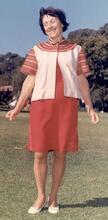
Shulamite Kivel was born Salome Shulamite Disentchik (later changed to Diskind) in Latvia, on February 22, 1927. Her mother, Luba Dzenzelsky, was “a great force in her life.” A woman of “great charm, strength and intelligence, who radiated love and self-confidence,” Luba was the backbone of the family. During World War II, Shulamite’s mother “used all these qualities to save her family from annihilation.” Her father, Leib, an educator and Hebraist, “imbued her with a deep attachment to Jewish life and learning,” teaching both Shulamite and her sister, Judith, “respect for the thinking life.” In 1932 the family moved to Brussels, Belgium, where she entered kindergarten, learned French, studied piano, and discovered her love for dance.
When the Germans invaded Belgium in 1940, her family narrowly escaped, eventually hiding in the countryside of Vichy France, working as farm hands. Alone in the fields as a shepherd, she had time to think and to decide what would give meaning to her life, if life ever became normal again. The answer was unconditionally dance and Shula, as she became known, held to her wartime resolution, “If I survive, I will dance.”
Shula did survive and in 1942 immigrated to America, where she felt as if she had stepped out of a nightmare and into a magic land where Jews were free. Now came the “joyful but arduous struggle” of becoming a dancer. She studied ballet with Valentina Belova and the American School of Ballet, and modern dance with the Graham School, José Limón, and the New Dance Group. She performed whenever possible and taught dance beginning in 1945.
But there was still a missing element. Because she felt “the guilt of being a survivor while millions had been murdered, [she] was compelled to find a reason for the gift of life.” It led her to “a search for Jewish expression in the art of dance both for herself and for sharing with others,” which she found in Katya Delakova and Fred Berk, who were also survivors, and they provided a first step.
Kivel worked with them, dancing to Jewish songs, old and new. Together, they choreographed their feelings about their Jewish past and Jewish visions, giving voice to the “longing for a land to call [their] own.” It was total involvement and became a way of life until the pull to Israel became stronger, leading her to move there in 1949. This was the beginning of Israel as a state and a time of kibbutz galuyot (the ingathering of the exiles). Shula, who spoke Hebrew, began to work as a dance teacher for the Ministry of Education and Culture. With a team of dance, music and Hebrew teachers, she went from one immigrant camp to another to help integrate immigrant children into a new and common culture. They worked to create Jewish holiday celebrations of grace and joy. The message was warmly embracing: “This is your dance, this is your song and this is your language.” Kivel also worked with the sabra children in the moshav school of Tel Mond as a eurhythmics and folk dance teacher.
In 1951 Shula returned to the United States to marry Leonard Kornberg, a college professor of educational psychology and an author; they lived in New York and had two sons, Ariel and Avram, and a daughter, Adena. She continued working to integrate dance within educational settings, most often in Jewish schools, camps, and community centers. Working on every educational level, from early childhood through college, she created innovative programs, using whatever form of dance was most suitable and drawing from folk, modern, and interpretive sources. Her goal was always to use dance to build positive emotional bridges to the Jewish experience.
As a co-director of the Jewish Dance Division of the 92nd Street Y in New York City, Kivel taught Israeli folk dance classes and workshops for teachers, directed a performing troupe of teenagers, and was co-producer and choreographer of the annual Hanukkah festival program, “A Gift of Light,” which was presented at the Y. For many years, she worked with children at SAJ (Society for the Advancement of Judaism in New York City), TAG (Torah Academy for Girls in Far Rockaway, NY), and with high school students at HANC (Hebrew Academy of Nassau County). In addition, she taught modern dance at the Samuel Field YM & YWHA in Flushing, Queens, and dance in the early childhood arts program at the Ethical Culture Fieldston School in Riverdale (Bronx, NY). Kivel established the Israeli dance program at the Central Queens YM/YWHA in Forest Hills, Queens, NY, with weekly Israeli folk dance sessions and a performing group. At Queens College, she organized the Hillel performing group. For twelve summers she was in charge of dance, initially at Camp Ramah in the Berkshires, a residential children’s camp in Wingdale, New York, and then at Ramah Day Camp in Nyack, NY. She was also a co-director of the Fred Berk Israeli Dance Workshop at Camp Blue Star in North Carolina together with Ruth Goodman.
In 1980 Berk and Kivel were invited to go to Bonn, Germany, to conduct workshops in Israeli dance. The students were physical education teachers and dancers who planned to utilize the material in the German public schools. When Berk died, Kivel was asked to carry on alone; for her, “as it would have been for Fred, a circle closed.”
In her more than forty years of teaching, Shula touched many lives. One student said, “It does not matter if it is snowing outside; in this room I feel as if there’s sand under my feet, the sun is warm and I am free!” Widowed in 1963, Shula married Morton Kivel in 1969. In 1985 they moved to Florida. She retired from teaching in 1987 and now finds artistic expression through painting; dancers are her main subject matter.
Shulamite Kivel passed away on April 2, 2021. She was predeceased in 2017 by her husband, Morton Kivel, and her daughter Adena Kornberg Holmes.
Sarah Rodberg Sommer
Sarah Rodberg, the only child of Clara and Samuel Rodberg, was born in Winnipeg, Manitoba, on December 18, 1929. As a teenager, she was active in the Zionist youth movement Habonim and as the coordinator of its social programs regularly arranged Israeli folk dance activities. Later she was recruited by Canadian Young Judaea to create Israeli dance programs for them. Eventually, the community took notice of her talent and Rodberg was asked to choreograph a local production of Fiddler on the Roof. As this was her first production, she consulted with local “Yiddishists” and researched the dance style to preserve the authenticity of movement.
On July 4, 1948, Sarah married Alex Sommer. Together they raised four children, two girls, Reena and Naomi, and two boys, Aaron and Hillel.
Sarah did not have any dance training until about the age of fifteen, when she took ballet lessons at the Nenad and Jill Lhotka School of Dance. A strong personal relationship developed between Sarah and these two teachers; it was to this couple that she turned for assistance. Nenad, in particular, became a regular source of guidance for the development of Sarah’s projects.
In 1964, Jill and Nenad Lhotka asked her to teach some of their ballet students a segment on Israeli dance. After seeing the Israeli dance troupe Inbal perform in Winnipeg in 1968, Sarah developed connections with the group and traveled to be with them in New York, where the group stayed for a few months; there she practiced with them to learn their technique and style.
When Sarah eventually became sufficiently experienced, she decided to form her own dance group. She approached some parents and children in the community to see if they were interested. In 1964, Chai was established with eight girls aged twelve to fourteen, dancing in the Sommer basement to the accompaniment of music from a record player. According to Joyce Mollov, the motivation for the group was “to present the Jewish heritage through the medium of folk dance” (Hora, 1976). Reena, Sarah’s eldest daughter and only eleven at the time, was one of the original eight dancers in Chai. A few years later, as the group expanded, her daughter Naomi also joined. Both daughters remained members for several years.
In 1967, under the direction of the late Sarah Udow (who died in 1971), singers who were also trained in movement were added, accompanied by a single accordionist. The group rapidly became known across Canada and was one of the few groups invited to perform for Queen Elizabeth and Prince Philip when they came to Ottawa in July 1967 for the Centenary of Confederation.
On July 3, 1969, at the age of thirty-nine, Sarah died from complications of metastatic breast cancer. Thereafter, Nenad and Jill Lhotka took over the artistic directorship of the group and both were involved with the ensemble for approximately twenty years. In 1978, Hillel, Sarah’s youngest son, joined the group as a percussionist and drummer. He became musical director in 1986 and from 1988 to 1994 served as the troupe’s artistic director.
With the support and encouragement of Sarah’s husband, Chai was renamed The Sarah Sommer Chai Folk Ensemble in 1970. Currently the group consists of more than forty dancers, singers and musicians; it is the only Israeli folk dance group in North America to perform exclusively to live musical accompaniment. The members of the group range in age from sixteen to their late twenties and most are students. Their junior dance group is called Ruach. All regular members of the troupe are volunteers.
Shirley T. Waxman
Shirley T. Waxman was born on April 23, 1933, to Alex and Esther (Buchalter) Silbert. Her first exposure to Israeli folk dance was in 1945 while she was a member of the HaShomer HatZair Zionist youth group in Hamilton, Ontario, Canada, which had strong connections with the much larger Toronto group. When she attended her first Oneg Shabbat, she was thrilled to see a new dance from Palestine, Mayim. In response to this initial exposure to folk dance, Waxman describes the entire experience: “There was such electricity in the air that I knew I had found my place. The warmth and feeling of everyone dancing with hands on shoulders stayed with me permanently.” (According to Fred Berk in his article, “Jewish Dance Activities in America,” included in The Jewish Dance, shortly after the end of World War II Mayim was “one of the first dances to be brought here [to North America] from Palestine, and it stimulated an enthusiastic wave of Palestinian or, as they were soon to be known, Israeli folk dances here.”) At the age of fourteen Waxman began working with the “peanut” group, ages five to seven, at the Jewish Community Centre of Hamilton. This was an activity program that included crafts, songs, and folk dance. Thus began her life-long experience of on-the-job training. However, her desire to care for people led her to a career in nursing and she was in the first graduating class of the Jewish General Hospital School of Nursing in Montreal.
When her physician husband accepted a position at George Washington University College of Medicine in 1962, Waxman moved to the Washington, D.C., area. However, since the hours of nursing conflicted with the needs of a growing family, she turned to Israeli folk dance for her second career. The sense of community motivated Waxman to devote more than twenty-five years to Israeli folk dance, pioneering activities in the Washington, D.C., area and inspiring many to become Israeli dance enthusiasts. She initiated folk dance programs at the Arlington-Fairfax Jewish Congregation and at other northern Virginia Hebrew schools, using folk dance as a tool to teach Jewish history. She started Camp Achvah, a Jewish cultural arts day camp that was the first unifying program in the northern Virginia Jewish community. This eventually prompted the founding of The Jewish Community Center of Northern Virginia in Fairfax. At the Jewish Community Center of Greater Washington in Rockville, Maryland, she was director of the Israeli Dance and Folklore Department for twelve years and taught classes for all ages, from preschoolers through senior citizens, as well as for the physically challenged and mentally disabled. Waxman had a special interest in drawing boys to Israeli folk dance by emphasizing its energetic, athletic style. She founded the Kallil Teen Israeli Folk Dance Performing Troupe, which performed at The John F. Kennedy Center for the Performing Arts as well as in Hebrew schools and festivals throughout the Washington, D.C., area and beyond.
In 1973, based on an idea of Yossi Almog, the Israeli shaliah, Waxman established Washington’s Annual Israeli Folkdance Festival under the guidance of Fred Berk and was its director until 1985. She also developed an annual workshop to introduce new material, to refresh older dances, and to incorporate choreography. As part of the Midrasha Community Hebrew School, her workshop initiatives in both festival preparation and leadership training led to high school credit for the participants. The festival grew in scope to include two thousand participants and 350 performers. In her attempt to bridge cultural barriers, she taught many Israeli folk dance programs outside the Jewish community. This included work in the public schools, Head Start programs in Arlington, Virginia, and work with teenagers in the Mormon Church. Waxman found that “Israeli folk dance is a good way to teach non-Jews something about Judaism. When you show Jewish dance comes from the Bible, it seems to open doors.”
In her role as a choreography and concert consultant to the folk dance ensemble at James Madison University in Harrisonburg, Virginia, Waxman created a Yemenite Wedding Suite and Simhat Torah, an Eastern European Suite. She also set choreographies for the folk dance ensembles at Salisbury University in Salisbury, Maryland, and Illinois State University in Normal, Illinois.
As part of Waxman’s work in Israeli folk dance, she designed and constructed costumes based on research and photography in Israel. This led to her third career, as a fiber artist. Her initial creations had been costume designs for the festival but eventually this grew to include Jewish ceremonial objects, synagogue art, decorative pieces, wearable art, and ethnic garments.
Waxman traveled extensively in Israel and the United States to research folklore and to study with well-known choreographers and teachers. Her publications include magazine articles and a vinyl sound recording and booklet, Jewish Culture through Folk Dance and Folklore for Young Children, published in 1981, commissioned by James Madison University.
Although currently retired from folk dancing, Waxman has presented workshops at Tikvat Israel Synagogue in Rockville, Maryland ,in preparation for Simhat Torah, and a program for Yom ha-Atzma’ut for fifth graders for the local Board of Jewish Education. She has also prepared staff at the B’nai B’rith Perlman Camp in Starlight, Pennsylvania. In her workshops, she uses only the older material and all the dances presented are connected to some aspect of Israeli life. For example, Dodi Tzah ve-Adom takes its words from biblical passages in the Song of Songs. Mehol ha-Gat (the Wine-Pressers’ Dance) refers to the initial grape harvest in Deganyah Alef, the first kibbutz, while Thé ve-Orez (Tea and Rice) is danced to a humorous folk song that is about the hard life of the haluzim in the 1920s and also refers to a time-honored home remedy for treating intestinal ills. The response to these types of dances has been overwhelmingly enthusiastic. Individuals who never before danced have been thrilled to find that the workshop included material that they were able to perform.
Ruth Browns Gundelfinger
Ruth Browns Gundelfinger was born on May 13, 1929, in Montreal, Quebec, Canada. In the early 1900s, her father, Samuel Browns, came from Vinnitsa (Vinnytsya), Russia (currently in Central Ukraine, it was taken by Russia from Poland in 1793). He had been a scrap-metal peddler and died when Ruth was one year old. His death left Ruth’s mother, Sara (Miller) Browns, destitute and responsible for Ruth and her three siblings, Morris, Issie, and Toby. On her tenth birthday Ruth was invited to a party being held by the Zionist youth movement, HaShomer HaZair. It was there that she and her friends fell in love with the dances and songs created by the Jews living in Palestine. She was too young to join the movement but insisted on attending for the music and dance every Friday and Saturday evening. Ruth finished the ninth grade in Montreal and at the age of fifteen began working as a bookkeeper. Eventually she received her B.A. degree in dance from San Francisco State College.
At the age of twenty-one she spent a year in Israel. Afterwards she went to New York City, where she stayed for six years, dancing with Fred Berk and acquiring a basic repertoire of Israeli folk dances. From New York she went to San Francisco, where she began dancing with a group led by Grace West, a Protestant who felt an affinity for Israeli music and dance. Several months later, in 1952, when West’s schedule limited her ability to continue leading the group, the core members decided to continue on a cooperative basis with Florence Freehof as their leader. In 1954, they chose the name Rikudom, a contraction of the Hebrew words rikud (dance) and am (nation). After about a year, Grace West returned to lead the group.
This unusual group, most of whose members were non-Jewish but had a deep interest in anything connected to Israel, ranged from high school students to senior citizens. Each session included singing Israeli songs. In 1958, when she wanted to retire, Grace West asked Ruth if she would lead the group. Ruth took over the group until 1970 when she left for a year in Israel. Under the leadership of Browns, the group grew to one hundred weekly participants plus a performing group with a core of twenty members, gaining recognition as an ethnic folk dance group affiliated with the Folk Dance Federation of California. While the group stopped meeting regularly as a folk dance group (circa 1999), it still meets to celebrate A seven-day festival to commemorate the Exodus from Egypt (eight days outside Israel) beginning on the 15th day of the Hebrew month of Nissan. Also called the "Festival of Mazzot"; the "Festival of Spring"; Pesah.Pesah, its original anniversary date.
Browns also led dancing at other venues in the area, including Ashkenaz Music and Dance Community Center in Berkeley and Café Rina in Cotati. She also taught at the Hillel Foundation in Berkeley from 1960 to 1970 and the Jewish Community Center in Palo Alto. After spending 1970 in Israel, she returned to San Francisco in 1971 and resumed teaching. Richard Gundelfinger came to dance with her group, and they married on March 16, 1974. (He died on May 31, 1989.) Beginning in 1996, she taught an Israeli dance group that meets at the Osher Marin Jewish Community Center in San Rafael, California.
Ruth Browns Gundelfinger pioneered several noteworthy projects and contributed greatly to stimulating interest in Israeli folk dance in northern California. In December 1969 she started the Café Shalom Israeli Folk Dance Group, a recreational group that began weekly meetings at the Jewish Community Center in San Francisco. She was the first person on the West Coast to initiate a Weekend Folk Dance Camp, bringing folk dance teachers from Israel to teach their own dances or dances of other choreographers. The camp was held on the campus of California Polytechnic State University in San Luis Obispo, California, a site chosen because it is the midpoint between Los Angeles and San Francisco. It continued annually for twenty-five years, from 1972 until 1997. Ruth wanted the dancers to learn the same dances at the same time, so that when dancers visited another city they would find the same dances done in the same way. Up to this point, many dances were done differently in the two main California cities and there had been confusion. Previously, for two successive years in the early 1960s, she was asked to teach during both weeks at the Stockton Folk Dance Camp held at the University of the Pacific in Stockton.
In his Folkdance Notebook, Israeli Volume 2, containing fifty-nine labanotated Israeli dances, Franklin Byrom has credited Ruth Browns as the source for the entries on the following dances: Debka Kurdit, Erev Ba, Shibboleth ba-Sadeh, Shiru ha-Shir, Vinekehu and Zemer Ikarim. In addition, the group Rikudom is credited for some of the entries: Esh Ali, Ke-Shoshana, Ki Tin’am, Mazal Tov Frelach, Mehol ha-Kerem, Mehol Ovadya, My Parents Delight, and Zur mi-Shelo.
In addition to her dance activities, Gundelfinger published two volumes of Israeli Folk Dance Songs that contain the transliteration and translation for each song. Also included is a list of songs containing texts from the Bible and citing the specific chapter and verse.
Molly Shafer Rutzen
Molly Shafer, the oldest of three children, was born on March 23, 1927, in Rochester, New York, to Sarah (Tepperman) and Nathan Abramow, and was reared with a strong sense of her Jewishness. In addition to her studies at the University of Rochester, where she earned a B.A. in Romance Languages and an M.A. in Education, leading to permanent state certification as a teacher of French and Spanish, she also studied tap, jazz and modern dance. In 1948 she married Earl Shafer, a CPA, and they had two sons and a daughter.
As a child, Molly Abramow was first exposed to Israeli folk dance in the Young Judaea Zionist Youth Movement. As an adult, from 1972 to 1992, she was an enthusiastic participant in the Fred Berk Israeli Folk Dance Workshop at the Blue Star Camps in North Carolina as well as in numerous workshops taught by Israeli choreographers and teachers elsewhere in the United States.
Shafer’s initial theatrical experiences involved directing and choreographing musicals for her Cornell Study Club, Hadassah, and other organizations. In 1969, while teaching languages at schools in Brighton, New York, she was hired to initiate a program in Israeli music and dance at Temple Beth El of Rochester. Within three years she had established four extracurricular dance groups and three choral groups. She also taught Israeli music and dance to all school classes. Later, she developed an advanced class; based on Berk’s methods, she taught high school students how to choreograph, notate, and teach Israeli folk dance. Her several visits to Israel included participation as a member of the North American delegation in the National Foundation for Jewish Culture celebration of Israel’s fortieth anniversary, “Independence and Interdependence: Israel-North America Cultural Exchange,” in June 1988. During these visits she worked with Israeli choreographers. She also held workshops in Rochester featuring several Israeli choreographers. For twenty-six years she taught Israeli dance and music at Temple Beth El of Rochester and at the community Hebrew High School (Midrasha) and for fifteen years at Hillel School (the Hebrew Day School of Rochester). In addition, she taught periodically at Temple Sinai High School and Temple B’rith Kodesh of Rochester. She also conducted Israeli folk dance workshops at area colleges.
With Fred Berk’s encouragement, and under the auspices of Temple Beth El of Rochester, Molly Shafer founded and directed the Rochester Israel Folk Dance Festival in 1974. This first festival, held on March 17, attracted high school and college groups from Ithaca, Albany and Buffalo to participate with the local groups. Workshops with Berk were scheduled for Saturday and Sunday prior to an evening performance. Starting on Sunday morning, there was a heavy snowfall and during the afternoon workshop the roads and the airport were closed. While home hospitality was part of the festival plan for performers, the storm necessitated the housing of both the out-of-town dancers and their families who had come to see the performance. The incident resulted in the development of lifelong friendships; the ensuing festivals continued with home hospitality as a norm for participants from outside the local community. Since the first festival was a success, the festival continued annually for nineteen consecutive years under Shafer’s direction, attracting college and high school groups from the New York State cities of Albany, Buffalo, Elmira, Ithaca, and Syracuse, and from Cleveland and Columbus, Ohio, Washington, D.C., and Toronto, Canada. In response to Berk’s emphasis on quality control, she visited all groups participating in the festival and supervised their choreography, costumes, and music. The festival weekend retained the format of having workshops as an integral part. Shafer’s groups also performed annually in the Albany Dance Festival and in 1988 Margalit, a group of senior high school students who attended Midrasha, the Community Hebrew High School, performed in the 37th Annual Israel Folk Dance Festival and Festival of the Arts held at The Triplex in New York City.
Many of Shafer’s students continued with Israeli dance; some performed and taught in Israeli folk dance groups in college. Her daughter, Amy Shafer Medovoy, taught Israeli folk dance during her years on a kibbutz, while Shira Elkins worked as an assistant to a professional choreographer in Israel. Two of Shafer’s former students have gone on to careers in dance: Barry Temkin danced with The Israel Ballet for two years and Danny Gwirtzman, after performing with Garth Fagan and other dance companies in New York City, formed his own dance company in 1998, the Daniel Gwirtzman Dance Company. The DGDC web page states that their “style is a mixture of a highly-technical vocabulary with a pedestrian one … Folk dances inform the work. One is aware that these are people dancing, not abstract designs in space.” The company provides a variety of teaching and performing residencies in the New York City Board of Education public schools. Shafer stated, “Since music and dance enriched my life and brought so much joy to me, I was thrilled to pass on an appreciation for our Jewish culture through music and dance to so many students for so many years.”
Shafer retired from teaching Jewish folk dance and music in 1994. Widowed in 1985, in 1996 she married Robert Rutzen, Ph.D., former Chair, Department of Sociology, and professor emeritus at the State University of New York College at Brockport. Molly became physically unable to continue the rigors of folk dancing after sustaining a serious injury in the summer of 1998 but continued to enjoy ballroom dancing with her husband. She died on December 25, 2012.
Teme London Kernerman
Born in Toronto, Ontario, Canada, on July 8, 1932, to Ann Mandel and Harry London (changed from Herschel Landman when he came to Canada from Zhytomyr), Teme was named after her Russian great-grandmother, whose name was pronounced “Tem-e.” Together with her younger sister, Corrine (Cookie), she had a conservative Jewish upbringing.
Teme’s involvement in Israeli dance began as a teenager in Habonim, a Zionist youth group that she attended. At the age of fifteen she was hired by Habonim to teach arts and crafts at Camp Kvutza. Here she was part of the counselor dance group run by a female counselor who had no special dance background. After making constant suggestions and criticisms, even though at that time she herself had no dance background, she ended up organizing and running the dance program in addition to arts and crafts, and also taking care of nursery school-aged children residing in cottages on the campgrounds. Over the years, the dance program came to include modern interpretive dances for the Oneg Shabbat and other camp events, dance festivals with international and Israeli dances and daily dance sessions. The camp became known for its festivals and dance programs, which featured outside groups brought from Toronto and the surrounding area to perform with the campers for those festivals that were held on the parents’ visiting day. While she felt that she was a “disaster as the arts and crafts person,” she was helped by the Sports Director, Barry Kernerman [December 8, 1932 - February 15, 2010], who had been studying at an art school and whom she married ten years later.
A first step to satisfy her desire to know more about dance was to study with Ernie Krehm and Ivy Krehm Wittmeyer at University Settlement Recreation Center. After completing high school and in preparation for Lit. "ascent." A "calling up" to the Torah during its reading in the synagogue.aliyah, Teme spent a year in Israel (1952–1953) on the Habonim Workshop at Kibbutz Geva, where she learned Hebrew and received a greater exposure to Israeli dance with Shaul Rosenfeld. Upon her return to Canada she worked for Habonim for two years as a group leader/counselor and organized and choreographed all the dance concerts and events. Realizing that there was much more to dance than what she knew, she became involved with international folk dance, introducing the Israeli dances into their repertoire. She also began to study modern dance with Dorothea Bucholz (from New York) at the local YM-YWHA. While she was not aware of it at the time, Teme was the local Israeli dance expert; there was no other teacher of Israeli dance in town. To support her dance activities, she enrolled in a program to become a nursery school teacher, subsequently working first in a church school with underprivileged children and then in a Hebrew nursery. At the same time she went dancing at night. When she found herself falling asleep with the children at nap time, she realized that she would not have a future as a teacher on the early child/nursery school level; she then decided to pursue dance full time.
In 1955, when Bucholz left Toronto to return to New York City, Teme followed her. During the day, she studied modern dance, mainly with José Limon, Hanya Holm, and Alwin Nikolai, while also continuing studies with Bucholz, and at night she went folk dancing. She also learned creative dance material for children with Ruth Doing, an acquaintance of Bucholz. She did international folk dance with Michael and Mary Ann Herman at Folk Dance House and Israeli dance with Fred Berk at the 92nd Street YM-YWHA. To support herself, she taught folk dancing in Hebrew schools under the guidance of Dvora Lapson. Dvora directed her to jobs and Teme was involved in the children’s dance festivals that Lapson organized. This exposure was the basis for her future festival, Rikudiyah. However, while Dvora insisted that every group “perform,” Teme felt that this was not the best experience for some of the groups, so she eventually took a different approach.
She worked with Berk at the “Y” as a dance demonstrator at the open sessions and as a substitute teacher; she assisted him in his first Israeli Dance Teachers Training Course and also performed in his Goren [Folk] Dance Group. She led and choreographed Adarim and Harmonica for the Habonim dance group’s participation in the Fifth Annual Israel Dance Festival, held at Hunter College Assembly Hall on February 12, 1956. The performance was repeated on April 10, 1956 in an Israeli Dance Festival held at the Brooklyn Academy of Music together with members of Berk’s dance group—an honor that was awarded to the acknowledged “best” group in the Festival. The association with Berk influenced her greatly; he encouraged her efforts and cemented her love for Israeli dance.
Together, Teme and Bucholz organized a “Stage for Young Dancers.” Deciding “[her] strength was teaching and not performing,” Kernerman worked backstage and became the stage manager. Her association with Bucholz on this project lasted for a year and a half. With Bucholz’s assistance, Teme was offered scholarships in 1956 and 1957 to study modern dance at a summer dance program (1948–1978) that was held at Connecticut College School of Dance in New London, directed by Martha Hill (until 1958). Here she studied with Doris Humphrey (choreography), José Limon, Louis Horst (pre-classic dance forms), Alwin Nikolai, Murray Lewis, Margaret Dietz (Mary Wigman Technique), and Virginia Tanner (creative dance for children). Original music was written for three of her pre-classic choreographies, which she performed at the college student recitals. A work scholarship (to help in the kitchen), provided by Mary Ann Herman, enabled her to attend Maine Folk Dance Camp where she was exposed to both folklore and international folk dance.
Lured to return to Toronto by Ivy Krehm in the fall of 1957, Teme took a dance job at the YM-YWHA and continued to dance and teach modern and folk dance. She was soon invited to establish and direct the School of Dance and, in 1957, became the first full time dance director and established the Dance Centre at the YM-YWHA, where she focused on all forms of dance. She taught classes in modern dance for adults and children and gave teacher training courses in folk dance (with an emphasis on Israeli dance), held Israeli dance workshops and taught Israeli and international dance sessions, organized Israeli dance festivals, created and choreographed for the Nirkoda Israeli Dancers Performing Group and, to round out the department, developed classes in tap, ballet and ballroom dance. Together, Krehm and Kernerman organized the Ontario Folk Dance Camp in 1959. Currently, the camp is held on Queen Victoria Day Weekend in May at various locations throughout the Province of Ontario. On July 5, 1959, Teme was a participant in a televised program, Rhapsody: Music and Dance of Israel, that was presented by the Canadian Broadcasting Corporation. The program, hosted by Jan Rubes, was prepared by Fred Berk and Ivy Krehm and included performances by the musical ensemble Oranim Zabar (Geula Gill, Dov Seltzer, Michael Kagan) and dances by the Ivy Krehm Festival Dancers (Marcel Chojnacki, Yitz Penciner, Jack Geddes) and the Fred Berk Folk Dancers (Gila Melandoff, Jack Wiener, Dov Alton, Nina Mrva, Mary Carrigan, Teme Kernerman) with music by Ivan Romanoff, his orchestra and chorus.
In 1960, when her husband was appointed director of Galerie Israel in Tel Aviv, Kernerman gave up her post as director of the Dance Centre and went on aliyah. In Israel she studied modern dance with Aryeh Kalev and taught modern classes for him; she also taught international and Israeli folk dance. Professionally she became active with Noah Am, the International Folk Dance Association. Through the organization and teaching of dance classes and teacher training courses, she formed friendships with many of the Israeli dance choreographers, thus obtaining first hand information on the genre. In 1967, when her husband decided to leave his position, the Kernermans returned to Canada with their children, a boy (Doron Noam) and a girl (Varda Rifka), born in Israel.
Unhappy, Teme returned to Toronto where she approached the YM-YWHA and convinced them to give her an opportunity to rebuild the folk dance program. (Currently it is under the Academy of Ballet and Jazz at the Koffler Centre of the Arts.) No longer in Israel, Teme felt that “Israeli dance would be my Israel connection!” She was employed to “develop, teach and co-ordinate the folk dance program.” In addition to reinstating her former initiatives, she reestablished Nirkoda Israeli Dancers, for twenty-five years the only performing Israeli dance group in Toronto, of which she was the artistic director and choreographer for twenty-two years. (The group continued until 1985.) Teme also established family folk dancing, a performing group for senior citizens over the age of fifty-five, known as Chai International Dancers (1978–present), and Rikudiyah–Israeli Dance Festival for Children. Relying on the personal connections she had made, Teme was able to bring Israeli dance teachers to provide workshops and expose Torontonians to Israeli dance. Visitors in the early years included Fred Berk, Ayalah Goren-Kadman, and Zafra Zalzman Tatcher; later came Amnon Shauli, Shlomo Maman, Moshiko, Moshe Telem, Seadia Amishai, Yaakov Eden, and Israel Yakovee. In 1970 Kernerman became the part-time coordinator of the Folk Dance Division at the Koffler Centre of the Arts School of Dance, and from 1982 to 1985 served as its full-time director.
Realizing that there was no dance in the Hebrew schools, and convinced that Israeli dance “is part of our heritage and culture” and should be a part of the curriculum in the schools, she began to formulate plans for Rikudiyah. She initially requested that the Board of Jewish Education allow her to appear before a meeting with the principals. Her request was granted, but her proposal was not accepted. Undaunted, she turned for assistance to parents who were dancing in her classes. They, in turn, descended on the principals. Supported by Rabbi Irwin Witty, the Executive Director of the Board of Jewish Education, Teme traveled to many of the schools and taught Israeli dance, initially without compensation. When the principals were convinced that dance was not only a good activity but that it was also educational, she had her program.
While the first Rikudiyah she directed in 1968 had only forty children dancing, it soon mushroomed to become a community highlight where children wait in anticipation to be old enough to participate. Teme attributes the growth in the program to the teacher-training courses she gave; she had developed a mechanism to provide competent individuals to work in the schools to teach Israeli dance. According to Teme, Rikudiyah is “a performance without the pressure of a performance.” Even though the audience might number one thousand, children do not worry about making mistakes since groups are dancing simultaneously, together with their instructor, and the instructors are permitted to vary the steps to adjust to the level and ability of the particular group. The older children (grades seven and up) perform in costume, providing an incentive for the younger children involved in Rikudiyah. Teme is now seeing former “kids, now young adults, dancing in the regular evening classes and some are even teaching in the schools.” She feels that “this is the only way to perpetuate Israeli dance.” At Rikudiyah 2002, former members of Nirkoda, now between forty and sixty-three years old, reunited to perform; appearing as the Nirkoda Alumni Israeli Dancers, they also danced in 2003, 2004 and 2005. Re-established, Nirkoda is now directed by Ronit Eizenman, a former Nirkoda dancer.
In 1980, to meet the needs of older dancers, Kernerman started Mechol Hanoar, a Rikudiyah for high school age students, which was held on Yom ha-Azma’ut (Israel’s Independence Day) for five years. This program had a different orientation. In preparation for the workshop, all the teens learned three dances, containing basic steps. At the workshop, new dances were presented to all, including parents who were invited and encouraged to participate. Performances followed the workshop but participation was optional. An outgrowth of this program was a performing teenage group, Neurim.
Kernerman’s “Montreal connections” led to the organization of a professional association. Initially contacted by Madame Cecille Grenier, Head of Physical Education for the Catholic Girl Schools, she was first requested to help her work out some Israeli dance instructions and then asked to teach Israeli dance in the Catholic schools. Eventually she was introduced to Michel Cartier, organizer of “Folkmoot” Folk Dance Camps in Lake Stukely (in Mont-Oford Provincial Park, Quebec). She served as their Israeli dance specialist for a few years and also worked with the professional folk dance company, L’Ensemble National des Feux-Follets, of which Cartier was director and founder. In 1969, inspired by their zest, zeal and organization for dance, she spearheaded the formation and served as the first chairperson of the Ontario Folk Dance Association and the Ontario Folk Dance Teachers Association. In 1981, the Ontario Folk Dance Association honored four teachers, including Kernerman, by establishing a scholarship known as OTEA in the Ontario Folk Dance Teachers Association to enable folk dancers to pursue new folk dance experiences. As a member of the International Folk Dance Division of The Canadian Dance Teachers’ Association (CDTA), Kernerman has been an examiner for International Folk Dance Student Examinations and a consultant at the national level. She held a fellowship membership with CDTA for ten years and is currently a member, at the fellowship level, of PAEC (Performing Arts Educators of Canada) and a certified examiner for the folk dance division. As the Canadian representative on the adjudicating committee for selecting performing dance groups and teachers to represent North America, she attended the First Israeli Dance Festival in Karmiel, Israel, celebrating Israel’s fortieth anniversary.
For many years, Kernerman has worked at the (Bathurst) Jewish Community Center, taught folk dance classes for the Fifty-Five Plus Department of Adult Services, and after 1995 coordinated their fundraising concerts. Another long-term association was with the Israeli Dance Camp, founded by Fred Berk, and held at Blue Star Camps, North Carolina. On the staff from 1983 to 1998, her responsibilities included classes in dances for children and festivals and conducting the morning warm-up. She has also been associated with Mainewoods Dance Camp held in the state of Maine, where she served on the Board of Directors (1998–2000) and where she has been on the staff and taught periodically since 1981. She conducted Folk Dance Teacher Training Courses for the Ontario Folk Dance Teachers Association and the Canadian Dance Teachers Association and in 2002 taught this course at Mainewoods Dance Camp and the Kentucky Dance Institute.
Besides teaching in Canada, the United States and Israel, Kernerman taught workshops in Hong Kong and Guangzhou, China in 1990. At the master class for the South China Singing and Dancing Troupe in Guangzhou, Kernerman gave some background in Israeli dance and taught a class on Israeli dance style and forms. She described her visit in the Ontario Folk Dance Association’s publication, Ontario FolkDancer, under the title, “Teme Sings in Hong Kong!!” In addition to instructing in recreational groups, Kernerman has also taught folk dance as part of the summer physical education courses offered at University of Toronto, Brock University (St. Catharines, Ontario), McMaster University (Hamilton, Ontario) and Queen’s University (Kingston, Ontario). She was also invited to conduct Israeli dance workshops at McMaster University (Hamilton, Ontario), Dalhousie University (Halifax, Nova Scotia), University of Rochester and The University of Chicago.
Among her other creative endeavors, Kernerman served with music director Shlomo Biederman as dance consultant for the production of the vinyl sound recording, Dance Israel, based on the dances that she taught at the YM-YWHA folk dance group’s annual Israeli workshop in Toronto in March 1968. She was also instrumental in the formation of the Ami Chai Israeli Dance Company, Ottawa, where she initiated Israeli dance workshops and taught from 1970 to 1976. In 1973, together with the Ontario Folk Arts Council, she served as co-coordinator and choreographer for the thirty ethnic groups involved in the presentation for Queen Elizabeth II and Prince Phillip at Canadian National Exhibition Stadium, Toronto. From 1978 to 1982 she was the coordinator of the Israeli dance performances on “Israel Day,” held at Ontario Place, a park located in Toronto Harbour Front. Teme was acknowledged for her contributions to Dictionary of Dance: Words, Terms, and Phrases, for which she provided the entries for the Israeli step terminology. As choreographer and advisor for the TV film Last Wish, directed by Jeff Bleckner, which aired on ABC in 1992, starring Patty Duke and Maureen Stapleton, Kernerman choreographed a dance sequence that supposedly took place at the 92nd St. Y and coached the actress who portrayed an Israeli dance teacher. (The film is based on a memoir by Betty Rollin, a network television correspondent, about the struggle with ovarian cancer of her mother, who asks her for help in fulfilling her wish to die with dignity.)
In addition to her numerous achievements in dance, Teme also served for fifteen years as the director of the Fifty-Five Plus Department of Adult Services at the Bathurst Jewish Community Center (1985–2000). At present, she teaches recreational folk dance classes for senior citizens at the BJCC, a project she began in 1970. She has been and still is the coordinator of all folk dance activities for the BJCC. She is also an executive member of the Folk Dance Division of the Performing Arts Educators of Canada. For her pioneering efforts and achievements, Teme was twice honored by the Ontario Folk Dance Association and was the recipient of the Ontario Arts Council Choreographers Award (1978) and the Ontario Folk Arts Recognition Fellowship Award (1991). She has lived by the phrase “To dance is to live—believe it!”
Gale Jacobsohn
Gale Jacobsohn was born in Cleveland, Ohio, on September 18, 1933, to Isaac and Jeanne (Shedroff) Goldweber. She discovered folk dancing only as an adult, when she signed up for a folk dance class for beginners offered at the local Jewish community center. She quickly became addicted to folk dance, to the music and to learning about the cultures of many peoples of the world. Her Labor Zionist background led her to believe that dancing other people’s dances helped form a bond among them. She felt that Israeli folk dance had brought her closer to her own Jewish Zionist roots.
Working mainly through the Hillel of Case Western Reserve University in Cleveland, she successfully developed an Israeli dance program that attracted both Jewish students and young working adults who often had no other contact with Judaism or Zionism. Once the Hillel program was established, she formed the Hillel Israeli Dancers of Cleveland. The group, which performed in the Cleveland area and participated in festivals in other parts of the country from 1979 until 1989, reflected Jacobsohn’s belief that the dynamic quality of Israeli dance presents a positive picture of modern Israel to the world at large. Through the Coalition for Alternatives in Jewish Education and the local mini-CAJE program, she has taught Israeli dance to teachers in the Cleveland area, thus enriching the local Jewish educational programs. As an artist-in-residence in the Cleveland area from 1982 to 1984, she taught an appreciation of many cultures through international folk dance. After retiring from Israeli folk dance teaching, Jacobson taught a full-semester course in international Folk Dance for undergraduates in the Department of Physical Education and Athletics at Case Western Reserve University.
Inbal Dancers in America
field_section_text_value
Dancers as Authors
field_section_text_value
Most information was gathered from telephone interviews with, and personal histories written by, Ruth Browns Gundelfinger, Gale Jacobsohn, Shulamite Kivel, Molly Shafer and Shirley Waxman during the summer and fall of 1995 and Teme Kernerman in Summer 2003.
A tape-recorded interview with Joyce Mollov was conducted by Ruth Goodman (New York, August 3, 1989).
Information about Sarah Rodberg Sommer was obtained from her family members with the assistance of Reeva Nepon and indirectly from the Chai archives.
Through e-mail correspondence and telephone calls, Ruth Schoenberg obtained additional material in 1997, 2003 and 2005.
Ruth Goodman, Director of the Israeli Dance Institute and of the Jewish Dance Division of the 92nd Street Y, has drawn from her resources and personal knowledge, as well as through collaborations with Ruth Schoenberg, Department of Physical Education and Exercise Science, Brooklyn College of CUNY, New York.
Some information came from The Arnold Schönberg Center, Vienna, the Lawton Harris Folk Dance Collection of the University of the Pacific and Klau Library of Hebrew Union College, Cincinnati.
Another important source of information was articles in Hora, A Quarterly Review of Israel and Jewish Folk Dance News, that changed to Hora, A Quarterly Review of Israel Folk Dance News from Vol. 1, No. 2, Winter 1969, edited by Fred Berk:
“Workshop in San Francisco August 11–12, 1962.” 1, no. 1 (October 1962).
“The Fifth Dalia Dance Festival August 1963: Bet Berl, Israel.” 1, no. 4 (Fall 1963).
“Dvora Lapson: Pioneer of Jewish Dance in America.” 3, no. 2 (Winter 1971).
“Margalit Oved” 4, no. 3 (Spring 1972) [from Volume 5, No. 3, Spring 1973, the title of this publication changed to Hora, a Review of Israeli Folk Dance News].
“Jewish Dance Activities in America.” 6, no. 1 (Fall 1973).
“Return to the Sources.” 9, no. 2, issue 26 (Winter 1977).
“The Story of the Newsletter Hora.” 10, no. 3, issue 30 (Spring 1978).
“What Folk Dance is Made of.” 11, no. 2, issue 32 (Winter 1979).
Kadman, Gurit. “The Folk Dance Movement in Israel” 1, no. 2 (Winter 1963).
Articles in Hora, A Review of Israeli Folk Dance News, edited by Ruth Goodman:
Fenster, Saul. “A History of the Rikudom Israeli Folk Dancers of San Francisco.” Issue 40 (Summer 1984).
Mollov, Joyce. “For Those Who Wish to Pursue Their Ideals.” Issue 41 (Winter 1984).
Shafer, Molly. “Diary of a Dance Festival.” 10, no. 3, Issue 30 (Spring 1978).
Waxman, Shirley. “The Washington Israeli Folk Dance Festival.” 10, no. 3, Issue 30 (Spring 1978).
Additional references include:
Appleton, Lewis, ed. Four American Jewish Composers: Their Life and Work: Gershon Ephros, Solomon Rosowsky, Heinrich Schalit, Jacob Weinberg. New York: 1962–1963.
Berk, Fred. The Jewish Dance: An Anthology of Articles. New York: 1960.
Dance Magazine (New York), Jan. 1991, 30.
Dance Magazine (New York), Aug. 1972, 14.
Koner, Pauline. Obituary of Corinne Chochem Kovarska. Dance Magazine, January 1991.
Schneiderman, Harry, and Itzhak J.Carmin. Who’s Who in World Jewry: A Biographical Dictionary of Outstanding Jews. New York: 1965.
Published works referred to within the article include:
Landman, Isaac, ed. Universal Jewish Encyclopedia, Vol. 3, 455–463. New York: 1941.
Machpherson, Susan, ed. Dictionary of Dance: Words, Terms, and Phrases. Toronto: 1996 [Entries by Teme Kernerman].
Winter, Nathan H. Jewish Education in a Pluralist Society: Samson Benderly and Jewish Education in the United States. New York: 1966 and works by several of the dancers themselves, including:
Publications by Corinne Chochem
Palestine Dances!, with Muriel Roth, drawings by Moses Soyer and photographs by John Mills, Jr. New York: 1941, Jewish Holiday Dances. New York: 1948, set to poems by Alfred Hayes; “Artists in Search of Their People.” The Reconstructionst, 21–23, February 1947, also reprinted in Hora, 7, No. 2 (Winter 1975): Issue 20.
Vinyl sound recordings by Corinne Chochem (some containing information on the jacket covers).
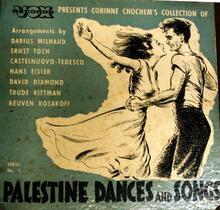
Palestine Dances and Songs (Z’chartihah, arranged by M. Castelnuovo-Tedesco.
Debka, Achshav, Hoi Chalutz Ikesh, Havu L’Venim and Ura Amchah, arranged by Darius Milhaud.
Kum Bachur Atzel and Pa’am Achat, arranged by Hans Eisler.
Y’minah, Y’minah, arranged by Ernst Toch.
Ari-Ara, Sovevuni Hora and Tcherkessia, arranged by David Diamond) on three discs with orchestra and chorus conducted by Max Goberman. (Vox Records Series No. 1 16037–39). Contains instructions for Y’minah, Y’minah and Tscherkessia reprinted from Palestine Dances.
Jewish Holiday Dances and Songs (Friday night: L’cho Dodi, arranged by D. Diamond.
Saturday night: Hamavdil and Tu Bish’vat: Atzey Zeytim, arranged by S. Wolpe.
Succot: Yom Tov Lanu, arranged by E. Toch.
Simchat Tora: Sisu V’Simchu, arranged by M. Castelnuovo Tedesco.
Chanuka: Mi Y’malel and Shavuot: Salenu, arranged by R. Kosakoff.
Purim: Chag Purim, arranged by H. Eisler.
Hora: Chanitah and Lag B’Omer: Az Titaneg, arranged by D. Milhaud.
Pesach: Dayenu, arranged by T. Rittman.
Reenah, arranged by L. Bernstein) on three discs. (Vox Records, Series No. 2 16040–42). Instructions are provided for Succot Dance and Dayenu, reprinted from Jewish Holiday Dances.
Alco Records also presented her material: Palestine Dances (three discs), Corinne Chochem’s Collection of Folk Dances (10 inch 33 1/3 rpm) and Corrine Chochem Collection Four Horah Dances (two discs).
Books by Katya Delakova and Fred Berk
Dances of Palestine. New York: 1947.
Jewish Folk Dance Book. New York: 1948.
Books by Florence Freehof
Jews Are a Dancing People. San Francisco: 1954.
Tips on Teaching Folk Dancing. San Francisco: 1958.
Rhythm Games and Dances for Jewish Juniors. New York: 1958.
New Dances from Israel. San Francisco: 1960.
A Guide for Israeli-Jewish Folk Dancers. New York: 1963, 1965.
Article by Teme Kernerman
“Teme Kernerman Sings in Hong Kong.” Ontario FolkDancer vol. 21, no. 7 (December 1, 1990): 21–22.
Publications by Dvora Lapson
Group Masks and Dances for Purim Festival. New York: 1942.
“Dance.” Universal Jewish Encyclopedia. New York: 1939–1943.
“Dance: In Ancient Israel and In the Diaspora.” Encyclopaedia Judaica, Vol. 5. Jerusalem: 1972.
New Israeli Dances with Gurit Kadman. New York: 1948.
Choreography, Israeli Folk Dances, First Series. New York: 1950s.
Dance Instructions for Israeli Folk Dances, Second Series. New York: 1953.
Dance Instructions for Israeli Folk Dances, Third Series. New York: 1957.
Dances of the Jewish People: Israeli and East European Dances. New York: 1954, 1960.
Jewish Dances the Year Round. New York: 1957.
Folk Dances for Jewish Festivals. New York: 1961.
The Bible in Dance. New York: 1970.
Sound recordings by Dvora Lapson
Sound recording supervised for Folkraft Records (Newark, N.J.) included 78 rpm recordings of Mayim, Hanodeid, Ken Yovdu, Kol Dodi, and Harmonica as well as Hora, Hava Nagila and Mechol Ovadya (with Huig Hofman). They also issued an LP, “Israeli Folk Dances” that included Hora and variations, El Harahat, Shiboleth Basadah, Ta’am Haman, Bat Tsurim, Israeli Mixer, Mechol Ovadya, Kuma Ekha, Debka, Mayim, Ken Yovdu, and Ve David. Under the Tikva label (New York), she supervised another LP (T24) “Israeli Dances” that included Aromimcha, B’er Basade, El Harahat, Israeli Couple Dance, Negev Shelanu, Shir Todah, Yemina Yemina, Yayin.
Articles by Joyce Dorfman Mollov
“The Sarah Sommer Chai Folk Ensemble.” Hora 9, no.1, issue 25 (Fall 1976).
“Interview with Rivka Sturman, May 25, 1982, Tel Aviv, Israel.” Hora, issue 39 (Summer 1983).
“Dance and Movement Ritual of the Jewish Community in the United States.” Hora, issue 42 (Spring 1985).
Sound recording by Margalit Oved
Travel With Me, My Dove, and Listen to Me: Songs of the Middle East (The Caravan; Dodahiya; My Brother, My Beloved; A Mother’s Love; Women Talk; The Quarrel; Lullaby; Deheh-Deh; A Tale of Aden; The Closing of the Gate of Aden). Washington, D.C.: 1976, 2000 (?).
Book and sound recording by Shirley T. Waxman
Jewish Culture Through Folk Dance and Folklore: for young children (3, 4 and 5 years of age) with Earlynn J. Miller and Patricia J. Bruce. Harrisonburg, VA: (Folk Dance and Folklore Research Project, Published in cooperation with James Madison University and the James Madison University Foundation), 1981.
More Like This
Double your impact to amplify Jewish women’s stories—
All gifts matched up to $35,000
Before you close this article, please consider supporting the Jewish Women’s Archive and uplifting Jewish women’s voices.
At JWA, we preserve the voices of Jewish women and gender-expansive people past and present, share them freely with millions online, and empower a new generation of Jewish feminists to lead with courage, creativity, and conviction.
But none of this happens without you. JWA is an independent nonprofit— we rely on people, like you, who believe that history belongs to all of us and that the voices of Jewish women must remain powerful, and heard.
This month, a generous JWA board member will match every gift dollar for dollar—up to $35,000—through June 30. Your contribution goes twice as far right now.
Every contribution—no matter the size—helps us document, teach, and inspire through Jewish women’s stories.
It takes less than a minute to make a difference.
Thank you for being a part of the JWA community,
Judith Rosenbaum, CEO