
Holocaust Studies in the United States

Jewish American women have made contributions to the field of Holocaust studies in a variety of areas, including general history, women and gender, children, literary criticism, autobiography and biography, curriculum development, religious studies, sociology, psychoanalytic theory, biomedical ethics, and archive and museum curatorship. These scholars come to the study of the Holocaust with diverse experiences, questions, and concerns. However, they all approach the subject with compassion and a profound sense of responsibility to the victims. Many of these scholars are university professors, including Deborah E. Lipstadt, Nechama Tec, and Sidra Dekoven Ezrahi. Although not all female scholars specifically study women, they generally agree that women do need to be accounted for in the study of the Holocaust.
Female American Scholars
field_section_text_value

Historian and author Lucy S. Dawidowicz (1915 - 1990) was a controversial figure not only because of her opinions about Jewish life and history but also because of her methodology. She was not afraid to immerse herself in the world of her people, believing her analyses could combine passion and objectivity.
Institution: American Jewish Historical Society.
field_section_text_value
Responses to the Holocaust

field_section_text_value
Sociological Approaches
Sociological approaches to the study of the Holocaust have become increasingly important to our understanding of the social phenomenon that occurred prior to, during, and after the Holocaust. Helen Fein (b. 1934) contributed original research and analysis to both Holocaust studies and genocide studies, combining historical and sociological methods of analysis and interpretation. She was executive director of the Institute for the Study of Genocide and the first president of the Association of Genocide Scholars, an international organization that she helped to found in 1995. Fein’s Accounting for Genocide: National Responses and Jewish Victimization During the Holocaust (1979) challenges the questions that have been asked about the Holocaust. Rather than focusing on the success of the Nazi destruction of European Jewry, Fein analyzes the rate of survival of Jews according to nation-states and proposes understanding the differences of survival rates in terms of national responses. As part of this innovative analysis, Fein examines the empiric responsibility and moral accountability of churches, Jewish leadership, and the Allies in the destruction of European Jewry. Fein extends her analysis of the Holocaust to account for other racial victims such as Gypsies and begins to develop a theoretical account of ideological genocide in the twentieth century. Since then, Fein has continued her work in the area of genocide, connecting it to violation of human rights.
Women and the Holocaust
The study of women and the Holocaust is one of the fastest growing areas of research within Holocaust studies. Although not all female scholars are working specifically in the area of women, there is a consensus among them that women do need to be accounted for in the study of the Holocaust. Including women is, Sybil Milton argues, simply a matter of good scholarship. After all, women represented half of the population and half of those who perished. Women also ask questions about the Holocaust that have not been posed by male scholars. Early male scholars often focused on the history of the Holocaust as if it were only the history of men in the Holocaust. Female scholars have opened up the study of the Holocaust to include accounts of women’s roles and experiences and have made the consideration of gender a basic category of analysis.
Joan Ringelheim (b. 1939) was director of the Department of Oral History at the Research Institute of the United States Holocaust Memorial Museum and pioneered in the study of women and the Holocaust, convening the first conference on the subject in 1983. Her interest in the study of the Holocaust was also influenced by her family’s experience of the Holocaust. Ringelheim’s paternal grandparents and eighty-eight paternal relatives lost their lives in Poland during the Holocaust. Growing up, she had long discussions with her father about prejudice, racism, and the Holocaust. Ringelheim underlines the significance of gender as a category of analysis. However, Ringelheim also is concerned about the assumptions we use when we assert the importance of gender when we study the Holocaust. In her article “Women and the Holocaust: A Reconsideration of the Research” (1985), she demonstrates that the assumptions we make about gender color the questions we ask and influence the conclusions we draw about women and the Holocaust. Ringelheim is concerned that feminist questions about women, intended to challenge traditional understandings of women as passive and oppressed, have a tendency to interpret women’s responses to the Holocaust in the best possible light. For example, if we look at women’s responses to the murder of their children in terms of their ability to “mother” other persons, this positive interpretation obscures the reality of the victimization of women by the Nazis.
Marion Kaplan (b. 1946) is professor of history at Queens College and the Graduate Center of the City University of New York as well as a consultant to the Museum of Jewish Heritage in New York City. Kaplan’s interest in Holocaust studies was shaped by being the daughter of German Jewish refugees. She describes her own work as an attempt to enrich both Jewish history and German history with evidence and questions from both areas. By studying Jewish and non-Jewish German women, Kaplan demonstrates in The Jewish Feminist Movement in Germany: The Campaigns of the Jüdischer Frauenbund, 1904–1938 (1979) that women shared common experiences. At the same time, in Jewish Life in Nazi Germany (1997) Kaplan highlights the distinctive experiences of women as Jews under Nazism. Kaplan argues that Jewish women were doubly stigmatized by antisemitism and sexism.
Many scholars combine their interest in the area of women and the Holocaust with other areas of study. Judith Tydor Baumel (b. 1959) is an Israeli-American scholar who works in the area of women and the Holocaust but is also interested in collective memory. Baumel has raised important questions about the role of women during and after the Holocaust through her work on Jewish refugee children and on survivors. She is lecturer in the department of Jewish History at the University of Haifa. She describes her focus on the Holocaust as stemming from a natural response to her family’s history, with her work on refugee children and postwar Jewish experiences being prompted by her family’s experience of the Holocaust. Together with Walter Laqueur, Baumel is associate editor of the Yale Encyclopedia of the Holocaust (1998). Ringelheim, Kaplan, and Baumel are exemplary representatives of a growing number of Jewish American female scholars who are not only challenging the way we understand women and the Holocaust but also are transforming the ways we study and think about the Holocaust.
Deborah Dwork (b. 1954) has contributed important research into the history of the children of the Holocaust. Dwork’s mother was born in the United States, but her mother’s adopted sister was born in Poland and was a survivor of the Holocaust. Dwork grew up with an awareness of how the Holocaust had affected her family. Although there has been tremendous research into the Holocaust, there had been no historical study of children. In her classic, Children With a Star: Jewish Youth in Nazi Europe (1991), Dwork argues that it is the history of the children that particularly and painfully underlines the horror of the Holocaust: It is the children who show that there can be no excuse for the Nazi Judeocide. Dwork has organized her research into patterns of children’s experience during and after the war. By studying the lives of the children during the Holocaust, Dwork also explores how adults, particularly women, were active in trying to hide and protect children. Dwork is Rose Professor of Holocaust Studies at Clark University. She also works with the Jewish Foundation for the Righteous, where she has developed an educational resource for teachers of the Holocaust. She is a consultant for the Anti-Defamation League, is on the national advisory board for Facing History and Ourselves, and works with the United States Holocaust Memorial Museum and other organizations centrally concerned with the future disposition of Auschwitz-Birkenau.

Baumel, Judith Tydor. Kibbutz Buchenvald: Survivors and Pioneers (1997), and Unfulfilled Promise: The Jewish Refugee Children in the United States 1934–1945 (1990), and A Voice of Lament: The Holocaust and Prayer. (Heb.) (1992).
Dawidowicz, Lucy S. From That Time and Place: A Memoir, 1938–1947 (1989), and The War Against the Jews: 1933–1945 (1975).
Dwork, Deborah. Children With a Star: Jewish Youth in Nazi Europe (1991).
Dwork, Deborah, and Robert Jan van Pelt. Auschwitz, 1270 to the Present (1996).
Ezrahi, Sidra Dekoven. By Words Alone: The Holocaust in Literature (1980), and “The Grave in the Air.” In Probing the Limits of Representation: Nazism and the Final Solution, edited by Saul Friedlander (1992), and The Holocaust and the Limits of Representations (1994).
and “Representing Auschwitz.” History and Memory 7, no. 2 (Winter 1996).
Fein, Helen. Accounting for Genocide: National Responses and Jewish Victimization During the Holocaust (1979), and The Persisting Question: Social Contexts and Sociological Perspectives of Modern Antisemitism (1987), and “Reading the Second Text: Meanings and Misuses of the Holocaust.” In The Challenge of Shalom: The Jewish Tradition of Peace and Justice, edited by Murray Polner and Naomi Goodman (1994).
Grossmann, Atina. Reforming Sex: The German Movement for Birth Control and Abortion Reform, 1920–1950 (1995).
Horowitz, Sara. “Memory and Testimony in Women Survivors of Nazi Genocide.” In Women of the Word: Jewish Women and Jewish Writing, edited by Judith Baskin (1994), and “Mengele, the Gynecologist, and Other Stories of Women’s Survival.” In Judaism Since Gender, edited by Miram Peskowitz and Laura Levitt (1997), and Voicing the Void: Muteness and Memory in Holocaust Fiction (1997).
Kaplan, Marion. The Jewish Feminist Movement in Germany: The Campaigns of the Jüdischer Frauenbund, 1904–1938 (1979), and Jewish Life in Nazi Germany (1997).
Kluger, Ruth. Katastrophen: Uber Deutsche Literatur (1994), and Weiter Leben: Eine Jugend (1992).
Kremer, Lillian S. Witness Through the Imagination: Jewish-American Holocaust Literature (1989).
Levin, Nora. The Holocaust: The Destruction of European Jewry, 1933–1945 (1968).
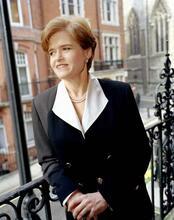
Lipstadt, Deborah. Beyond Belief: The American Press and the Coming of the Holocaust, 1933–1945 (1986), Denying the Holocaust: The Growing Assault on Truth and Memory (1993), and History on Trial: My Day in Court with David Irving (2005).
Milton, Sybil. The Camera as Weapon and Voyeur: Photography of the Holocaust as Historical Evidence (forthcoming); The Holocaust: Ideology, Bureaucracy, and Genocide: The San Jose Papers. Edited with Henry Friedlander (1980), and In Fitting Memory: The Art and Politics of Holocaust Memorials (1991), and “Women and the Holocaust: The Case of German and German-Jewish Women.” In When Biology Became Destiny: Women in Weimar and Nazi Germany, edited by Renate Bridenthal, Marion Kaplan, and Atina Grossmann (1984).
Ringelheim, Joan. “The Unethical and the Unspeakable: Women and the Holocaust.” The Simon Wiesenthal Annual 1 (1984): 69–87, and “Women and the Holocaust: A Reconsideration of the Research.” Signs 10, no. 41 (1985): 741–761, reprinted in Jewish Women in Historical Perspectives, edited by Judith Baskin (1991).
Tec, Nechama. Defiance: The Bielski Partisans (1993), and Dry Tears: The Story of a Lost Childhood (1984), and In the Lion’s Den: The Life of Oswald Rufeisen (1990), and When Light Pierced the Darkness: Christian Rescue of Jews in Nazi-Occupied Poland (1990).
More Like This
Double your impact to amplify Jewish women’s stories—
All gifts matched up to $35,000
Before you close this article, please consider supporting the Jewish Women’s Archive and uplifting Jewish women’s voices.
At JWA, we preserve the voices of Jewish women and gender-expansive people past and present, share them freely with millions online, and empower a new generation of Jewish feminists to lead with courage, creativity, and conviction.
But none of this happens without you. JWA is an independent nonprofit— we rely on people, like you, who believe that history belongs to all of us and that the voices of Jewish women must remain powerful, and heard.
This month, a generous JWA board member will match every gift dollar for dollar—up to $35,000—through June 30. Your contribution goes twice as far right now.
Every contribution—no matter the size—helps us document, teach, and inspire through Jewish women’s stories.
It takes less than a minute to make a difference.
Thank you for being a part of the JWA community,
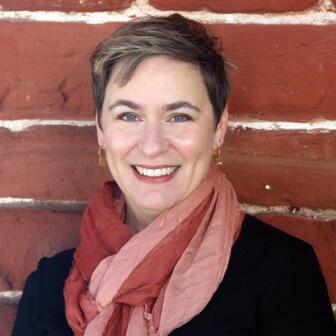
Judith Rosenbaum, CEO