

Batsheva Bonne-Tamir

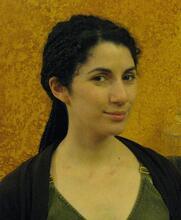
Batsheva Bonne-Tamir, of Tel Aviv University, was one of the first human population geneticists in Israel. For more than 50 years, she studied genetic markers and genetic diseases among the Samaritans and among other population groups in Israel. Between 1961 and 2004 she published 197 articles, held several prominent positions in local and international conferences, and served on the boards of many academic journals.
For more than 50 years, geneticist Batsheva Bonne-Tamir, from Tel-Aviv University, has studied genetic markers and genetic diseases among the Samaritans and other population groups in Israel. Between 1961 and 2004 she published 197 articles, held several prominent positions in local and international conferences, and served on the boards of many academic journals.
Family and Education
field_section_text_value
Graduate Work in Physical Anthropology
Bonne wished to continue her academic education in anthropology, but the discipline did not yet exist in Israel at that time. Awarded a full scholarship, she pursued her master’s degree in physical anthropology at the University of Chicago between 1958 and 1960. When by chance she found a book on the Samaritans, written by lsrael's second president Yitzhak Ben-Zvi, Bonne decided to focus her thesis on the Samaritans, a small, isolated ethnic group of a few hundred individuals divided into two parts living under different political allegiances. About 150 Samaritans lived in Holon, Israel, and 200 lived in Nablus, Jordan, near mount Gerizim, the group’s holiest site. Bonne studied the Samaritans' marriage patterns and found that over 40 percent of the marriages were between first cousins. Marriage of relatives was not only a necessity but was also perceived by the Samaritans as a biblical commandment. On a visit to Israel in the summer of 1961, Bonne presented her findings on the Samaritan community at the “The Genetics of Migrant and Isolate Populations” conference, organized by Elisheva Goldschmidt (1912-1970) and Chaim Sheba (1908–1971). This marked the start of a long and fruitful relationship with Sheba’s research team at Tel Hashomer hospital.
During the summer of 1961, Bonne collected blood samples from 90 of the 150 Samaritans who lived in Israel. She also studied the incidence of other specific genetically determined characteristics among those Samaritans, like deficiencies of the enzyme G6PD, taste sensitivity to PTC, and color blindness. The blood samples and other genetic data served as the basis for her doctorate under the advisorship of William Boyd, at the Boston University School of Medicine.
In the fall of 1963 Bonne visited Israel to get more blood samples, as well as anthropometric data (height, weight, and skull measurements) and morphological data on eye color, hair color, and fingerprint patterns. Bonne submitted her Ph.D. in June 1965; four months later she returned to Israel and joined the group of young researchers from Tel Hashomer who had founded the human genetics department at the Tel Aviv University School of Medicine the previous year.
Studying Genetic Diversity of Small Communities
Working with her colleagues in Tel-Aviv University and with a team of students, Bonne studied the genetic diversity of small communities (isolates). One of these isolates was the Habbanites, a small Jewish community of several hundred who arrived in Israel in 1950 from Hadramaut in Yemen. Bonne also studied a population of 9,000 Bedouin who lived in the southern Sinai desert. Those Bedouin were available to her as research subject after Israel occupied the Sinai desert in 1967, and the study was made possible thanks to practical help from the Israel Defense Forces. While conducting her research on the Bedouin in Sinai, Batsheva Bonne met her future husband, Zvi Tamir (1923–1996), who worked for the Israeli Intelligence and Security forces. Their son, Eldad Tamir, was born in 1970.
As a result of the six-day war in 1967, Nablus came under the control of the State of Israel. Bonne was eager to seize the opportunity to conduct research on the part of the Samaritan population that lived in the region, whom previously she could not reach, and discovered there cases of Usher syndrome. This rare recessive genetic disorder, which was not found among the Samaritans in Holon, is primarily characterized by deafness and accompanied by progressive loss of vision.
During the 1970s Bonne cooperated with Oxford University geneticists Lady Julia Bodmer (1934-2001) and her husband Sir Walter Bodmer (b. 1936), the world's leading experts in the HLA (human leukocyte antigen) system of genetic markers. HLA molecules are expressed on almost all our body cells, and they are the major molecules that initiate graft rejection. Bonne, together with the Bodmers, explored the distribution of HLA types among different populations in Israel: Libyan Jews; Ashkenazi Jews of German, Polish, Romanian, and Russian descent; Jews from Morocco, Iraq, Yemen, and Ethiopia; members of the Armenian community in Jerusalem; and Muslim Arabs. The research compared the eleven Israeli groups to nine non-Israeli population groups and used those genetic markers for calculating “genetic distances” between populations and as a vehicle for suggesting possible origins and histories of the studied populations.
From 1977 to 1982 Bonne chaired the human genetics department at Tel Aviv University. In 1979 she was promoted to associate professor and attained full professorship in 1987. During the 1980s Bonne cooperated with physicians and statistics experts in an effort to locate specific genes responsible for genetic diseases. Molecular methods enabled them to map the gene for Wilson’s liver and neurologic disease on chromosome no. 13; locate the gene for XIII factor, whose deficiency may cause bleeding episodes and lead to abortion in women, on chromosome no. 6; and the gene causing McArdle disease, a glycogen storage disorder, on chromosome no. 11. Usher syndrome, which was found by Bonne in the late 1960s among Samaritans in Nablus, was also located by the laboratory team on chromosome no. 11. During the 1990s, Avital Adato, Bonne's Ph.D. student, identified eight different mutations of Usher syndrome among various Israeli ethnic groups.
Beginning in the mid-1980s, studies of mitochondrial DNA became popular all over the world, as indexes of genetic maternal lines. In the following decade, Y chromosome tests were adopted worldwide as a tool for detecting paternal lines. It was important to Bonne to become familiar with the newest laboratory techniques. During her sabbatical year in Cavalli Sforza's laboratory at Stanford University in 1983–1984, she studied analysis of mitochondrial DNA samples and applied it to samples from Israeli Jews and Arabs. Bonne and her colleagues discovered similarities between mtDNA of Ashkenazi Jews and Jews from Morocco and revealed that the number of founding mothers of the Jewish population studied was smaller than the number of founding mothers of Arabs living in Israel. Later, in 2000, Bonne spend a few months in Michael Hammer's laboratory at the University of Arizona and took part in a research project that analyzed the Y chromosome among seven groups of Jewish men and sixteen groups of non-Jews. Their results indicate small distances between Jews and Mediterranean populations (PNAS 2000).
In 1992 Bonne was appointed the Near East representative in the Human Genome Diversity Project, which aims to collect genetic materials of different populations. In 1995 she established and headed, together with Mia Horwitz, the National Laboratory for the Genetics of Israeli Populations (NLGIP). This laboratory is a biobank for human cell lines, where frozen cell lines are preserved as a pool serving researchers from Israel and abroad. In 1997 the Yoran Institute for Human Genome Research was erected at Tel-Aviv University and the NLGIP became part of that institute. Bonne-Tamir was appointed to head the Yoran Institute and did so until her retirement in 2004. As a professor emerita, Batsheva Bonne-Tamir wrote an autobiography, Living with Genes: Fifty Years of Research on Genetics of Israeli Population. She passed away in April 8, 2020.
Selected Works by Batsheva Bonne-Tamir
Bonne-Tamir, B. Living with Genes: Fifty Years of Research on Genetics of Israeli Population. Jerusalem: Carmel, 2010 (in Hebrew).
Frydman, m. B. Bonné-Tamir, L. A. Farrer, P. M. Conneally, A. Magazanik, S. Ashbel and Z. Golwitch. "Assignment of the gene for Wilson disease to chromosome 13: linkage to the esterase D locus". PNAS - Proceedings of the National Academy of Sciences. 82 no.6 (1985): 1819-1821; https://doi.org/10.1073/pnas.82.6.1819
Hammer, M. F., A. J., Redd, E. T. Wood, M. R. Bonner, H. Jarjanazi, T. Karafet, S. Santachiara-Benerecetti, A. Oppenheim, M. A. Jobling, T. Jenkins, H. Ostrer and B. Bonne-Tamir. “Jewish and Middle Eastern non-Jewish populations share a common pool of Y-chromosome biallelic haplotypes”. PNAS - Proceedings of the National Academy of Sciences, 97, no. 12 (2000): 6769–6774. https://doi.org/10.1073/pnas.100115997
More Like This






Double your impact to amplify Jewish women’s stories—
All gifts matched up to $35,000
Before you close this article, please consider supporting the Jewish Women’s Archive and uplifting Jewish women’s voices.
At JWA, we preserve the voices of Jewish women and gender-expansive people past and present, share them freely with millions online, and empower a new generation of Jewish feminists to lead with courage, creativity, and conviction.
But none of this happens without you. JWA is an independent nonprofit— we rely on people, like you, who believe that history belongs to all of us and that the voices of Jewish women must remain powerful, and heard.
This month, a generous JWA board member will match every gift dollar for dollar—up to $35,000—through June 30. Your contribution goes twice as far right now.
Every contribution—no matter the size—helps us document, teach, and inspire through Jewish women’s stories.
It takes less than a minute to make a difference.
Thank you for being a part of the JWA community,

Judith Rosenbaum, CEO

