
Fanny Baronin Von Arnstein

Franziska “Fanny” von Arnstein, who rose to the rank of baroness, navigated the artistic and political upheaval of the Napoleonic Era as a hostess of salons that welcomed celebrities. The respect she garnered as a salonnière fostered the growing acceptance of Jews in Viennese high society. During the Napoleonic Wars from 1805 to 1815, von Arnstein aided the sick and wounded and financially backed a rebellion against the French occupying force. At the Congress of Vienna (1814–1815), she brought together intellectuals and politicians in hopes of adding equal rights for Jews to the new constitution for the German Federation, but her allies did not push back when they encountered strong opposition. Exhausted by the war, von Arnstein retired to her counry seat after Napoleon’s defeat.
Fanny von Arnstein, patroness of music, arts, and literature, was the outstanding salonnière of her time in Vienna. The high esteem in which she was held contributed much to the growing acceptance of Jews in the high society circles of Vienna.
Early Life
Born in Berlin on November 29, 1758, Vögelchen or Franziska (Fanny) was the eighth child of the banker Daniel Itzig (1723–1799) and his wife Mariane (Mirjam), née Wulff (1727–1788). Fanny’s father, court-financier to King Frederick II of Prussia, was the senior head of the Jewish community there and in 1791 (by a naturalization patent of Frederick William II) gained full civil rights. Growing up in a rich and cultivated household, young Fanny received an excellent education under the influence of Moses Mendelssohn’s reforms and Berlin enlightenment ideals. In 1776 she was married in Berlin to the Viennese banker and merchant Nathan Adam Arnstein or Arnsteiner (1748–1838), the son of Adam Isaac Arnstein(er) (1715–1785) and Sibilla (Bela) Gomperz (d. 1787). He was ennobled in 1795 and made a baron in 1798 for his contributions to Austrian finances; his nephew was the writer Benedict David Arnstein (1765–1841). Nathan Arnstein’s parents may have had some reservations regarding the modern ways of their beautiful daughter-in-law, who discarded the traditional headdress of married Jewish women and tended to dominate her husband. Fanny von Arnstein regarded religion the way Lessing’s parable of the rings had taught her; the idea of conversion did not appeal to her, though she tolerated the conversions of others. From the fact that Anna L. Staudacher has found Arnstein (in the church register of the Viennese Calvinist parish) as a godmother of the niece of an esteemed servant of hers in 1804, we cannot conclude (as Staudacher tends to do) that she was a convert. Accepting a godchild was merely a kind and generous social gesture by Arnstein, without special religious content, because the real godmother was her proxy, i.e., the child’s aunt. Given this context and the fact that Arnstein received a regular burial in the Jewish cemetery, Staudacher’s interpretation must be rejected. Goodness and loyalty, frankness and quick temper were Arnstein’s chief characteristics.
Although Fanny liked Vienna, she remained attached to Prussia and frequently returned to Berlin, where she gave birth to her only child, Judith, later called Henriette (1780–1859), on her twenty-second birthday in 1780. On the same day the old Empress Maria Theresia died in Vienna. Emperor Joseph II (1741–1765–1790), who was on friendly terms with the Arnsteins and seems to have admired brilliant Fanny, was now free to pave the way for some reforms (including religious tolerance). However, even at the turn of the century Jews were still denied many civil rights (e.g. religious community rights and real estate ownership in Vienna).
Life as a Salon Hostess
field_section_text_value
Work during and after Napoleonic Wars
From an otherwise enjoyable journey to Paris in 1801 Fanny had returned full of distrust for Bonaparte’s politics. During the Napoleonic Wars (1805–1815) Arnstein and her daughter proved themselves to be true patriots and did much for the sick and wounded soldiers. Andreas Hofer’s uprising in Tyrol (1809) was financially aided by the Arnstein family. Anti-Napoleonic guests (including Mme de Staël in 1808 and 1812) found a warm welcome. Even members of the temporary French occupation forces liked the salon, indulgently smiling about the charming hostess’s political views (or secretly sharing her criticism of Napoleon). Aware of her social responsibility as a wealthy woman, Arnstein supported countless charities and in 1811 was a founding member and committee woman of the Society of Noble Women for the Promotion of the Good and Useful. In 1812 she helped to organize successful amateur charity concerts; and when Fanny von Arnstein’s friend Joseph Sonnleithner (1766–1835; author of Beethoven’s Fidelio libretto) conceived from these the idea of founding the Society of Friends of Music in Vienna (1812–1813), Fanny encouraged it. As a custom from Berlin, Fanny von Arnstein and her daughter had introduced the Christmas tree to Vienna by 1812, but in an intellectual version with little poems accompanying the presents.
The climax of social activities in Arnstein’s salon was reached during the Congress of Vienna in 1814–1815. There were splendid dinners, tableaux vivants, piano performances by young Giacomo Meyerbeer (1791–1864), and so on. Tuesday was the regular reception day by now (with musical soirées), though friends visited daily. Diplomats from all over Europe were among the guests, including Arthur Wellesley, Duke of Wellington (1769–1852), Cardinal Ercole Marchese Consalvi (1757–1824), and Charles-Maurice, Duke of Talleyrand (1754–1838). Arnstein’s salon was a headquarter of the Prussian delegation: not only her nephew, the diplomat Jacob Salomo Bartholdy (1779–1825) and her old friend Varnhagen (with his wife Rahel) came, but also Karl August Prince Hardenberg (1750–1822), Wilhelm von Humboldt (1767–1835), Friedrich August Staegemann (1763–1840), and others. During the first months of the year 1815 Arnstein’s Prussian friends tried to put their ideas about equal civil rights for Jews into the constitution of the German Confederation. But they did not persist when the matter became difficult. Slight changes in the wording (introduced by reactionaries) left the German states free to reject any progress made under the influence of French law during the time of the occupation. Similarly, a petition to Emperor Franz for the amelioration of the situation of the Austrian Jews (Nathan von Arnstein was among the petitioners) failed (in April 1815). The retreat to the Arnsteins and the Eskeles country seats immediately afterwards proved unfavourable, but at that time Fanny was sick and worn out by Napoleon’s return and the new war. She did, however, continue her hospitality and Rahel Levin-Varnhagen stayed with her at her house in Baden.
Later Life
After the final defeat of Napoleon Arnstein travelled in the Rhine valley and to Italy and then retired to her country seats, where she tried to recover from her hectic social life. She died of a lung ailment, probably tuberculosis, in her Braunhirschengrund house on June 8, 1818, and was buried in the Währing cemetery in Vienna ten days later. Herz Homberg (1749–1841), an old representative of the Austrian Jewish Enlightenment; European movement during the 1770sHaskalah, performed the funeral oration, and her widower donated an ark curtain to the prayer house in her memory. (It is noteworthy that Vienna, unlike other parts of the Habsburg empire, had no regular synagogue until 1825/26. The reference here is to the Dempfingerhof, which had been acquired by the city’s religious community and adapted for religious use in 1811/12.) The inscription on Fanny Arnstein’s gravestone correctly described her as “The mother of the poor, equally great as regards head and heart.”
Selected Primary Sources
Bemerkungen oder Briefe über Wien eines jungen Bayern auf einer Reise durch Deutschland an eine Dame von Stande. Leipzig: [c. 1800].
[Brentano, Sophie.] Meine Seele ist bey euch geblieben. Briefe Sophie Brentanos an Henriette von Arnstein, ed. by Karen Schenck zu Schweinsberg. Weinheim: 1985.
Gräffer, Franz. “Wieder eine Augarten-Vision.” In Kleine Wiener Memoiren: Historische Novellen, Genrescenen, [...] und Notizen [...]. zur Geschichte und Characteristik Wien’s und der Wiener [...]. Part 3, 247–252. Vienna: 1845.
Pichler, Caroline. Denkwürdigkeiten aus meinem Leben. 1769–1843. [...], ed. by Emil Karl Blümml. 2 vols., Munich: 1914 [1Vienna: 1844].
Reichardt, Johann Friedrich. Vertraute Briefe, geschrieben auf einer Reise nach Wien und den Oesterreichischen Staaten zu Ende des Jahres 1808 und zu Anfang 1809. Vol. 1, Amsterdam: 1810.
Staegemann, Friedrich August. [Correspondence with his wife Elizabeth (1814/15).] In Hedwig von Olfers geb. von Staegemann, ed. by Hedwig Abeken. Vol. 1: Elternhaus und Jugend. 1799-1815. Berlin: 1908.
Varnhagen von Ense, Karl August: Denkwürdigkeiten des eignen Lebens. Vol. 2 and 3, Leipzig: 21843.
[Varnhagen von Ense, Karl August.] “Fanny von Arnstein.” In Vermischte Schriften von K.A. Varnhagen von Ense, 3rd, augmented edition. Part 1, 328–335. Leipzig: 1875.
[Varnhagen von Ense, Rahel.] Rahel. Ein Buch des Andenkens für ihre Freunde [ed. by Karl August Varnhagen von Ense]. Berlin: 1834. Reprint: Rahel Varnhagen. Gesammelte Werke, ed. by Konrad Feilchenfeldt, Uwe Schweikert and Rahel E. Steiner. Vol. 1–2, Munich: 1983.
[Varnhagen von Ense, Rahel.] Briefwechsel zwischen Varnhagen und Rahel. Vol. 2, 4, and 5, Leipzig: 1874–1875. Reprint: Rahel Varnhagen. Gesammelte Werke, ed. by Konrad Feilchenfeldt, Uwe Schweikert and Rahel E. Steiner. Vol. 4.2, 5.2 and 6.1, Munich: 1983.
Secondary Sources
Bermann, Moriz. Oesterreichisches biographisches Lexikon. [....]. Vol. 1, 248, Vienna: 1851.
Biba, Otto. “Jüdische Familien, Komponisten und Musiker in der Wiener Musikszene in der ersten Hälfte des 19. Jahrhunderts.” In quasi una fantasia. Juden und die Musikstadt Wien, ed. by Leon Botstein and Werner Hanak, 65-75. Exhibition catalog, Jewish Museum Vienna. Vienna: 2003.
Deutsch, Simon, ed. Jüdischer Plutarch; oder biographisches Lexicon der markantesten Männer und Frauen jüdischer Abkunft [...]. Vol. 2 (second alphabet), 10–18. Vienna: 1848.
Dick, Jutta, and Marina Sassenberg, eds. Jüdische Frauen im 19. und 20. Jahrhundert. Lexikon zu Leben und Werk, 26–28. Reinbek near Hamburg: 1993.
Gerstinger, Heinz. Altwiener literarische Salons. Wiener Salonkultur vom Rokoko bis zur Neoromantik (1777–1907). Salzburg: 2002.
[Gräffer, Franz, and Johann Jakob Heinrich Czikann, eds.] Österreichische National-Enzyklopädie [...].Vol. 1, 124, Vienna: 1835.
Grözinger, Elvira. "Die jüdischen Salons in Berlin." (1995).
Heimann-Jelinek, Felicitas. “Geschichte hinter Geschichten. Kultobjekte aus Wiener Bethäusern und Synagogen.” In Jahrbuch für Jüdische Geschichte, Kultur und Museumswesen 1 (1994/95): 147–154.
Lowenstein, Steven M. “Jewish Upper Crust and the Berlin Jewish Enlightenment: The Family of Daniel Itzig.” In Profiles in Diversity. Jews in a Changing Europe, 1750–1817, ed. by Frances Malino and David Sorkin, 182–201. Detroit: 1998.
Mittenzwei, Ingrid. Zwischen Gestern und Morgen. Wiens frühe Bourgeoisie an der Wende vom 18. zum 19. Jahrhundert. Vienna, Cologne, Weimar: 1998.
Remy [-Lazarus], Nahida Ruth. “Die Töchter Daniel Itzigs.” In Das jüdische Weib, introduction by Moritz Lazarus, 243–256. Berlin: 31896 [11891].
Schiferer, Beatrix. “Fanny von Arnstein (1758–1818).” In Vorbilder. Kreative Frauen in Wien 1750-1950, 10–22. Vienna: 1994.
Sluga, Glenda. "“Who Hold the Balance of the World?” Bankers at the Congress of Vienna, and in International History." The American Historical Review 122, no. 5 (2017): 1403-1430.
Spiel, Hilde. Fanny von Arnstein oder Die Emanzipation. Ein Frauenleben an der Zeitwende (1758–1818). Frankfurt/Main: 1962. English Translation: Fanny von Arnstein: A daughter of the Enlightenment, 1758–1818. Transl. by Christine Shuttleworth. Oxford: 1991.
Spiel, Hilde. “Fanny von Arnstein.” In Affairs of the Mind: The Salon in Europe and America from the Eighteenth to the Twentieth Century, ed. by Peter Quennell, 47–54. Washington, D.C.: 1980.
Staudacher, Anna L. Jüdische Konvertiten in Wien 1782–1868. Part 1. Frankfurt/Main, Berlin: 2002, 260–261.
Timms, Edward. "The Pernicious Rift: Metternich and the Debate about Jewish Emancipation at the Congress of Vienna." The Leo Baeck Institute Year Book 46, no.1 (2001): 3-18.
Vick, Brian. "The Vienna Congress as an Event in Austrian History: Civil Society and Politics in the Habsburg Empire at the End of the Wars against Napoleon." Austrian History Yearbook 46 (2015).
Wachstein, Bernhard. Die Inschriften des Alten Judenfriedhofs in Wien. Im Auftrage der Historischen Kommission der Israelitischen Kultusgemeinde in Wien bearbeitet. Part 2: 1696–1783. Vienna, Leipzig: 1917.
Wurzbach, Constant von. Biographisches Lexikon des Kaiserthums Oesterreich [...]. Vol. 1, 69–70. Vienna: 1856.
More Like This

Double your impact to amplify Jewish women’s stories—
All gifts matched up to $35,000
Before you close this article, please consider supporting the Jewish Women’s Archive and uplifting Jewish women’s voices.
At JWA, we preserve the voices of Jewish women and gender-expansive people past and present, share them freely with millions online, and empower a new generation of Jewish feminists to lead with courage, creativity, and conviction.
But none of this happens without you. JWA is an independent nonprofit— we rely on people, like you, who believe that history belongs to all of us and that the voices of Jewish women must remain powerful, and heard.
This month, a generous JWA board member will match every gift dollar for dollar—up to $35,000—through June 30. Your contribution goes twice as far right now.
Every contribution—no matter the size—helps us document, teach, and inspire through Jewish women’s stories.
It takes less than a minute to make a difference.
Thank you for being a part of the JWA community,
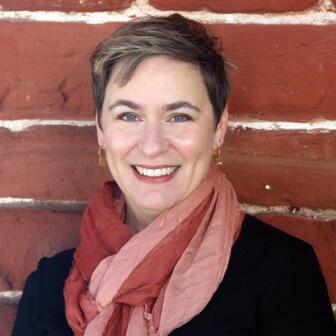
Judith Rosenbaum, CEO