

Chava Alberstein

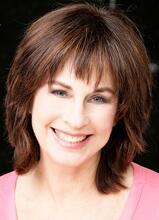
Israeli singer/songwriters Chava Alberstein in 2007.
Image courtesy of Flikr Commons.
Chava Alberstein is a singer-songwriter who by the end of 2020 had recorded over 60 albums, more than any other Israeli singer. Her first three albums, recorded in 1967, signaled her future musical path: all were hits. Alberstein’s first album, Chava Alberstein be-Shirim Ivri’im, heralded her role in the world of Hebrew song in all its diversity. Her second album, Tsa’atsu’eha shel Osnat, marked her entry into children’s songs, while her third album, Hobnmir a nigundl, spotlighted her Yiddish repertoire. In the 1980s, Alberstein began to write the lyrics for her live performances and recordings. In 1992, she recorded her first album in English and has since recorded a number of foreign-language albums. Alberstein has performed globally and released sixeen CD sets totaling 218 songs.
Chava Alberstein is a singer-songwriter (both lyricist and composer) who by the end of 2020 had recorded over 60 albums (including eight albums in Yiddish but not including singles and song collections), more than any other Israeli singer.
Family and Early Career
Alberstein was born on December 8, 1946, in Szczecin, Poland, and immigrated to Israel with her parents in 1951. While still a schoolgirl, she began to perform in public, accompanying herself on the guitar. Her first radio performances took place even before she joined the army. In the Israel Defense Forces she served as a one-woman “entertainment troupe,” performing solo at army bases with nothing more than her guitar. After completing her military service, she began to appear in concert and to record albums. Her first three albums, recorded in 1967, signaled her future musical path: all were hits.
Alberstein’s first album, Chava Alberstein be-Shirim Ivri’im (Chava Alberstein Sings Hebrew Songs), heralded her role in the world of Hebrew song in all its diversity. Her second album, Tsa’atsu’eha shel Osnat (Osnat’s Toys), marked her entry into children’s songs, while her third album, Hobnmir a nigundl (I Have a Little Melody [known as: “Our Song”]), spotlighted her Yiddish repertoire. With the perspective of time, one can see in each of these musical directions Alberstein’s evolution within the field of Hebrew song as a whole, while her performances and recordings in Yiddish place her at the pinnacle of Yiddish singers on the world stage.
Dramatic Talents and Composition of Lyrics
field_section_text_value
Musical Importance
Today, Alberstein’s primary focus is still her singing. Despite her range of musical styles, Alberstein describes herself as a “singer of folk songs.” In recent years she has begun setting to music and recording songs composed by her husband, director Nadav Levitan (on the album Motza’ei Hag [End of the Holiday], 2003).
In addition to her recordings, Alberstein has compiled several songbooks, including Shir be-Matanah ([Gift of Song], Jerusalem, 1979) and Shiru Aharai ([Sing After Me], Jerusalem, 1982). Alberstein, who frequently performs abroad, is considered one of the most important female performers of Hebrew music, including children’s songs, the world over. Likewise, she is renowned as an interpreter of Yiddish songs (some ten albums of her Yiddish songs have been issued to date). Alberstein is one of the few female singers for whom the Israeli record company NMC has put out a sixteen-CD set totaling 218 songs—selected from her output of the 1960s and 1970s alone. Egged Today has released more than 60 albums by Hava Alberstein, eight in Yiddish and one in English.
To date, Chava Alberstein has received several of the most prestigious prizes, including:
1998: The Itzik Manger Prize
2005: Honorary Doctorate from Tel Aviv University
2005: Included in the Top Ten most important recordings in the Hebrew songbook (“Kmo Tzemakh Bar” 1975)
2011: Lifetime Achievement Award from the Society of Authors, Composers, and Music Publishers in Israel
2011: Honorary Doctorate from the Weizmann Institute
2018: Honorary Doctorate from Brandeis University
2018: Yiddish Culture Lifetime Achievement Award
Alberstein has also been the recipient of the Manger Prize and a Jewish Research Lifetime Achievement Award from YIVO for her contribution to the preservation of Yiddish song.
Alberstein is the mother a daughter, Meira, born in 1972, and a son, Uri, born in 1977.
More on Chava Alberstein


Double your impact to amplify Jewish women’s stories—
All gifts matched up to $35,000
Before you close this article, please consider supporting the Jewish Women’s Archive and uplifting Jewish women’s voices.
At JWA, we preserve the voices of Jewish women and gender-expansive people past and present, share them freely with millions online, and empower a new generation of Jewish feminists to lead with courage, creativity, and conviction.
But none of this happens without you. JWA is an independent nonprofit— we rely on people, like you, who believe that history belongs to all of us and that the voices of Jewish women must remain powerful, and heard.
This month, a generous JWA board member will match every gift dollar for dollar—up to $35,000—through June 30. Your contribution goes twice as far right now.
Every contribution—no matter the size—helps us document, teach, and inspire through Jewish women’s stories.
It takes less than a minute to make a difference.
Thank you for being a part of the JWA community,
Judith Rosenbaum, CEO

