
Insights from the Outside: Rabbi Angela Buchdahl Affirms the Stranger in All of Us


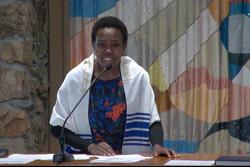
Angela Buchdahl always knew she wanted to be a rabbi. But as a Korean, patrilineal Jewish woman, she was well aware that the odds were stacked against her. Today, she is the Senior Rabbi at Central Synagogue, one of the country’s largest Reform congregations. Buchdahl tells the story of that journey in her memoir, Heart of a Stranger. The book is as much a meditation on life as it is her personal story. Each chapter centers on a core memory from Buchdahl’s life, paired with a d’var Torah built around a single guiding word. As a reader, this struck me as an unusual and refreshing pairing, personalizing the Torah as well as drawing out the text’s universal messages.
In Heart of a Stranger, Buchdahl sheds light on the prejudice she has faced throughout her life, much of it from within the Jewish community, and explores her perseverance in the face of exclusion. While attending a summer program in Israel during her junior year of high school, an Orthodox peer questioned Buchdahl’s Jewish identity because her mother was not Jewish. Buchdahl recalls being disheartened, noting that, “My friend, my peer, could look me in the eye and tell me that I wasn't the real thing.”
At the same summer program three years later, Buchdahl’s sister, Gina, experienced an incident that turned her away from Judaism entirely. On the final night of the program, a peer who rejected Gina’s patrilineal heritage tricked her into reciting the incorrect havdalah blessings. Buchdahl observes that some people are willing to break a din (law) to save a Jew, but this was the mirror opposite. “Those students broke a Jew that night,” she writes.
Buchdahl’s Korean Buddhist mother was also concerned about the potential challenges her daughter would face: “You have three strikes against you: You’re a woman. You are Korean. You have a non-Jewish mother. Why choose this fight?”
Buchdahl chose to pursue her dream of becoming a rabbi anyway. Despite these painful experiences, she found a natural comfort in Jewish texts and songs from a young age, such as the song “Kol Ha'olam Kulo Gesher Tzar Me'od” (“The World Is a Narrow Bridge”), and remained determined to become a rabbi. “Somehow the discipline and exhilaration of study felt like God’s way of telling me not to doubt my Jewish core,” she writes.
Buchdahl draws a parallel between her own outsider status and the central characters in Jewish tradition. Abraham and Sarah were commanded to leave their home, as Buchdahl describes, “They had to be Other in order to create a religion of the Other.” Moses grew up as a stranger in an Egyptian palace. Every year at the Passover seder, we eat matzah, the bread of affliction, to remind ourselves that we were once strangers in the land of Egypt. To be Jewish is, in large part, to possess the heart of a stranger. We are commanded not just to remember that we were strangers, but to love and protect the strangers in our midst.
Buchdahl’s journey and the lessons from her sermons are deeply inspiring. She doesn’t simply reflect on her differences, but also her appreciation of the people who’ve supported her and not made her feel like a stranger. Her wise meditation on what it takes to be a good friend draws on the teachings of Maimonides, the prolific Medieval Jewish scholar, building on his three categories of friendship. The deepest level of friendship is chaver ma’alah, or a friend for a higher purpose. This refers to friends who, no matter what, will always listen without judgment and with whom one can share all parts of themselves. A person is lucky if they find one or two such friends in their lifetime. While her divrei Torah are powerful, this analysis of friendship touched me in a deep way. As I read Angela Buchdahl’s words, I felt so grateful for my own close friends, my chaverei ma’alot. We are very different, but we are kindred spirits who actively want the best for each other.
Buchdachl also offers powerful insights on being a woman in a high-ranking leadership position. Before becoming Senior Rabbi at Central Synagogue, she served as the congregation’s cantor and did not initially aspire to the top role. As a mother of three, she was concerned about how to balance the responsibilities of her roles as a mother and congregational leader. Although women had been ordained as rabbis since 1972, no woman had ever served as Central’s Senior Rabbi. Buchdahl writes, “...The job requirements were viewed as incompatible with motherhood.” She cites research suggesting that women are often less comfortable taking professional risks than men, which can contribute to significant gender disparities in top-level leadership and pay.
Buchdahl’s insights on women’s hesitation echo research I undertook last summer. I worked as a student researcher for Professor Marianne Bertrand, an applied microeconomist at the University of Chicago Booth School of Business. Professor Bertrand’s research focuses on the notion that women are often conditioned to internalize a sense of inadequacy and self-doubt. They often don’t apply for high-ranking jobs as much as their male counterparts, despite having the same qualifications.
Heart of a Stranger isn’t just one woman’s journey to becoming a Rabbi. It’s about purpose, determination, and authenticity. It’s inspiring that someone who fought so long and tirelessly to be accepted is now a leading voice in the American Jewish community. Her book also challenges us to think about why she had to face these obstacles in the first place. What once made Buchdahl feel like an outsider ultimately becomes her greatest source of strength. Her story is a beautiful and uplifting testament to all that’s meaningful about Jewish tradition and identity.
This piece was written as part of JWA’s Rising Voices Fellowship.
Double your impact to amplify Jewish women’s stories—
All gifts matched up to $35,000
Before you close this article, please consider supporting the Jewish Women’s Archive and uplifting Jewish women’s voices.
At JWA, we preserve the voices of Jewish women and gender-expansive people past and present, share them freely with millions online, and empower a new generation of Jewish feminists to lead with courage, creativity, and conviction.
But none of this happens without you. JWA is an independent nonprofit— we rely on people, like you, who believe that history belongs to all of us and that the voices of Jewish women must remain powerful, and heard.
This month, a generous JWA board member will match every gift dollar for dollar—up to $35,000—through June 30. Your contribution goes twice as far right now.
Every contribution—no matter the size—helps us document, teach, and inspire through Jewish women’s stories.
It takes less than a minute to make a difference.
Thank you for being a part of the JWA community,
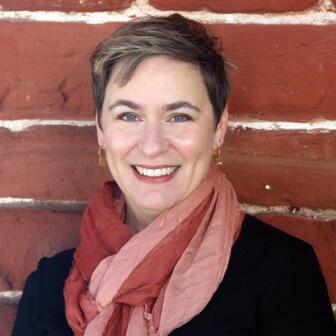
Judith Rosenbaum, CEO