Free Press: The Foundation of Tikkun Olam


I sit in front of the TV, an eager four-year-old ready to be entertained. Little puppets flash across my screen in song. Big Bird’s yellow feathers, Abby Cadabby’s fluffy hair, and Elmo’s expressive smile immediately sent my younger self into a tizzy. Sesame Street raised me as a kid. It didn’t just teach me the alphabet, melodies, or factors of two. It taught me what friendship looks like, how to love music, and how to have fun. Sesame Street even shaped my Jewish identity. Every Passover, Hanukkah, and Yom Kippur, my mom had a different Sesame Street special ready to show me, teaching me about my own heritage through my favorite puppet friends.
When I was in pre-K and Kindergarten, Sesame Street was the extent of my public media consumption. But as I grew, my horizons widened. Throughout grade school, my mom and I listened to NPR every morning, and slowly, I began to observe my community more. Even as a kid, I would wait to get into my mom’s car at the end of the school day to hear how current events had progressed. I might not have grasped every detail, but I understood the importance of trying to know what was happening in the world around me. Soon enough, I gained the confidence not just to listen, but to ask. Conversations flooded my mother’s car about The Daily News, a new episode of This American Life, or the trivia questions on Wait, Wait, Don’t Tell Me.
Now, I see public media everywhere. It floods my emails, fills my mailbox, and radiates from my car speakers. I’d always thought access to information about our ever-changing world would be immersive, easily accessible, and centered on educating the community. But now, I’m not so sure. President Donald Trump recently cut approximately $1.1 billion in funding for public media. Now, PBS and NPR are struggling. It may not be obvious through the big national podcasts, breaking news, or flagship programs, but the communities that feel it most are the ones that rely on their local news services, the smaller stations that tell neighborhood stories, spotlight local issues, and connect people who might otherwise go unheard.
It’s one thing to have limited access to national events, whose effects often ripple out slowly before reaching local communities. It’s another to be unaware of your own neighborhood because of a lack of journalistic funding. Citizens remain powerless in shaping their communities when they don’t even have the opportunity to educate themselves about the issues that affect them most. When these funding cuts were first announced in 2025, I spiraled, worrying about what they might mean for democracy and for underserved communities who can’t afford other news sources. But for some reason, my Jewish values from Sunday school came to mind. I reflected on tikkun olam, the idea of repairing the world, and what it means to build a holy community. I had always loved that concept in religious school because, to me, it meant giving yourself the gift of education so that you could give back to your community.
I realize now that my first steps in participating in tikkun olam were those hours spent watching Sesame Street, those conversations with my mother in the car, and now the countless articles I’ve read since. Access to free and accurate news gave me the education I needed and built my foundation of tikkun olam, teaching me how to give back to my community in a way that truly matters.
The news has done so much to support tikkun olam, and in the public media’s time of need, maybe it’s finally time for us to use tikkun olam to support the media. Since these funding cuts, I take a little more time each morning to listen to public broadcasting, show my support for local journalism, and donate when I can. I encourage you to do the same. Pick up your local paper, listen to morning traffic reports and weather, and pay attention to your community. If public media begins to dwindle, don’t passively let your right to education disappear. If we value our right to learn and grow, then protecting public media isn't just a choice; it’s our responsibility to the world we want to build.
This piece was written as part of JWA’s Rising Voices Fellowship.
Double your impact to amplify Jewish women’s stories—
All gifts matched up to $35,000
Before you close this article, please consider supporting the Jewish Women’s Archive and uplifting Jewish women’s voices.
At JWA, we preserve the voices of Jewish women and gender-expansive people past and present, share them freely with millions online, and empower a new generation of Jewish feminists to lead with courage, creativity, and conviction.
But none of this happens without you. JWA is an independent nonprofit— we rely on people, like you, who believe that history belongs to all of us and that the voices of Jewish women must remain powerful, and heard.
This month, a generous JWA board member will match every gift dollar for dollar—up to $35,000—through June 30. Your contribution goes twice as far right now.
Every contribution—no matter the size—helps us document, teach, and inspire through Jewish women’s stories.
It takes less than a minute to make a difference.
Thank you for being a part of the JWA community,
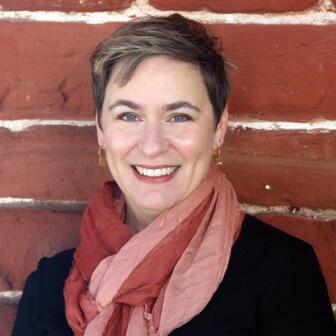
Judith Rosenbaum, CEO