
Etz Hayim Hi: How the Torah Shaped My Judaism, Feminism, and Self


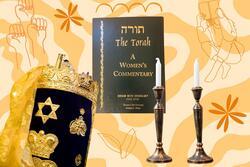
Many objects embody and personify different aspects of my identity. My hamza necklace, a bat mitzvah gift from my grandma, represents me as a Jew. My medals from districts and state championships represent me as a swimmer. My meet bibs represent me as a runner and athlete. My AP exam scores and carefully curated notebooks represent me as a student. And the object that best represents me as a Jewish feminist is the Torah. Of course, the Torah is more than just an object; it is a living, breathing text. It is etz hayim hi, the tree of life that connects us all. The Torah is the story of our people. It is a symbol, containing a plethora of traditions, stories, and lessons.
And yet, while the Torah is so much more than an object, its physical presence is what is most important to me: The twin Torahs at my synagogue that I held during my bat mitzvah and read from three years in a row at High Holidays. I have lifted them at services, feeling their weight in my hands—and my heart. And when I do so, I feel the weight of the physical Torah, but also the weight of all those who came before me: their stories and fears and dreams and selves.
The Torah is a spiritual object, yes, but to me, some of the most important parts of it are directly tied to its weight in the world. The Torah connects me to my family, to my synagogue, to the broader Portland Jewish community, to the Jewish community as a whole—past, present, and future. L’dor v’dor—from generation to generation, the Torah connects us all.
At my bat mitzvah, I remember looking out at the congregation while reading the end of my second Torah portion, knowing I was in the home stretch, seeing so many eyes focused on me. I remember the cookies I scarfed down afterward, the first thing I could bring myself to eat that day. I remember the endless mazel tovs. Most of all, I remember the weight of the Torah in my arms, walking around the congregation desperately hoping I wouldn’t trip. And when I was handed the Torah, physically passed from my grandmother to my mother to me, I felt the weight of my feminist self more than anything else. From my grandmother, who was born before women were regularly bat mizvahed, to my mother, the first in my family to become a bat mitzvah, to myself. I felt the power of taking on this role, being passed the physical embodiment of my Jewish identity l’dor v’dor. Judaism is one of a small minority of religions worldwide that is matrilineal. Our stories, traditions, and even identities are passed down by our mothers, by our matriarchs.
Every time I don my tallit—the tallit that I first wore on my bat mitzvah—I am reminded of that transformative experience. And I am reminded that being bat mitzvahed is a radical, feminist action; that reading Torah, addressing and leading the congregation, and wearing my Tallit, are all radically feminist activities that women fought so hard, for so long, to be able to do, and that many women are still unable to do today. Judaism and feminism are deeply, deeply intertwined, and when I connect with the Torah, I stand at that intersection, tangled in all the webs of our collective history.
Since my bat mitzvah, I have continued to foster a relationship with the Torah through hagbah, or lifting it, as well as reading it. The primary role of the hagbah (person who lifts the Torah) is to lift the Torah so all can see it and connect with it. In my synagogue, this role is available to any b’nei mitzvahed community member during Shabbat morning services. On the days I can attend, I always volunteer for this role because I love it. More than anything, it is a true blend of all the parts of my identity: my physical strength, derived from grueling swim and cross country practices; my feminist identity, inspiring me to take on roles and lead my community in ways that women were historically denied; and my Judaism, centered right there on the bimah. And every time I take on this role, I am approached by people—usually older women—telling me how much it meant to them to see a young girl holding the Torah and taking on that role. They tell me what I did was inspiring to them, that they weren’t allowed to do so at the synagogues they grew up in. And by doing so, they inspire me to keep doing it, to keep stepping up as a leader.
Lifting the Torah makes me feel strong, whole, and connected. When I lift the Torah, I feel its weight in every part of me. Recently, I was granted the opportunity to take on this role in the biggest way yet: during the Yom Kippur Torah service, in front of my whole community. And while it was all such a blur, the one thing I very vividly remember is the overwhelming feeling of happiness it gave me. The feeling of connection and pride.
While my congregation is very progressive and accepting, the majority of our service leaders are still men. Since our founding, we have allowed women to be bat mitzvahed and lead the congregation. While many do, even in our open, tolerant community, the majority are men. When I lead the congregation — whether it's by lifting Torah or reading it or leading services — I am helping to lead my community into a more equal world. I am stepping up, and hopefully inspiring other girls to do the same.
I don't agree with everything in the Torah. There are parts of it that are incredibly dated, misogynistic, or racist. And yet, much of it is strongly feminist, with values that were shockingly progressive for the time. From the matriarchs to the strong female characters I grew up hearing bedtime stories about—Esther, Miriam, and Naomi, my namesake—to the stories of daughters inheriting their fathers’ assets, to women who stood up and made their own decisions, feminism is woven into the Torah. It is a valuable and important part of the story of our people, and when I interact with the Torah, I take my place in that story, adding to it. Because the Torah is etz hayim hi, the tree of life. Every time I lift the Torah or read from it, I am adding myself to this story, a branch of our collective tree of life.
From the events that only happen once—such as my bat mitzvah—to the ones that I keep doing, over and over—such as reading from or lifting it—my synagogue’s Torahs are symbolic of so many things, and important for so many reasons. The Torah truly is a tree of life, connecting me to Jews everywhere, every time I interact with it. Our Torahs represent me not only as a Jewish feminist but as an athlete, person, and bat mitzvah—a daughter of the commandment.
This piece was written as part of JWA’s Rising Voices Fellowship.
Double your impact to amplify Jewish women’s stories—
All gifts matched up to $35,000
Before you close this article, please consider supporting the Jewish Women’s Archive and uplifting Jewish women’s voices.
At JWA, we preserve the voices of Jewish women and gender-expansive people past and present, share them freely with millions online, and empower a new generation of Jewish feminists to lead with courage, creativity, and conviction.
But none of this happens without you. JWA is an independent nonprofit— we rely on people, like you, who believe that history belongs to all of us and that the voices of Jewish women must remain powerful, and heard.
This month, a generous JWA board member will match every gift dollar for dollar—up to $35,000—through June 30. Your contribution goes twice as far right now.
Every contribution—no matter the size—helps us document, teach, and inspire through Jewish women’s stories.
It takes less than a minute to make a difference.
Thank you for being a part of the JWA community,
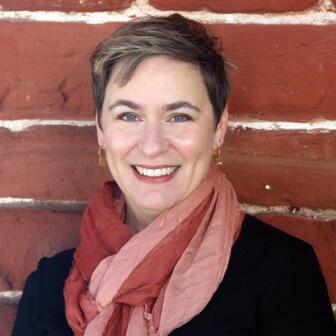
Judith Rosenbaum, CEO