
Henrietta Scheuer Wimpfheimer
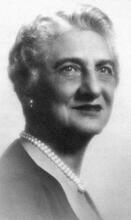
An extraordinarily active woman who lived to be 103, Henrietta Scheuer Wimpfheimer was representative of many nineteenth-century urban Jewish women. Born in Germany, she immigrated with her husband to New Hampshire and then to New York City. Wimpfheimer was widowed young and filled the remaining half of her life with a plethora of social work, including the United Order of True Sisters and the New York Guild for the Blind.
Article
Henrietta Scheuer Wimpfheimer, born on June 21, 1836, to Bernhardt Baruch and Rosa Scheuer in Mainz, Germany, married Max Wimpfheimer when she was eighteen. In 1854, Henrietta Scheuer Wimpfheimer and her husband joined the wave of German Jews who left their homeland for religious freedom and economic opportunity in the United States. Unlike most Jewish immigrants, the Wimpfheimers settled in rural Somersworth, New Hampshire. There they raised a family of five daughters and four sons. Twelve years later, the Wimpfheimers moved to New York City, where Max opened a velvet business with his brother Abraham.
Max Wimpfheimer died at age forty-seven, leaving Henrietta Wimpfheimer with over half her life remaining to be lived. She filled the next fifty years participating in local Jewish community groups. She was a member of Temple Beth-El and Central synagogues, and an active member in a number of Jewish women’s benevolent associations. Wimpfheimer joined Unabhaengiger Treue Schwestern [United Order of True Sisters]—a female equivalent of B’nai B’rith—as a charter member. This New York–founded organization with lodges in nearby cities merged benevolence with social functions. Following the lead of Protestant secret societies such as the Masons, the United Order of True Sisters included rituals in their meetings and special codes for their members, while they assisted Jews in need.
Wimpfheimer was a member of many other New York benevolent societies including the New York Guild for the Blind, the Amelia Relief Society, the Montefiore Home, and the Godmothers’ League.
Besides her benevolence work, Wimpfheimer led an active social life. Her obituary in September 1939 in The New York Times characterized her as a strong-willed and well-loved woman. She was known to drink champagne with dinner and to smoke a cigarette on occasion. A practical and resourceful woman, she managed her own finances after her husband’s death. Shortly before she died, a reporter asked Wimpfheimer her secret for a long and productive life. Her answer, printed in her obituary, was, “I didn’t do anything extra. I had my three meals a day—I had fresh air and I worked.”
Diner, Hasia R. A Time for Gathering: The Second Migration, 1820–1880 (1992).
Obituary. NYTimes, September 17, 1939, 49:1.
Wilhelm, Cornelia. The Independent Orders of B’nai B’rith and True Sisters: Pioneers of a New Jewish Identity, 1843-1914. Trans. by Alan Northnagle and Sarah Wobick. Detroit: Wayne State University Press, 2011.
WWIAJ (1938): 1141–1142.
More Like This

![roisman.jpg - still image [media]](/sites/default/files/styles/medium/public/mediaobjects/roisman.jpg?itok=7iKIF0ev "roisman.jpg - still image [media]")
Double your impact to amplify Jewish women’s stories—
All gifts matched up to $35,000
Before you close this article, please consider supporting the Jewish Women’s Archive and uplifting Jewish women’s voices.
At JWA, we preserve the voices of Jewish women and gender-expansive people past and present, share them freely with millions online, and empower a new generation of Jewish feminists to lead with courage, creativity, and conviction.
But none of this happens without you. JWA is an independent nonprofit— we rely on people, like you, who believe that history belongs to all of us and that the voices of Jewish women must remain powerful, and heard.
This month, a generous JWA board member will match every gift dollar for dollar—up to $35,000—through June 30. Your contribution goes twice as far right now.
Every contribution—no matter the size—helps us document, teach, and inspire through Jewish women’s stories.
It takes less than a minute to make a difference.
Thank you for being a part of the JWA community,
Judith Rosenbaum, CEO