

Helen Weil

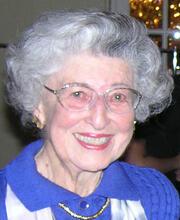
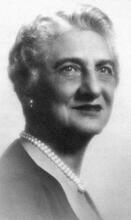
Helen Weil was a devoted gerontologist in and around Cleveland, Ohio. A German-Jewish refugee herself, in addition to teaching at Western Reserve University, Weil provided thorough social services and programs to elderly Jewish residents at Cleveland’s Montefiore Home alongside her husband, before going on to found and direct the Schnurmann House, where she remained active until her death. Weil’s work on aging and institutional care was published extensively, and she spoke on local, regional, and national stages about her studies.
“Who can explain the searching smile that flies across your wrinkled face upon my gentle touch? ... No worded answer tells me, but I can feel the hidden presence of an eternal spark.” These words, written by Helen Weil, illuminate her sensitivity and commitment to older people that she developed during a long and active career in gerontology and social services.
From Refugee to Academic
field_section_text_value
Montefiore Home
Julius Weil, as executive director from 1941 to 1968, and Helen Weil, as head of social services from 1945 to 1968, transformed Cleveland’s Montefiore Home from a traditional shelter for elderly Jewish residents to a model facility with an array of medical, therapeutic, psychological, rehabilitative, and social services. During a transitional period in gerontological history, the Weils initiated staff social workers, a day care service (1944), a sheltered workshop (1944), a special department for senile residents (1945), a psychiatric unit (1947), and an out-resident program based on the concept of foster care (1943). In 1947, Montefiore became a training site for graduate students interested in caring for the aged, one of the earliest geriatric facilities to offer such placement.
Contributions to Gerontology
Weil’s extensive publications on aging and institutional care include articles in the Jewish Social Services Quarterly and the American Journal of Orthopsychiatry. In the 1960s, she was an adjunct professor at Western Reserve University and taught aging and family life, a course that introduced gerontology into the general studies program. She spoke at local and regional workshops, seminars, and national conferences on topics such as the changing nature of the Jewish family, parental/child relationships, and institutional and social services for the aged. Her volunteer activities included work with the Cleveland Council on Mental Health, the Cleveland Welfare Federation, and the Institute on Care of the Aged and Chronically Ill in Philanthropic, Private and County Homes.
In 1968, the Weils left Montefiore Home to form and direct the Cornelia Schnurmann Foundation and develop Schnurmann House, a residential compound for senior citizens in Mayfield Heights, Ohio. Weil remained active in the administration until her death on August 20, 1992.
Helen and Julius Weil were honored by the local chapter of the National Conference of Christians and Jews (1955), named Senior Citizens of the Year by the Cuyahoga Senior Citizens Council (1972), and inducted as charter members in the Ohio Senior Citizens Hall of Fame (1978). In recognition of her service to the university, the community, and her family, John Carroll University awarded Helen Weil the Alumni Medal in 1990. She belonged to Shaarey Tikvah, “Gates of Hope,” and Temple Beth El in Shaker Heights, Ohio.
Dictionary of Cleveland Biography. Edited by David D. Van Tassel and John J. Grabowski (1996): 474.
Ettore, John, “‘I’m Still Not in a Laughing Mood,’ Helen Weil. A Pioneer in Social Services Carries Holocaust Pain.” Carroll Alumni Journal, John Carroll University (May 1990): 3.
Montefiore Home Records, MSS 3835. Western Reserve Historical Society, Cleveland, Ohio.
Weil, Julius and Helen. Papers, MSS 4499. Western Reserve Historical Society, Cleveland.
More Like This

Double your impact to amplify Jewish women’s stories—
All gifts matched up to $35,000
Before you close this article, please consider supporting the Jewish Women’s Archive and uplifting Jewish women’s voices.
At JWA, we preserve the voices of Jewish women and gender-expansive people past and present, share them freely with millions online, and empower a new generation of Jewish feminists to lead with courage, creativity, and conviction.
But none of this happens without you. JWA is an independent nonprofit— we rely on people, like you, who believe that history belongs to all of us and that the voices of Jewish women must remain powerful, and heard.
This month, a generous JWA board member will match every gift dollar for dollar—up to $35,000—through June 30. Your contribution goes twice as far right now.
Every contribution—no matter the size—helps us document, teach, and inspire through Jewish women’s stories.
It takes less than a minute to make a difference.
Thank you for being a part of the JWA community,
Judith Rosenbaum, CEO

