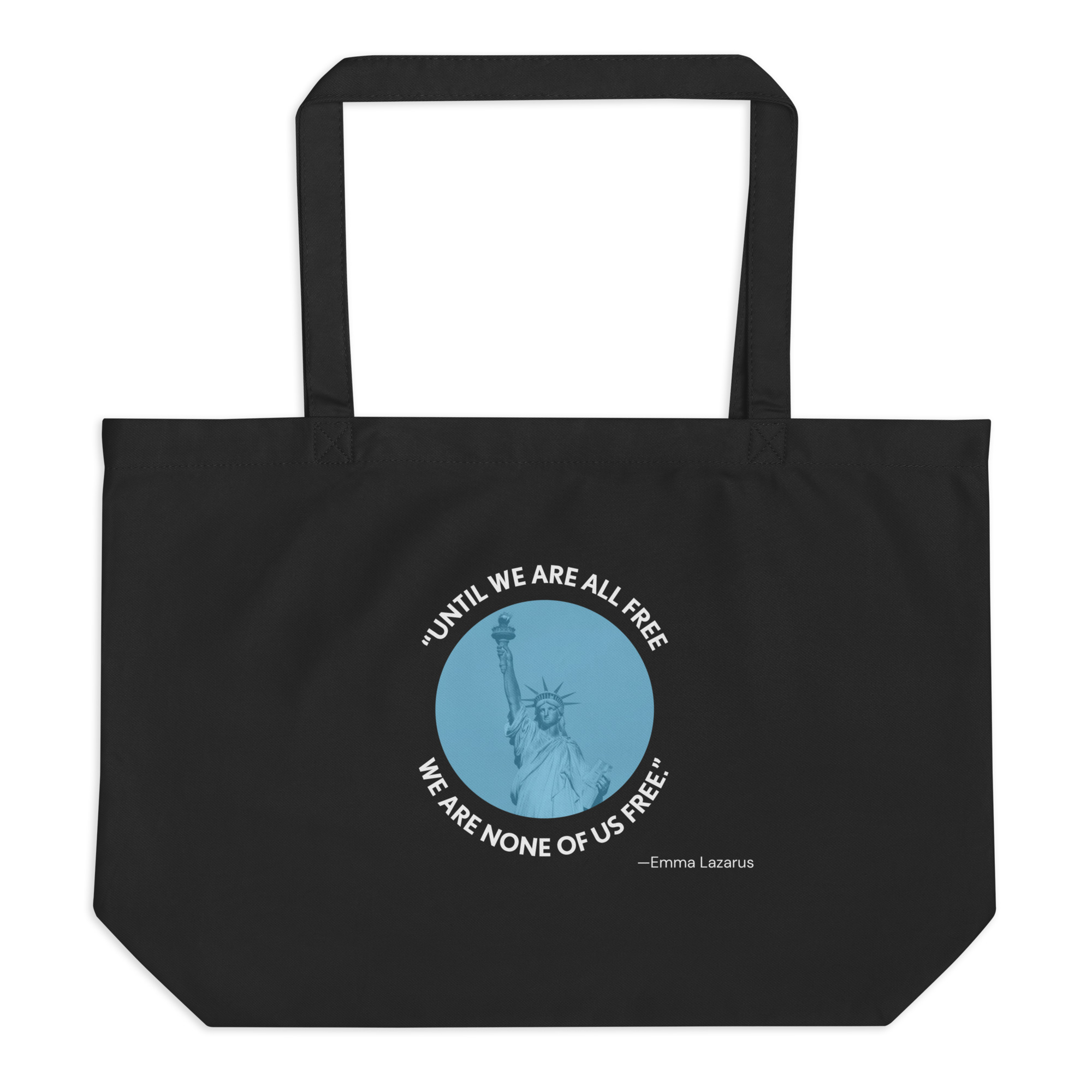

Hela Rufeisen Schüpper

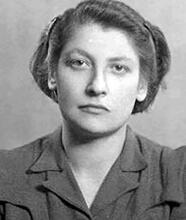
The only member of her family and fellow resistance fighters to survive the Holocaust, Hela Schupper felt that she could only live in Palestine, where she could tell the story "of what happened to us… of the murder of millions, of life in the ghettos, of the unequal, impossible and heroic struggle against the Nazi beast," while also helping to "build Erez Israel."
Courtesy of Yael Peled
Born to a hasidic family in Krakow, Hela Rufeisen Schüpper joined the Zionist youth movement Akiva against her family’s wishes. When the Germans invaded Poland, Schüpper joined the Jewish resistance against the Nazis, becoming a key courier on account of her Aryan looks. She smuggled weapons and other vital supplies for the resistance between Warsaw and Krakow, only being captured after the Warsaw Ghetto Uprising was over. Schüpper survived Bergen-Belsen and moved to Israel after the war.
Early Life
One of five children, Hela (var. Hella) Rufeisen was born in Krakow on June 7, 1921, to Simha (née Rosenberg, 1896–1931) and Pinhas Schüpper (1896–1943). She had two sisters, Nehama-Halinka (1927–1942) and Miriam (1931–1943), and two brothers, Josef (1920–1943) and Heszu-Melech (1923–1942).
Schüpper grew up in a A member of the hasidic movement, founded in the first half of the 18th century by Israel ben Eliezer Ba'al Shem Tov.hasidic atmosphere. Her maternal grandfather had been a trusted assistant to the rebbe of Bobówa (Bobov). Her father was a cantor and ritual slaughterer. In 1931, when Hela was ten years old, her mother died shortly after giving birth to Miriam. Left with five young children to care for, her father gave Hela into the care of her grandmother. Even after he remarried, Hela stayed in the very religious home of her grandmother, her aunts, and her uncles. Schüpper attended the Polish public school where she was exposed to Polish religious patriotism that was in sharp conflict with the very religious atmosphere of her grandmother’s home. When she was fourteen, her grandmother died and Hela remained with her aunts and uncles.
Upon completing elementary school, she attended the Polish commercial high school. Instructors from the Women’s Organization for Military Training, a Polish nationalist organization, visited the school to persuade the girls to join their group. When Schüpper saw that no one was interested, she became ashamed of her classmates’ lack of patriotism and joined, whereupon other pupils followed suit.
The group’s meetings were devoted to culture, sport, riflery, and pistol practice. Schüpper was a member for two years until she was sixteen. She left demonstratively after a member of the Polish parliament, Janina Amelia Prystorówa, tried to have Jewish ritual slaughter abolished, ostensibly on humane grounds. Schüpper, however, saw this as an antisemitic act.
Joining Akiva
Schüpper’s friends had been trying for years to bring her into the Zionist youth movement. She decided to join Akiva when Shimshon Draenger (1917–1943), one of its leaders, assured her that although the movement was Zionist, it was not atheist. Interestingly, her family, who had not opposed her activity in the Polish nationalist youth movement since they saw it as part of her school activities, opposed her joining the Zionist movement because it was coeducational, advocated immigration to Palestine and was, they felt, remote from Judaism. One of her uncles described her membership in the movement as “unbecoming to a girl of good family.”
Considering herself independent because she supported herself by working in a laundry, Schüpper went to the movement’s summer camp against her relatives’ wishes. Faced with their anger upon her return, she announced that since her membership in the movement was not to their liking, she would leave home. Accordingly, she rented a bed in the home of two elderly women, with whom she lived for six months. Shimshon Draenger calmed her by reminding her that they would in any case be immigrating to Palestine in half a year. Severing all contact with her family, Schüpper made the movement her home.
Joining the Resistance
World War II broke out on September 1, 1939, but before the Germans entered Krakow on September 6, the members of the youth movement decided to flee eastward to the Soviet Union and afterwards to join the Polish army. Together with her brother Josef, Schüpper traveled some two hundred kilometers to Rozwadów, which they reached on the eve of the Jewish New Year. When the Germans caught up with them, they decided to return to Krakow, arriving after The Day of Atonement, which falls on the 10th day of the Hebrew month of Tishrei and is devoted to prayer and fasting.Yom Kippur 1940. After Josef was captured by Germans and badly beaten, he decided to flee eastward once again. This time he refused to take his sister with him, thinking her incapable of enduring the difficult journey.
In February 1941 the Germans announced that only fifteen thousand people would be able to enter the Krakow ghetto, which was to be opened on March 21. Of all her family, only Schüpper was permitted to enter. Since the rest of her family, including her father, his wife and her youngest sister, had moved to Wieliczka, she decided, with her counselors’ encouragement, to join Akiva’s Warsaw branch. Defined as a “place of refuge for young people who had left Krakow,” their apartment was sponsored by the Jewish Association for Social Aid (Zydowskie Towarzystwo Opeki Spolecznej, ZTOS). Most of the twenty-five members who lived there were from Krakow and Warsaw, while two were from Sanok. To support themselves they worked at various jobs until the afternoon, later conducting a wide variety of movement activities. They established a group of three hundred members whose activities included the study of Torah she-bi-khetav: Lit. "the written Torah." The Bible; the Pentateuch; Tanakh (the Pentateuch, Prophets and Hagiographia)Torah, Jewish history, Hebrew, and literature.
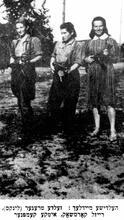
As conditions in the Warsaw ghetto deteriorated and many people died of starvation and disease, the situation in the commune also became difficult. Matters took a dramatic turn after the great aktion of July 22, 1942, which continued on and off until September 12, with 265,000 Jews sent to the crematoria of Treblinka. This aktion sparked the establishment of a militant Jewish underground. Representatives of the three pioneer youth movements—Ha-Shomer ha-Za’ir, Dror/He-Halutz, and Akiva—met on July 28, 1942 and decided to establish the Jewish Fighting Organization (Zydowska Organizacja Bojowa, ZOB). Schüpper and Israel Kanal represented Akiva at the meeting. Schüpper conveyed the committee’s decision about armed struggle to her comrades, most of whom were in favor, well aware that they had to take orders from their leaders in Krakow, Dolek Liebeskind (1912–1942) and Shimshon Draenger.
Heroism and Smuggling
field_section_text_value
Return to Warsaw
On Schüpper’s return to Warsaw on January 18, she found an aktion and a minor rebellion in progress. Unable to enter the ghetto, she decided to return to Krakow. Here she met the remaining comrades who decided that she should travel to nearby Bochnia, where several of their colleagues were hiding in a bunker. There she would find Hillel Wodzislawski, who had undertken to lead the group after the murder of Dolek Liebeskind and the imprisonment of Laban and Shimshon Draenger. Thinking such an option still possible, the comrades decided to raise money to ransom Laban and the Draengers. For this purpose Schüpper returned to Warsaw, succeeded in entering the ghetto and announced the comrades’ decision to ransom the three prisoners. She succeeded in raising thirty thousand złotys. Once again mingling with the workers leaving the ghetto for the night shift, she was caught by a German guard renowned for his cruelty. Once more she was detained at the police station, this time appearing before the Polish and German police. She managed to stuff the money quickly into the pocket of a Jewish boy who entered to sweep her cell. Once again her courage and aplomb served her as she insisted she was Polish.
This time she decided to escape, taking advantage of the permission she received to relieve herself near the ghetto wall with only one German police officer to guard her. Seizing an opportune moment, she ran off. A hail of bullets followed her, one hitting her foot. Reaching a dark place, she hid in some ruins, emerging to enter the ghetto in the morning when movement resumed.
The Warsaw Ghetto Uprising
field_section_text_value
After the War
Arriving in Palestine in September 1945, Schüpper joined her comrades on A voluntary collective community, mainly agricultural, in which there is no private wealth and which is responsible for all the needs of its members and their families.Kibbutz Beit Yehoshua where she met Aryeh Rufeisen (b. 1923) and they were married in 1947. In 1949 they moved to Bustan ha-Galil in the western Galilee, where they built their home and ran a farm. They had three children: Eliyahu (b. 1948), Yossi (b. 1952), and Ami (b. 1961).
Schüpper, who was always ready to give talks about her experiences in schools and various institutions, published an account of them in Farewell to Mila 18.
Schüpper passed away on April 23, 2017, at the age of 96.
Dawidson, Gusta. Justina’s Diary. Tel Aviv: 1978.
Rufeisen-Schüpper, Hela. Farewell to Mila 18: A Courier’s Story. Tel Aviv: 1990.
Gutman, Israel. The Jews of Warsaw 1939–1943: Ghetto, Underground, Revolt. Jerusalem: Hebrew University, 1977.
Peled, Yael (Margolin). Jewish Cracow 1939–1943: Resistance, Underground, Struggle. Tel Aviv: Bet Lokhame ha-Geta’ot, 1993.
More Like This
Double your impact to amplify Jewish women’s stories—
All gifts matched up to $35,000
Before you close this article, please consider supporting the Jewish Women’s Archive and uplifting Jewish women’s voices.
At JWA, we preserve the voices of Jewish women and gender-expansive people past and present, share them freely with millions online, and empower a new generation of Jewish feminists to lead with courage, creativity, and conviction.
But none of this happens without you. JWA is an independent nonprofit— we rely on people, like you, who believe that history belongs to all of us and that the voices of Jewish women must remain powerful, and heard.
This month, a generous JWA board member will match every gift dollar for dollar—up to $35,000—through June 30. Your contribution goes twice as far right now.
Every contribution—no matter the size—helps us document, teach, and inspire through Jewish women’s stories.
It takes less than a minute to make a difference.
Thank you for being a part of the JWA community,
Judith Rosenbaum, CEO