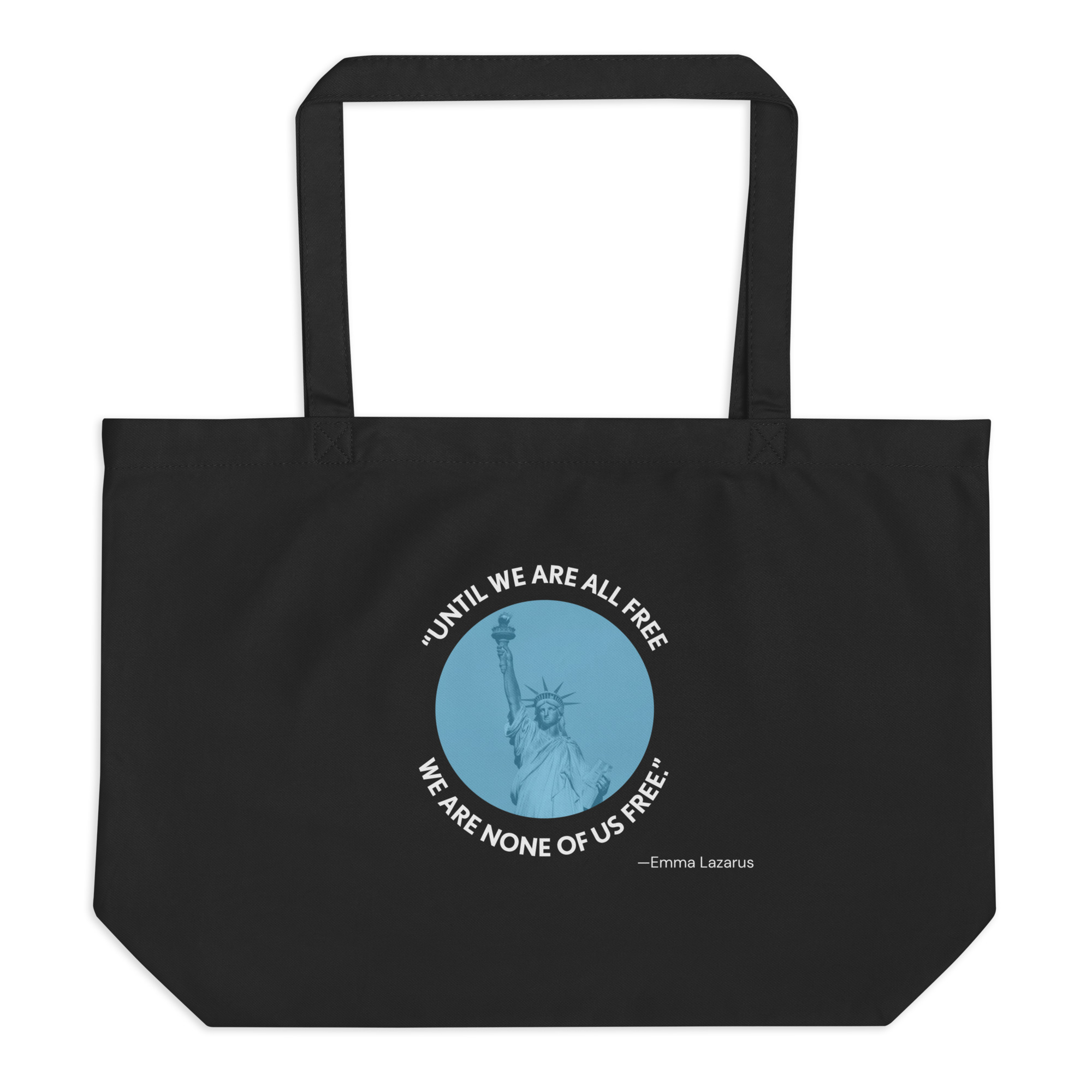

Eve Merriam
Eve Merriam mingled poetry for children with devastating social criticism for adults, introducing a new generation to the power of poetry to create change. A lifelong feminist, Merriam criticized the women’s fashion industry, wrote biographies of major historical and current political figures, and infused progressive social commentary into her many plays and poems. Much of her poetry was aimed at sparking a love of language in children, but writings like Inner City Mother Goose highlighted urban blight with an incisive accuracy, igniting controversy and garnering critical acclaim.
I’ve sometimes spent weeks looking for precisely the right word. It’s like having a tiny marble in your pocket, you can just feel it. Poetry is great fun. That’s what I’d like to stress ...: the joy of the sound of language.
The tactility and fertility of language, its joys and journeys, are the stuff of Eve Merriam’s more than fifty books of poems for children. “Eat a poem,” she urged her readers and listeners (for her, poetry was to be “out loud”). “Don’t be polite. / Bite in. / Pick it up with your fingers and lick the juice that may run down your chin.”
Influences and Education
Eve Merriam was born Eva Moskowitz in Philadelphia, on July 19, 1916, one of four children of Jennie (Siegel) and Max Moskowitz, emigrants as children from Russia. The family owned a chain of dress shops, and Eve “grew up with fashion.” Her book Figleaf: The Business of Being in Fashion (1960) is a wittily devastating critique of the industry for its manipulation of women.
After graduating from the University of Pennsylvania in 1937, she embarked on graduate study at Columbia University. There, a teacher speculated that her lack of success in getting her work published might be the result of her Jewish surname. She chose the writing name Merriam from the Merriam-Webster Dictionary on her desk. Although she delighted in travel and loved the sea, Merriam’s life and writing career centered on New York. Married four times, she was the mother of two sons, Guy (b. 1951) and Dee (b. 1952), by her second husband, Martin Michel. She raised her children in the city and once commented, “I expect to be the last living inhabitant of Manhattan when everyone else has quit for sub or exurbia.”
Poetry, Plays, and More
field_section_text_value
Legacy
Eve Merriam died on April 11, 1992, in New York City. She was, above all, a poet: “You write poems because you must ... because you can’t live your life without writing them.” A posthumously published volume, Embracing the Dark (1995), concludes with the “Poems Purgatorio” sequence in which the love of language and poetry struggles with the fact of dying: “It may well be exquisite, as the dictionary notes, / adj. keen, intense, acute.”
Selected Works
BOOKS
After Nora Slammed the Door (1964)
The Double Bed from the Feminine Side (1958)
Embracing the Dark (1995)
Emma Lazarus, Woman with a Torch (1956)
Figleaf: The Business of Being in Fashion (1960)
I Am a Man: Ode to Martin Luther King, Jr. (1971)
The Inner City Mother Goose (1969)
Mommies at Work (1961)
The Real Book About Franklin D. Roosevelt (1952)
The Story of Ben Franklin (1965)
The Voice of Liberty: The Story of Emma Lazarus (1959).
PLAYS
The Club (1976)
Inner City: A Street Cantata (1971)
Singing of Women, with Gerda Lerner (1951).
American Women Writers. Vol. 5, supplement (1995)
Merriam, Eve. Papers. Kerlan Collection, University of Minnesota at Minneapolis–St. Paul, and Schlesinger Library, Radcliffe College, Cambridge, Mass.
Double your impact to amplify Jewish women’s stories—
All gifts matched up to $35,000
Before you close this article, please consider supporting the Jewish Women’s Archive and uplifting Jewish women’s voices.
At JWA, we preserve the voices of Jewish women and gender-expansive people past and present, share them freely with millions online, and empower a new generation of Jewish feminists to lead with courage, creativity, and conviction.
But none of this happens without you. JWA is an independent nonprofit— we rely on people, like you, who believe that history belongs to all of us and that the voices of Jewish women must remain powerful, and heard.
This month, a generous JWA board member will match every gift dollar for dollar—up to $35,000—through June 30. Your contribution goes twice as far right now.
Every contribution—no matter the size—helps us document, teach, and inspire through Jewish women’s stories.
It takes less than a minute to make a difference.
Thank you for being a part of the JWA community,
Judith Rosenbaum, CEO