

Margaret Mahler
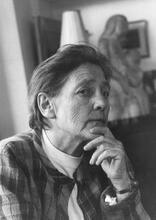
Margaret Schönberger Mahler pioneered theories on child development and abnormal psychology that impacted generations of psychiatrists. Mahler began studying medicine in Budapest in 1917 and earned her doctorate from the University of Jena in 1922. She then opened a pediatric practice in Vienna and began training at the Vienna Psychoanalytic Society. She fled the Anschluss in 1938 for the United States. She simultaneously taught psychiatry at Columbia University and directed the child analysis training program of the Philadelphia Psychoanalytic Institute, shuttling between New York and Philadelphia. In 1962 created the Masters Child Center for studying interaction between mothers and their children under age three. She wrote extensively on the mother-child relationship and the separation-individuation process, and in her therapies she encouraged mothers to become partners in their children’s treatment, a pioneering approach.
Article
field_section_text_value
Dick, Jutta, and Marina Sassenberg, eds. Jüdische Frauen im 19. und 20. Jahrhundert: Lexikon zu Leben und Werk (1993).
Dickstein, Leah J., and Carol C. Nadelson. Women Physicians in Leadership Roles (1986).
EJ.
International Biographical Dictionary of Central European Emigrés. Vol. 2, part 2 (1980): 763.
International Encyclopedia of Psychiatry, Psychology, Psychoanalysis and Neurology. Vol. 6. Edited by B.B. Wolman (1972).
McDevitt, John B., and Calvin F. Settlage, eds. Separation—Individuation: Essays in Honor of Margaret S. Mahler (1971).
Mahler, Margaret. Papers. Margaret Mahler Collection. A.A. Brill Library, New York Psychoanalytic Society and Institute, New York.
Mühlleitner, Elke, ed. Biographisches Lexikon der Psychoanalyse: Die Mitglieder der Psychoanalytischen Vereinigung 1902–1938 (1992).
Obituaries. NYTimes, October 3, 1985, and Züricher Tages-Anzeiger, October 15, 1985.
Peters, Uwe Henrik. Psychiatrie im Exil (1992).
Stevens, Gwendolyn, and Sheldon Gardner. The Women of Psychology 2 (1982): 52–55.
Swerdloff, Bluma. Interviews with Margaret Mahler, 1969–1974. Oral History Research Project, Butler Library, Columbia University, NYC.
More on Margaret Mahler
Double your impact to amplify Jewish women’s stories—
All gifts matched up to $35,000
Before you close this article, please consider supporting the Jewish Women’s Archive and uplifting Jewish women’s voices.
At JWA, we preserve the voices of Jewish women and gender-expansive people past and present, share them freely with millions online, and empower a new generation of Jewish feminists to lead with courage, creativity, and conviction.
But none of this happens without you. JWA is an independent nonprofit— we rely on people, like you, who believe that history belongs to all of us and that the voices of Jewish women must remain powerful, and heard.
This month, a generous JWA board member will match every gift dollar for dollar—up to $35,000—through June 30. Your contribution goes twice as far right now.
Every contribution—no matter the size—helps us document, teach, and inspire through Jewish women’s stories.
It takes less than a minute to make a difference.
Thank you for being a part of the JWA community,
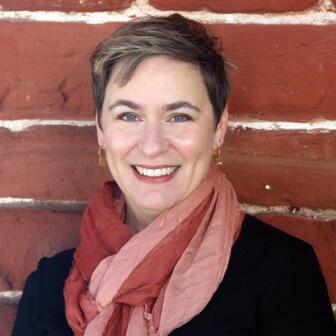
Judith Rosenbaum, CEO

